Notice: تابع WP_Block_Type_Registry::register به طورنادرست فراخوانی شد. نامهای نوع بلوک نباید حروف بزرگ داشته باشند. لطفاً برای اطلاعات بیشتر، اشکال زدایی در وردپرس را مشاهده کنید. (این پیام در نگارش 5.0.0 افزوده شده است.) in /home/ethicsho/public_html/wp-includes/functions.php on line 5313
Warning: Use of undefined constant TDC_PATH_LEGACY - assumed 'TDC_PATH_LEGACY' (this will throw an Error in a future version of PHP) in /home/ethicsho/public_html/wp-content/plugins/td-composer/td-composer.php on line 109
Warning: Use of undefined constant TDSP_THEME_PATH - assumed 'TDSP_THEME_PATH' (this will throw an Error in a future version of PHP) in /home/ethicsho/public_html/wp-content/plugins/td-composer/td-composer.php on line 113 بایگانیهای Middle East - Civilization - خانه اخلاق پژوهان جوان Notice: Trying to access array offset on value of type bool in /home/ethicsho/public_html/wp-content/plugins/wp-ulike/inc/general-functions.php on line 807
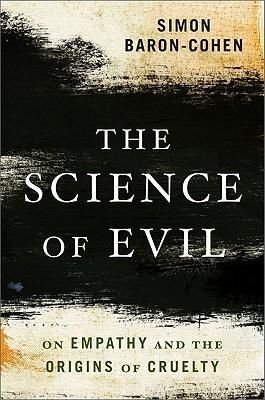
Borderline personality disorder, autism, narcissism, psychosis, Asperger’s: All of these syndromes have one thing in common–lack of empathy. In some cases, this absence can be dangerous, but in others it can simply mean a different way of seeing the world.In Cruel or Unusual Simon Baron-Cohen, an award-winning British researcher who has investigated psychology and autism for decades, develops a new brain-based theory of human cruelty. A true psychologist, however, he examines social and environmental factors that can erode empathy, including neglect and abuse. Based largely on Baron-Cohen’s own research, Cruel or Unusual will change the way we understand and treat human cruelty.
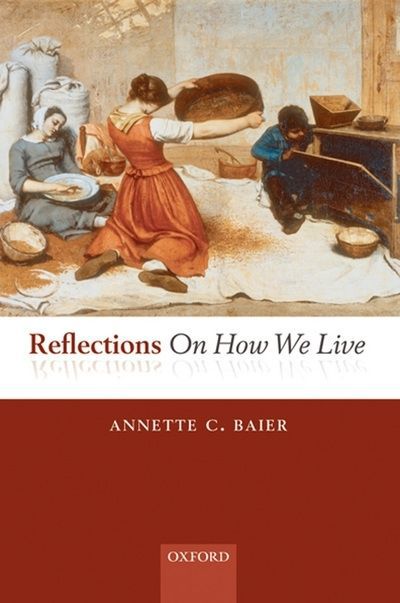
The pioneering moral philosopher Annette Baier presents a series of new and recent essays in ethics, broadly conceived to include both engagements with other philosophers and personal meditations on life. Baier’s unique voice and insight illuminate a wide range of topics. In the public sphere, she enquires into patriotism, what we owe future people, and what toleration we should have for killing. In the private sphere, she discusses honesty, self-knowledge, hope, sympathy, and self-trust, and offers personal reflections on faces, friendship, and alienating affection.
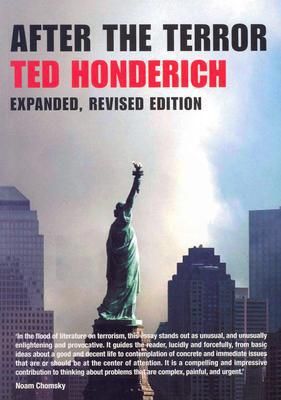
Ted Honderich investigates the morality of the September 11th attacks and what terrorism tells us about ourselves and our obligations. Did we have a responsibility for what took place? Did we respond to it as we should have? What are we to do now? After the Terrorinquires into the “natural fact” of morality and the worked-out moralities of philosophers. It reaches to the moral core of our lives.Honderich writes, “We can be held partly responsible for the 3,000 deaths at the twin towers and at the Pentagon. We are rightly to be held responsible along with the killers. We share the guilt. Those who condemn us have a reason to do so. Did we bring the killing at the twin towers on ourselves? Did we have it coming? Those offensive questions, and their offensive, but affirmative answer, do contain a truth.”
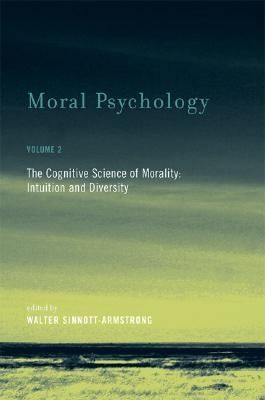
For much of the twentieth century, philosophy and science went their separate ways. In moral philosophy, fear of the so-called naturalistic fallacy kept moral philosophers from incorporating developments in biology and psychology. Since the 1990s, however, many philosophers have drawn on recent advances in cognitive psychology, brain science, and evolutionary psychology to inform their work. This collaborative trend is especially strong in moral philosophy, and these three volumes bring together some of the most innovative work by both philosophers and psychologists in this emerging interdisciplinary field.Contributors to Volume 2:Fredrik Bjorklund (University of Lund), James Blair (National Institute of Mental Health), Paul Bloomfield (University of Connecticut), Fiery Cushman (Harvard University), Justin D’Arms (Ohio State University), John Deigh (University of Texas at Austin), John Doris (Washington University), Julia Driver (Dartmouth College), Ben Fraser (Australian National University Research School of Social Science), Gerd Gigerenzer (Max Plank Institute), Michael Gill (University of Arizona), Jonathan Haidt (University of Virginia) Marc Hauser (Harvard University), Daniel Jacobson (Bowling Green State University), Joshua Knobe (University of North Carolina at Chapel Hill), Brian Leiter (University of Texas at Austin), Don Loeb (University of Vermont), Ron Mallon (University of Utah), Darcia Narvaez (University of Notre Dame), Shaun Nichols (University of Arizona), Alexandra Plakias (University of Michigan), Jesse Prinz (University of North Carolina at Chapel Hill), Geoffrey Sayre-McCord (University of North Carolina, Chapel Hill), Russ Shafer-Landau (University of Wisconsin), Walter Sinnott-Armstrong (Dartmouth College), Cass Sunstein (University of Chicago), William Tolhurst (University of Northern Illinois), Liane Young (Harvard University).
ما از اخلاق چه انتظاری داریم؟ این سوال شاید تاحدودی برای عموم مردم و یا متخصصان این رشته قابل پاسخ باشد؛ اینکه خوب بودن را به ما بیاموزد و در تنظیم روابط فردی م...

جشن کتاب تهران به ایستگاه سی و یکم رسیده است. حال و احوال نشر کتاب خوب نیست و باید فرهنگدوستان را به خرید و هدیه دادن کتاب ترغیب نمود. خانه اخلاقپژوهان جوان ب...

بنیاد کتابهای اخلاق اسلامی عمدتا پالایش جان از آلودگیها و آراستن آن به زیباییها است. اندیشه محوری این قبیل کتابها آن است که انسان فعلی آنی نیست که باید باشد...

-
0 Comments