Notice: تابع WP_Block_Type_Registry::register به طورنادرست فراخوانی شد. نامهای نوع بلوک نباید حروف بزرگ داشته باشند. لطفاً برای اطلاعات بیشتر، اشکال زدایی در وردپرس را مشاهده کنید. (این پیام در نگارش 5.0.0 افزوده شده است.) in /home/ethicsho/public_html/wp-includes/functions.php on line 5313
Warning: Use of undefined constant TDC_PATH_LEGACY - assumed 'TDC_PATH_LEGACY' (this will throw an Error in a future version of PHP) in /home/ethicsho/public_html/wp-content/plugins/td-composer/td-composer.php on line 109
Warning: Use of undefined constant TDSP_THEME_PATH - assumed 'TDSP_THEME_PATH' (this will throw an Error in a future version of PHP) in /home/ethicsho/public_html/wp-content/plugins/td-composer/td-composer.php on line 113 بایگانیهای Methodology - History - خانه اخلاق پژوهان جوان Notice: Trying to access array offset on value of type bool in /home/ethicsho/public_html/wp-content/plugins/wp-ulike/inc/general-functions.php on line 807
Russell Hardin presents a new explication of David Hume’s moral and political theory. With Hume, he holds that our normative views can be scientifically explained but they cannot be justified as true. Hume argued for the psychological basis of such views. In particular, he argued for sympathy as the mirroring of the psychological sensations and emotions of others. By placing Hume in the developing tradition of social science, as a strong forerunner of his younger friend Adam Smith, Hardin demonstrates Hume’s strong strategic sense, his nascent utilitarianism, his powerful theory of convention as a main source of social and political order, and his recognition of moral and political theory as a single enterprise.
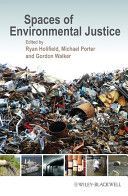
In this cutting-edge volume leading scholars examine a diverse range of environmental inequalities from around the world and introduce a pluralistic agenda for critical environmental justice research Spaces of Environmental Justice explores novel theoretical approaches and neglected spaces of inequality and shows how far the field has moved beyond its original focus on uneven distributions of pollution in the USAThe book also considers the influence of critical geographical and social theory on environmental justice studies Arrange of possibilities for future research directions are identified as are the challenges involved in investigating and pursuing environmental justice at a time of rapid economic and environmental change
Thomas Aquinas is one of the foremost thinkers in Western philosophy and Christian scholarship, recognized as a significant voice in both theological discussions and secular philosophical debates. Alongside a revival of interest in Thomism in philosophy, scholars have realized its relevance when addressing certain contemporary issues in bioethics. This book offers a rigorous interpretation of Aquinas’s metaphysics and ethical thought, and highlights its significance to questions in bioethics. Jason T. Eberl applies Aquinas’s views on the seminal topics of human nature and morality to key questions in bioethics at the margins of human life – questions which are currently contested in the academia, politics and the media such as: * When does a human person’s life begin? How should we define and clinically determine a person’s death? * Is abortion ever morally permissible? How should we resolve the conflict between the potential benefits of embryonic stem cell research and the lives ofhuman embryos? * Does cloning involve a misuse of human ingenuity and technology? * What forms of treatment are appropriate for irreversibly comatose patients? How should we care for patients who experience unbearable suffering as they approach the end of life? * What ethical mandates and concerns underlie the practice of organ donation? Thomistic Principles and Bioethicspresents a significant philosophical viewpoint which should motivate further dialogue amongst religious and secular arenas of inquiry concerning such complex issues of both individual and public concern. It will be illuminating reading for scholars, postgraduate and research students of philosophy, metaphysics, ethics, bioethics and moral theology.
In this book Uwe Steinhoff describes and explains the basic tenets of just war theory and gives a precise, succinct and highly critical account of its present status and of the most important and controversial current debates surrounding it. Rejecting certain in effect medieval assumptions of traditional just war theory and advancing a liberal outlook, Steinhoff argues that every single individual is a legitimate authority and has under certain circumstances the right to declare war on others or the state. He also argues that the just cause cannot be established independently of the other criteria of jus ad bellum (the justification of entering a war), except for right intention, which he interprets more leniently than the tradition does. Turning to jus in bello (which governs the conduct of a war) he criticizes the Doctrine of Double Effect and concludes that insofar as wars kill innocents, and be it as “collateral damage”, they cannot be just but at best justified as the lesser evil. Steinhoff gives particular attention to the question why soldiers, allegedly, are legitimate targets and civilians not. Discussing four approaches to the explanation of the difference he argues that the four principles underlying them all need to be taken into account and outlines how their weighing can proceed if applied to concrete cases. The resulting approach does not square the distinction between legitimate and illegitimate targets with the distinction between soldiers and civilians, which has extremely important consequences for the conduct of war. Finally, Steinhoff analyses the concept of terrorism and argues that some forms of “terrorism” are actually not terrorism at all and that even terrorism proper can under certain circumstances be justified.
This book is about people whose beliefs and affiliations have opposed powerful interests in the present-day United States. This eclectic group of people and controversial issues, from climate-change scientists who have been censored by the Bush administration to Muslims accused of terrorism, have one thing in common. All of them straddle the limits of what Noam Chomsky has called permissible debate as defined by dominant political and economic institutions and individuals. The central thesis is that restriction of free inquiry is harmful to our culture because it inhibits the search for knowledge. Johansen presents case studies in the borderlands of free speech in a Jeffersonian cast-an intellectual framework assuming that open debate-even of unpopular ideas-is essential to accurate perception of reality. This book is about people whose ideological circumstances have found them opposing established beliefs in our times-scholars advocating the Palestinian cause in a very hostile intellectual environment, for example, as well as climate scientists defending themselves against the de-funding of their laboratories by defenders of fossil-fuel interests; opponents of creation science under assault for teaching what once was regarded as household-variety biology (a.k.a. Darwinism); Marxists in a political system dominated by neoconservatives. The central thesis that unites this diverse array of controversies is that shutting down free inquiry-most notably for points of view deemed unpopular-dumbs us all down by restraining the search for knowledge, which demands open inquiry. We have been told when going to war, as in Iraq, that freedom isn’t free, the unstated assumption being that our armed forces are fighting and dying to safeguard our civil rights at home and abroad. During recent years, however, freedom to inquire and debate without retribution has been under assault in the United States. This assault has been carried out under a distinctly Orwellian cast, under Newspeak titles such as the Patriot Act, parts of which might as well be described more honestly as the Restriction of Freedom of Inquiry Act. The information gathered here will interest (and probably anger) anyone who is concerned with protecting robust, free inquiry in a nation that takes seriously its freedom to speak out, and to define truth through open debate.
ما از اخلاق چه انتظاری داریم؟ این سوال شاید تاحدودی برای عموم مردم و یا متخصصان این رشته قابل پاسخ باشد؛ اینکه خوب بودن را به ما بیاموزد و در تنظیم روابط فردی م...

جشن کتاب تهران به ایستگاه سی و یکم رسیده است. حال و احوال نشر کتاب خوب نیست و باید فرهنگدوستان را به خرید و هدیه دادن کتاب ترغیب نمود. خانه اخلاقپژوهان جوان ب...

بنیاد کتابهای اخلاق اسلامی عمدتا پالایش جان از آلودگیها و آراستن آن به زیباییها است. اندیشه محوری این قبیل کتابها آن است که انسان فعلی آنی نیست که باید باشد...

-
0 Comments