
Notice: تابع WP_Block_Type_Registry::register به طورنادرست فراخوانی شد. نامهای نوع بلوک نباید حروف بزرگ داشته باشند. لطفاً برای اطلاعات بیشتر، اشکال زدایی در وردپرس را مشاهده کنید. (این پیام در نگارش 5.0.0 افزوده شده است.) in /home/ethicsho/public_html/wp-includes/functions.php on line 5313
Warning: Use of undefined constant TDC_PATH_LEGACY - assumed 'TDC_PATH_LEGACY' (this will throw an Error in a future version of PHP) in /home/ethicsho/public_html/wp-content/plugins/td-composer/td-composer.php on line 109
Warning: Use of undefined constant TDSP_THEME_PATH - assumed 'TDSP_THEME_PATH' (this will throw an Error in a future version of PHP) in /home/ethicsho/public_html/wp-content/plugins/td-composer/td-composer.php on line 113 بایگانیهای Medicine, Military - خانه اخلاق پژوهان جوان Notice: Trying to access array offset on value of type bool in /home/ethicsho/public_html/wp-content/plugins/wp-ulike/inc/general-functions.php on line 807
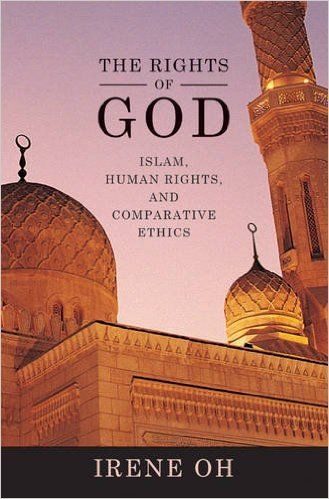
Promoting Islam as a defender of human rights is laden with difficulties. Advocates of human rights will readily point out numerous humanitarian failures carried out in the name of Islam. In The Rights of God, Irene Oh looks at human rights and Islam as a religious issue rather than a political or legal one and draws on three revered Islamic scholars to offer a broad range of perspectives that challenge our assumptions about the role of religion in human rights. The theoretical shift from the conception of morality based in natural duty and law to one of rights has created tensions that hinder a fruitful exchange between human rights theorists and religious thinkers. Does the static identification of human rights with lists of specific rights, such as those found in the Universal Declaration of Human Rights, make sense given the cultural, historical, and religious diversity of the societies in which these rights are to be respected and implemented? In examining human rights issues of the contemporary Islamic world, Oh illustrates how the value of religious scholarship cannot be overestimated. Oh analyzes the commentaries of Abul A’la Maududi, Sayyid Qutb, and Abdolkarim Soroush — all prominent and often controversial Islamic thinkers — on the topics of political participation, religious toleration, and freedom of conscience. While Maududi and Qutb represent traditional Islam, and Soroush a more reform and Western-friendly approach, all three contend that Islam is indeed capable of accommodating and advocating human rights. Whereas disentangling politics and culture from religion is never easy, Oh shows that the attempt must be made in order to understand and overcome the historical obstacles that prevent genuine dialogue from taking place across religious and cultural boundaries.
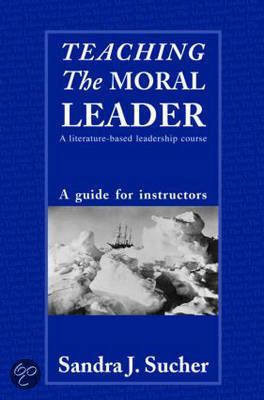
This book is a comprehensive, practical manual to help instructors integrate moral leadership in their own courses, drawing from the experience and resources of the Harvard Business School course ‘The Moral Leader’, an MBA elective taken by thousands of HBS students over nearly twenty years. Through the close study of literature–novels, plays, and historical accounts– followed by rigorous classroom discussion, this innovative course encourages students to confront fundamental moral challenges, to develop skills in moral analysis and judgment, and to come to terms with their own definition of moral leadership. Using this guide’s background material and detailed teaching plans, instructors will be well prepared to lead their students in the study of this vital and important subject. Featuring a website to run alongside that links the manual with the textbook and provides a wealth of extra resources, including on-line links to Harvard Business School case studies and teaching notes this manual forms a perfect complement to The Moral Leader core text also by Sandra Sucher.The detailed and hands-on nature of the guide makes it possible for instructors, with or without a specialized background, to replicate the 13-session Harvard Business School course, or to integrate moral leadership into an existing course, or as a module, or as stand-alone sessions. The manual presents flexible class plans, easily adaptable to a wide variety of business and academic topics. It suggests how to adapt the course to other settings, provides supporting materials, and reviews the approach to teaching The Moral Leader, differentiating it from other literature-based courses. The author, a Harvard Business School professor with a successful record in teaching this course, also brings into the text the kind of real world understanding of effective leadership development that comes from decades of experience as a high level corporate executive. An accompanying student book, focused on class preparation and the context of each work, helps students address questions like: What is the nature of a moral challenge? How do people reason morally? How do leaders – formal and informal – contend with the moral choices they face? How is moral leadership different from leadership of any other kind? Struggling with these questions, both individually and as members of a vibrant learning community, students internalize moral leadership concepts and choices, and develop the skills to pursue it in their careers and personal lives.
Offers an extensive and probing ethical analysis of economic globalisation. This innovative and highly informative book on globalisation and business ethics will set the tone for the debate on this important issue in the coming years, and will be an invaluable source of information for everyone committed to the global economic responsibilities of businesses and governments. Ron Jeurissen, Professor of business ethics, Nyenrode Business Universiteit/ European Institute for Business Ethics, The Netherlands This volume takes an interdisciplinary approach to provide a theoretical overview of how business ethics deals with the phenomenon of globalization. The authors first examine the origins and development of globalization and its interaction with business ethics, before discussing the impact on and role of national and multinational corporations. The book goes on to examine the relationship between industrialized and developing countries, and explores the place of ethics in globalized markets. Contents: Introduction; Part I Globalisation: Concepts and Problems: Globalisation from a business ethics point of view, Karl Homann; Concepts of globalisation: the institutional prerequisites for the integration of world markets, Michael Ehret, Michaela Haase and Martin Kaluza; Diagnoses of our time: theoretical approaches to the globalised age, Manfred Prisching; Globalisation as a gendered process: a differentiated survey on feminist and postcolonial perspectives, Silvia Bauer and Tatjana Schönwälder- Kuntze. Part II Globalisation, Business and Corporate Governance: Globalisation of corporate governance, Klaus J. Hopt; Business ethics in globalised financial markets, Peter Koslowki; Transparency and integrity: contrary concepts?, Frits Schipper; Tangible ethics: commitments in business organisations, Eberhard Schnebel and Margo A. Bienert. Part III Global Justice: A theory of global justice focussing on absolute poverty, Elke Mack; Just relations between North and South in international financial markets, Bernhard Emunds; Access to essential medicines: global justice beyond equality, Georg Marckmann and Matthis Synofzik. Part IV Globalisation, Philosophy and Culture: Social glue under conditions of globalisation: philosophers on essential normative resources, Christopher Lütge; Sovereignty of interpretation: a dubious model of cultural globalisation, Michael Neuner; Index. About the Author: Karl Homann is Professor and Chair for Philosophy and Economics at the University of Munich, Germany. Peter Koslowski is Professor of Philosophy, especially Philosophy of Management and Organizations and History of Philosophy, at the Free University Amsterdam, The Netherlands. Christoph Luetge is Assistant Professor in the Department of Philosophy, and Chair for Philosophy and Economics at the University of Munich, Germany.
This beautifully written book by one of the world’s leading moral philosophers argues that the key to a fulfilled life is to pursue wholeheartedly what one cares about, that love is the most authoritative form of caring, and that the purest form of love is, in a complicated way, self-love. Harry Frankfurt writes that it is through caring that we infuse the world with meaning. Caring provides us with stable ambitions and concerns; it shapes the framework of aims and interests within which we lead our lives. The most basic and essential question for a person to raise about the conduct of his or her life is not what he or she should care about but what, in fact, he or she cannot help caring about. The most important form of caring, Frankfurt writes, is love, a nonvoluntary, disinterested concern for the flourishing of what is loved. Love is so important because meaningful practical reasoning must be grounded in ends that we do not seek only to attain other ends, and because it is in loving that we become bound to final ends desired for their own sakes. Frankfurt argues that the purest form of love is self-love. This sounds perverse, but self-love–as distinct from self-indulgence–is at heart a disinterested concern for whatever it is that the person loves. The most elementary form of self-love is nothing more than the desire of a person to love. Insofar as this is true, self-love is simply a commitment to finding meaning in our lives.
ما از اخلاق چه انتظاری داریم؟ این سوال شاید تاحدودی برای عموم مردم و یا متخصصان این رشته قابل پاسخ باشد؛ اینکه خوب بودن را به ما بیاموزد و در تنظیم روابط فردی م...

جشن کتاب تهران به ایستگاه سی و یکم رسیده است. حال و احوال نشر کتاب خوب نیست و باید فرهنگدوستان را به خرید و هدیه دادن کتاب ترغیب نمود. خانه اخلاقپژوهان جوان ب...

بنیاد کتابهای اخلاق اسلامی عمدتا پالایش جان از آلودگیها و آراستن آن به زیباییها است. اندیشه محوری این قبیل کتابها آن است که انسان فعلی آنی نیست که باید باشد...

-
0 Comments