Notice: تابع WP_Block_Type_Registry::register به طورنادرست فراخوانی شد. نامهای نوع بلوک نباید حروف بزرگ داشته باشند. لطفاً برای اطلاعات بیشتر، اشکال زدایی در وردپرس را مشاهده کنید. (این پیام در نگارش 5.0.0 افزوده شده است.) in /home/ethicsho/public_html/wp-includes/functions.php on line 5313
Warning: Use of undefined constant TDC_PATH_LEGACY - assumed 'TDC_PATH_LEGACY' (this will throw an Error in a future version of PHP) in /home/ethicsho/public_html/wp-content/plugins/td-composer/td-composer.php on line 109
Warning: Use of undefined constant TDSP_THEME_PATH - assumed 'TDSP_THEME_PATH' (this will throw an Error in a future version of PHP) in /home/ethicsho/public_html/wp-content/plugins/td-composer/td-composer.php on line 113 بایگانیهای Literature - خانه اخلاق پژوهان جوان Notice: Trying to access array offset on value of type bool in /home/ethicsho/public_html/wp-content/plugins/wp-ulike/inc/general-functions.php on line 807
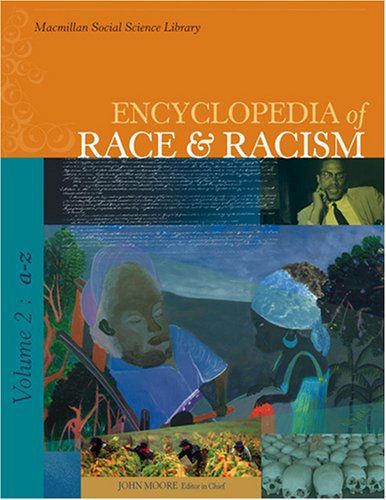
The Encyclopedia of Race and Racism is the first such work examining the anthropological, sociological, historical, economic, and scientific theories of race and racism in the modern era. The set delves into the historic origins of ideas of race and racism and explores their social and scientific consequences. Some of the nearly 400 articles address broad theoretical topics that have helped to shape modern ideas about race and racism; others address more specific subjects in the larger fields. The set includes biographies of dozens of significant theorists, as well as political and social leaders and notorious racists. The Encyclopedia of Race and Racism also includes a carefully chosen selection of primary documents that enhance and reinforce the content of the articles. Set includes a thematic outline, a filmography, and a comprehensive general index.
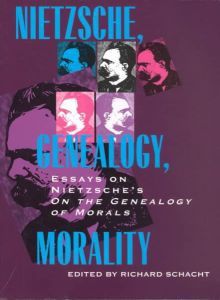
Written at the height of the philosopher’s intellectual powers, Friedrich Nietzsche’s On the Genealogy of Morals has become one of the key texts of recent Western philosophy. Its essayistic style affords a unique opportunity to observe many of Nietzsche’s persisting concerns coming together in an illuminating constellation. A profound influence on psychoanalysis, antihistoricism, and poststructuralism and an abiding challenge to ethical theory, Nietzsche’s book addresses many of the major philosophical problems and possibilities of modernity.In this unique collection focusing on the Genealogy, twenty-five notable philosophers offer diverse discussions of the book’s central themes and concepts. They explore such notions as ressentiment, asceticism, “slave” and “master” moralities, and what Nietzsche calls “genealogy” and its relation to other forms of inquiry in his work. The book presents a cross section of contemporary Nietzsche scholarship and philosophical investigation that is certain to interest philosophers, intellectual and cultural historians, and anyone concerned with one of the master thinkers of the modern age. Written at the height of the philosopher’s intellectual powers, Friedrich Nietzsche’s On the Genealogy of Morals has become one of the key texts of recent Western philosophy. Its essayistic style affords a unique opportunity to observe many of Nietzsche’s persisting concerns coming together in an illuminating constellation. A profound influence on psychoanalysis, antihistoricism, and poststructuralism and an abiding challenge to ethical theory, Nietzsche’s book addresses many of the major philosophical problems and possibilities of modernity.In this unique collection focusing on the Genealogy, twenty-five notable philosophers offer diverse discussions of the book’s central themes and concepts. They explore such notions as ressentiment, asceticism, “slave” and “master” moralities, and what Nietzsche calls “genealogy” and its relation to other forms of inquiry in his work. The book presents a cross section of contemporary Nietzsche scholarship and philosophical investigation that is certain to interest philosophers, intellectual and cultural historians, and anyone concerned with one of the master thinkers of the modern age.
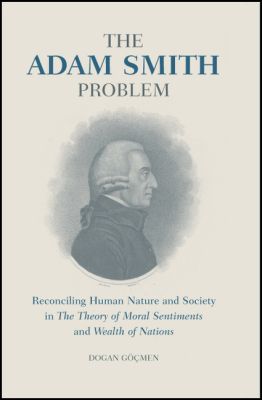
This is the first scholarly work to deal solely with the ‘Adam Smith problem’, namely the apparent contradiction between Adam Smith’s most famous works, The Theory of Moral Sentiments and The Nature and Causes of the Wealth of Nations. Since the 1840s scholars have puzzled over and attempted to explain the fact that these works offer two fundamentally different and contradictory concepts of human nature. In this radical new approach Dogan Göçmen makes a major contribution to the debate. Accepting that Smith does indeed put forward two different and varied ideas, he argues that the ethical position articulated in The Theory of Moral Sentiments can be, and was intended by Smith to be, applied as a basis for criticising the commercial society analysed in the Wealth of Nations. Göçmen argues that this ethical position points to the character of an ideal future society, Adam Smith’s Utopia, a society in which its social components are completely in sympathy – and therefore harmonious – with each other.
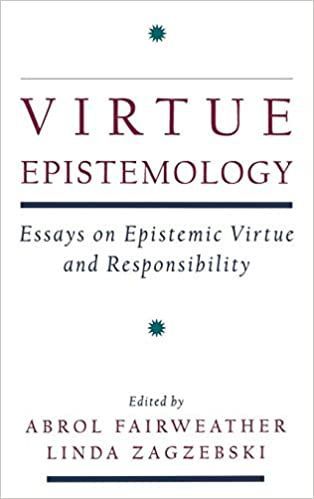
Virtue epistemology is an exciting, new movement receiving an enormous amount of attention from top epistemologists and ethicists; this pioneering volume reflects the best work in that vein. Featuring superb writing from contemporary American philosophers, it includes thirteen never before published essays that focus on the place of the concept of virtue in epistemology. In recent years, philosophers have been debating how this concept functions in definitions of knowledge. They question the extent to which knowledge is both normative (i.e., with a moral component) and non-normative, and many of them dispute the focus on justification, which has proven to be too restrictive. Epistemologists are searching for a way to combine the traditional concepts of ethical theory with epistemic concepts; the result is a new approach called virtue epistemology–one that has established itself as a particularly favorable alternative. Containing the fruits of recent study on virtue epistemology, this volume offers a superb selection of contributors–including Robert Audi, Simon Blackburn, Richard Foley, Alvin Goldman, Hilary Kornblith, Keith Lehrer, Ernest Sosa, and Linda Zagzebski–whose work brings epistemology into dialogue with everyday issues.
ما از اخلاق چه انتظاری داریم؟ این سوال شاید تاحدودی برای عموم مردم و یا متخصصان این رشته قابل پاسخ باشد؛ اینکه خوب بودن را به ما بیاموزد و در تنظیم روابط فردی م...

جشن کتاب تهران به ایستگاه سی و یکم رسیده است. حال و احوال نشر کتاب خوب نیست و باید فرهنگدوستان را به خرید و هدیه دادن کتاب ترغیب نمود. خانه اخلاقپژوهان جوان ب...

بنیاد کتابهای اخلاق اسلامی عمدتا پالایش جان از آلودگیها و آراستن آن به زیباییها است. اندیشه محوری این قبیل کتابها آن است که انسان فعلی آنی نیست که باید باشد...

-
0 Comments