Notice: تابع WP_Block_Type_Registry::register به طورنادرست فراخوانی شد. نامهای نوع بلوک نباید حروف بزرگ داشته باشند. لطفاً برای اطلاعات بیشتر، اشکال زدایی در وردپرس را مشاهده کنید. (این پیام در نگارش 5.0.0 افزوده شده است.) in /home/ethicsho/public_html/wp-includes/functions.php on line 5313
Warning: Use of undefined constant TDC_PATH_LEGACY - assumed 'TDC_PATH_LEGACY' (this will throw an Error in a future version of PHP) in /home/ethicsho/public_html/wp-content/plugins/td-composer/td-composer.php on line 109
Warning: Use of undefined constant TDSP_THEME_PATH - assumed 'TDSP_THEME_PATH' (this will throw an Error in a future version of PHP) in /home/ethicsho/public_html/wp-content/plugins/td-composer/td-composer.php on line 113 بایگانیهای Literary Criticism / Semiotics & Theory - خانه اخلاق پژوهان جوان Notice: Trying to access array offset on value of type bool in /home/ethicsho/public_html/wp-content/plugins/wp-ulike/inc/general-functions.php on line 807
This first book of its kind for the medical profession brings the real-world translation of ethics to the care of patients, conduct of protocols, and training of professionals. An interactive, case-oriented approach to mental health ethics, Professionalism and Ethics: Q & A Self-Study Guide for Mental Health Professionals consists of questions and answers developed by the authors and fourteen contributors from backgrounds as diverse as family medicine, research ethics, social psychology, and public health. They draw on personal experience in the care of people with mental illness, in mental health research, and in clinical training to generate scenarios that pose ethical questions. Some questions are narrow and to the point, such as responding to a suspicion of child abuse; others require a more nuanced approach, such as dealing with conflict of interest posed by a pharmaceutical company. They then resolve these questions in alignment with an understanding of ethical principles, the standards of their fields, the law, and the expectations of mental health professionals. The brief case descriptions that frame each ethical question echo the real-life complexities of clinical practice and are presented in single-answer, multiple-choice format modeled after key medical licensure and specialty certification organizations. Following an overview of ethics and professionalism, questions cover four broad areas: core concepts, clinical care, medical research, and interactions with colleagues and trainees. Explanations following the questions offer background information about relevant ethical concepts and related legal and clinical considerations. A subsequent section features another set of questions for self-assessment, followed by answers with citations to appropriate references. The book’s overall approach is geared to underscore the following areas of concern: • Essential ethical skills, such as understanding how personal values affect patient care, recognizing high-risk situations in which ethical problems arise, and building ethical safeguards• Core ethical principles, including nonmaleficence, beneficence, autonomy, respect, justice, veracity, fidelity, and privacy• Key clinical ethics issues, including maintaining therapeutic boundaries, patient non-abandonment, informed consent and treatment refusal, alternative decision making and advance directives, confidentiality, reporting colleague misconduct, and caring for difficult patients. Trainees and experienced clinicians alike will be richly rewarded by considering the dilemmas posed here. Developed with an extensive review process, reference verifications, and iterative crosschecks, this book facilitates professionalism as a core competency in medicine as it instills the need for ongoing consideration of ethical behaviors and principles in the daily practice of psychiatry.
In this book Axel Honneth re-examines arguments put forward by Hegel and claims that the ‘struggle for recognition’ should be at the centre of social conflicts.
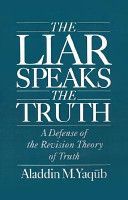
In this book, Yaqub describes a simple conception of truth and shows that it yields a semantical theory that accommodates the whole range of our seemingly conflicting intuitions about truth. This conception takes the Tarskian biconditionals (such as “The sentence ‘Johannes loved Clara’ is true if and only if Johannes loved Clara”) as correctly and completely defining the notion of truth. The semantical theory, which is called the revision theory, that emerges from this conception paints a metaphysical picture of truth as a property whose applicability is given by a revision process rather than by a fixed extension. The main advantage of this revision process is its ability to explain why truth seems in many cases almost redundant, in others substantial, and yet in others paradoxical (as in the famous Liar). Yaqub offers a comprehensive defense of the revision theory of truth by developing consistent and adequate formal semantics for languages in which all sorts of problematic sentences (Liar and company) can be constructed. Yaqub concludes by introducing a logic of truth that further demonstrates the adequacy of the revision theory.
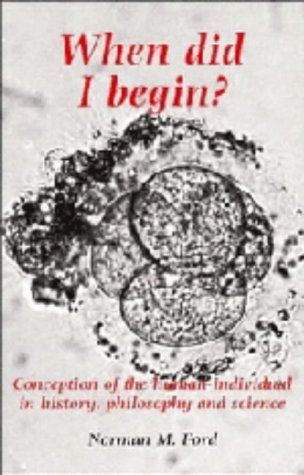
When Did I Begin? investigates the theoretical, moral and biological issues surrounding the debate over the beginning of human life. With the continuing controversy over the use of in vitro fertilization techniques and experimentation with human embryos, these issues have been forced into the arena of public debate. The answer to the question, āWhen did I begin?ā draws on both scientific evidence, and on the philosophical concepts of the presence of the human individaul. As a leading theologian and moral philosopher, thoroughly conversant with modern embryology, Norman Ford, a Salesian priest, is well qualified to bridge the gap between the biological and philosophical point of view. Dr Ford argues that a human individual could not begin before definitive individuation occurs with the appearance of the primative streak about two weeks after fertilisation. While he does not specifically address any moral issues regarding the treatment of human embryos, the author views reading of this book as an essential prerequisite for such moral considerations. The implications of Dr Fordās answer to the question posed in the title will be crucially important for fully evaluating such problems as embryo experimentation and contraception, for a range of readers from embryologists and physicians to moral philosophers and theologians. The book has already stimulated considerable interest and debate, and is now available in paperback for the first time.
ما از اخلاق چه انتظاری داریم؟ این سوال شاید تاحدودی برای عموم مردم و یا متخصصان این رشته قابل پاسخ باشد؛ اینکه خوب بودن را به ما بیاموزد و در تنظیم روابط فردی م...

جشن کتاب تهران به ایستگاه سی و یکم رسیده است. حال و احوال نشر کتاب خوب نیست و باید فرهنگدوستان را به خرید و هدیه دادن کتاب ترغیب نمود. خانه اخلاقپژوهان جوان ب...

بنیاد کتابهای اخلاق اسلامی عمدتا پالایش جان از آلودگیها و آراستن آن به زیباییها است. اندیشه محوری این قبیل کتابها آن است که انسان فعلی آنی نیست که باید باشد...

-
0 Comments