Notice: تابع WP_Block_Type_Registry::register به طورنادرست فراخوانی شد. نامهای نوع بلوک نباید حروف بزرگ داشته باشند. لطفاً برای اطلاعات بیشتر، اشکال زدایی در وردپرس را مشاهده کنید. (این پیام در نگارش 5.0.0 افزوده شده است.) in /home/ethicsho/public_html/wp-includes/functions.php on line 5313
Warning: Use of undefined constant TDC_PATH_LEGACY - assumed 'TDC_PATH_LEGACY' (this will throw an Error in a future version of PHP) in /home/ethicsho/public_html/wp-content/plugins/td-composer/td-composer.php on line 109
Warning: Use of undefined constant TDSP_THEME_PATH - assumed 'TDSP_THEME_PATH' (this will throw an Error in a future version of PHP) in /home/ethicsho/public_html/wp-content/plugins/td-composer/td-composer.php on line 113 بایگانیهای Legitimidad De Los Gobiernos - خانه اخلاق پژوهان جوان Notice: Trying to access array offset on value of type bool in /home/ethicsho/public_html/wp-content/plugins/wp-ulike/inc/general-functions.php on line 807
How should a prize be awarded after a horse race? Should it go to the best rider, the best person, or the one who finishes first? To what extent are bystanders blameworthy when they do nothing to prevent harm? Are there any objective standards of moral responsibility with which to address such perennial questions? In this fluidly written and lively book, Daniel Robinson takes on the prodigious task of setting forth the contours of praise and blame. He does so by mounting an important and provocative new defense of a radical theory of moral realism and offering a critical appraisal of prevailing alternatives such as determinism and behaviorism and of their conceptual shortcomings. The version of moral realism that arises from Robinson’s penetrating inquiry–an inquiry steeped in Aristotelian ethics but deeply informed by modern scientific knowledge of human cognition–is independent of cognition and emotion. At the same time, Robinson carefully explores how such human attributes succeed or fail in comprehending real moral properties. Through brilliant analyses of constitutional and moral luck, of biosocial and genetic versions of psychological determinism, and of relativistic-anthropological accounts of variations in moral precepts, he concludes that none of these conceptions accounts either for the nature of moral properties or the basis upon which they could be known. Ultimately, the theory that Robinson develops preserves moral properties even while acknowledging the conditions that undermine the powers of human will.
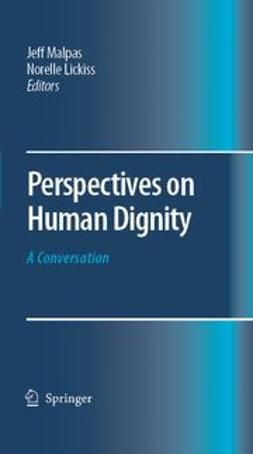
The idea of human dignity is central to any reflection on the nature of human worth, and has become a key concept in international and national law, in medical ethics, and in much philosophical and political theory. However, the idea is a complex one that also takes on many different forms. This collection explores the idea of human dignity as it arises within these many different domains, opening up the possibility of a multidisciplinary conversation that illuminates the concept itself, as well as the idea of the human to which it stands in an essential relation. The book is not only an intriguing and stimulating exploration of human dignity from a range of perspectives, but also provides an important resource for those who wish to take the exploration further.
With more than a billion people living on less than one dollar per day, human well-being is a core issue for both researchers and policymakers. The Millennium Development Goals are a powerful reminder of this point. We now know more about human well-being and the related concepts of poverty and inequality than ever before, as a result of many conceptual and methodological advances and better data. Yet despite this progress, the vitality of underlying concepts and the quality of data are repeatedly challenged and still leave much to be desired, particularly with regard to the worlds poorest countries. This book looks at advances in underlying well-being, poverty, and inequality concepts and corresponding empirical measures and case studies. Traditional monetary concepts and measurements are examined as well as educational achievement, longevity, health, and subjective well-being. Among the measures examined is the Human Development Index, which has done much to refocus attention on the importance of nonmonetary measures of human wellbeing. Chapters review pre-existing concepts and measures, with a view of future developments, while others propose new concepts or measures.
The fundamental question of the ethics of belief is “What ought one to believe?” According to the traditional view of evidentialism, the strength of one’s beliefs should be proportionate to the evidence. Conventional ways of defending and challenging evidentialism rely on the idea that what one ought to believe is a matter of what it is rational, prudent, ethical, or personally fulfilling to believe. Common to all these approaches is that they look outside of belief itself to determine what one ought to believe. In this book Jonathan Adler offers a strengthened version of evidentialism, arguing that the ethics of belief should be rooted in the concept of belief—that evidentialism is belief’s own ethics. A key observation is that it is not merely that one ought not, but that one cannot, believe, for example, that the number of stars is even. The “cannot” represents a conceptual barrier, not just an inability. Therefore belief in defiance of one’s evidence (or evidentialism) is impossible. Adler addresses such questions as irrational beliefs, reasonableness, control over beliefs, and whether justifying beliefs requires a foundation. Although he treats the ethics of belief as a central topic in epistemology, his ideas also bear on rationality, argument and pragmatics, philosophy of religion, ethics, and social cognitive psychology.
ما از اخلاق چه انتظاری داریم؟ این سوال شاید تاحدودی برای عموم مردم و یا متخصصان این رشته قابل پاسخ باشد؛ اینکه خوب بودن را به ما بیاموزد و در تنظیم روابط فردی م...

جشن کتاب تهران به ایستگاه سی و یکم رسیده است. حال و احوال نشر کتاب خوب نیست و باید فرهنگدوستان را به خرید و هدیه دادن کتاب ترغیب نمود. خانه اخلاقپژوهان جوان ب...

بنیاد کتابهای اخلاق اسلامی عمدتا پالایش جان از آلودگیها و آراستن آن به زیباییها است. اندیشه محوری این قبیل کتابها آن است که انسان فعلی آنی نیست که باید باشد...

-
0 Comments