Notice: تابع WP_Block_Type_Registry::register به طورنادرست فراخوانی شد. نامهای نوع بلوک نباید حروف بزرگ داشته باشند. لطفاً برای اطلاعات بیشتر، اشکال زدایی در وردپرس را مشاهده کنید. (این پیام در نگارش 5.0.0 افزوده شده است.) in /home/ethicsho/public_html/wp-includes/functions.php on line 5313
Warning: Use of undefined constant TDC_PATH_LEGACY - assumed 'TDC_PATH_LEGACY' (this will throw an Error in a future version of PHP) in /home/ethicsho/public_html/wp-content/plugins/td-composer/td-composer.php on line 109
Warning: Use of undefined constant TDSP_THEME_PATH - assumed 'TDSP_THEME_PATH' (this will throw an Error in a future version of PHP) in /home/ethicsho/public_html/wp-content/plugins/td-composer/td-composer.php on line 113 بایگانیهای Laziness/ Humor - خانه اخلاق پژوهان جوان Notice: Trying to access array offset on value of type bool in /home/ethicsho/public_html/wp-content/plugins/wp-ulike/inc/general-functions.php on line 807
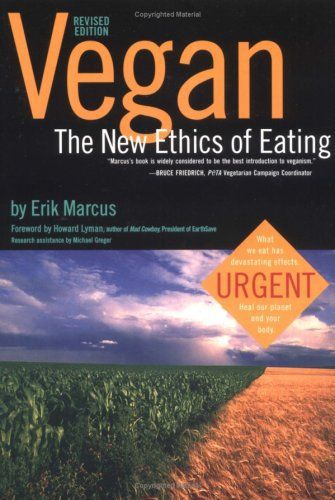
In this book, you will find the latest information about how what you eat affects your health, the environment, and the existence of the animals who share this planet, along with in-depth discussions of ground-breaking work by these internationally respected experts: Heart specialist, Dean Ornish, M.D.; Nutrition scientist, T. Colin Campbell, Ph.D.; Weight loss expert, Terry Shintani, M.D.; Farm Sanctuary founders, Gene and Lorri Bauston; Vegetarian nutritionist, Suzanne Havala, R.D.; Population analysis, David Pimentel, Ph.D.; Mad Cow disease expert, Stephen Dealler, M.D.; Rangeland activist, Lynn Jacobs.
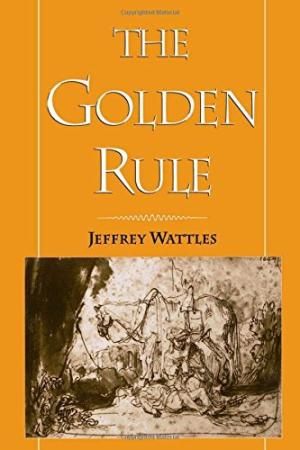
In an age plagued by selfishness, materialism, and violence, ethicists feel impelled to find a universal system of values. To arrive at such a “rule” requires that they struggle with a series of seemingly irreconcilable questions. First, are universal values possible in a pluralistic world, and how does one do justice to both human equality and to individual and cultural differences? How is one to understand the interface between religious moral teachings and the ethics of secular humanism? Finally, can such a system integrate moral intuition and moral reason? In the first scholarly book in English on the golden rule since the seventeenth century, Jeffrey Wattles demonstrates how a clear understanding of the psychological, philosophical, and religious ramifications of the rule can form the synthesis needed to solve these dilemas.The golden rule, “do to others as you would have others do to you,” is widely assumed to have a single meaning, shared by virtually all the world’s religions. It strikes the average person as intuitively true, though most modern philosophers reject it or recast it in more rational form. Wattles surveys the history of the golden rule and its spectrum of meanings in diverse contexts, ranging from Confusius to Plato and Aristotle, from classical Jewish literature to the New Testament. He also considers medieval, Reformation, and modern theological and philosophical responses and objections to the rule, as well as how some early twentieth-century American leaders have tried to use the rule. Wattles draws these diverse interpretation into a synthesis that responds, at the psychological, philosophical, and religious levels, to the challenges to moral living in any given culture. Emotionally, the rules counsels consideration for others feelings by asking that “you place yourself in their shoes.” Intellectually, it activates moral thinking about what is fair. At the same time, it retains a spiritual appeal as “the principle of the practice of the family of God.”Demonstrating how, despite its contentious history, this age-old ethical principle contiues to be relevant in dealing with contemporary issues, The Golden Rule should interest students and scholars working in religious studies, philosophy and ethics, and psychology, as well as anyone looking for an alternative to postmodern cynicism and alienation.
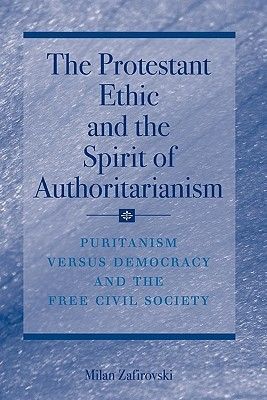
This book explores the historical and contemporary relationships of Protestant Puritanism to political and social authoritarianism. It focuses on Puritanism’s original, subsequent and modern influences on and legacies in political democracy and civil society within historically Puritan Western societies, with emphasis on Great Britain and particularly America, from the 17th to the 21th century. The Protestant Ethic and the Spirit of Authoritarianism: Puritanism, Democracy and Society’s importance and novelty lie in its original theoretical argument and empirical demonstration that Puritanism constitutes or reproduces political-social authoritarianism rather than liberal-secular political democracy and free civil society, contrary to the conventional wisdom in Puritan societies, especially America. The book’s methodological approach is thoroughly interdisciplinary by integrating methods, theories and data in sociology with those in other social sciences such as political science, history and economics. In addition, the book uses a comparative-historical method through comparisons of Western (and other) societies at various points of history in terms of the impact of Puritanism on authoritarianism.
Pioneers in the study of forgiveness, Robert Enright and Joanna North have compiled a collection of twelve essays ranging from a first-person account of the mother of a murdered child to an assessment of the United States’ post-war reconciliations with Germany and Vietnam. This book explores forgiveness in interpersonal relationships, family relationships, the individual and society relationship, and international relations through the eyes of philosophers and educators as well as a psychologist, police chief-turned-minister, law professor, sociologist, psychiatrist, social worker, and theologian.
ما از اخلاق چه انتظاری داریم؟ این سوال شاید تاحدودی برای عموم مردم و یا متخصصان این رشته قابل پاسخ باشد؛ اینکه خوب بودن را به ما بیاموزد و در تنظیم روابط فردی م...

جشن کتاب تهران به ایستگاه سی و یکم رسیده است. حال و احوال نشر کتاب خوب نیست و باید فرهنگدوستان را به خرید و هدیه دادن کتاب ترغیب نمود. خانه اخلاقپژوهان جوان ب...

بنیاد کتابهای اخلاق اسلامی عمدتا پالایش جان از آلودگیها و آراستن آن به زیباییها است. اندیشه محوری این قبیل کتابها آن است که انسان فعلی آنی نیست که باید باشد...

-
0 Comments