Notice: تابع WP_Block_Type_Registry::register به طورنادرست فراخوانی شد. نامهای نوع بلوک نباید حروف بزرگ داشته باشند. لطفاً برای اطلاعات بیشتر، اشکال زدایی در وردپرس را مشاهده کنید. (این پیام در نگارش 5.0.0 افزوده شده است.) in /home/ethicsho/public_html/wp-includes/functions.php on line 5313
Warning: Use of undefined constant TDC_PATH_LEGACY - assumed 'TDC_PATH_LEGACY' (this will throw an Error in a future version of PHP) in /home/ethicsho/public_html/wp-content/plugins/td-composer/td-composer.php on line 109
Warning: Use of undefined constant TDSP_THEME_PATH - assumed 'TDSP_THEME_PATH' (this will throw an Error in a future version of PHP) in /home/ethicsho/public_html/wp-content/plugins/td-composer/td-composer.php on line 113 بایگانیهای Law (Theology) - خانه اخلاق پژوهان جوان Notice: Trying to access array offset on value of type bool in /home/ethicsho/public_html/wp-content/plugins/wp-ulike/inc/general-functions.php on line 807
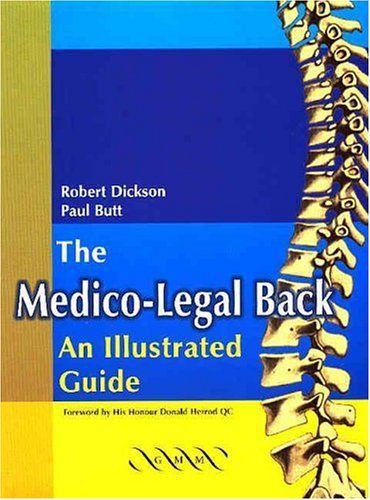
Back pain and back injury is an extremely common problem, producing chronic, debilitating symptoms for sufferers, and resulting in millions of pounds of lost revenue in absence from work and paid in compensation for spinal injuries. The Medico-Legal Back is the first book to address all aspects of the problem for a legal readership, in a clear, concise and reader-friendly style. It does away with the need to search for and then extract complex information from many different sources, and as such will be an indispensable guide to the problem for all lawyers, judges and medico-legal experts, as well as being of value to the orthopaedic surgeon with an interest in the spine. Of particular value is the use throughout the book of analogies drawn on anatomical technicalities and common movements, situations and incidents of everyday life. Fully illustrated throughout, with real scans using imaging modalities, and line diagrams generated especially for this title, The Medico-Legal Back should be on the shelves of all medico-legal personnel at all levels of expertise and experience.
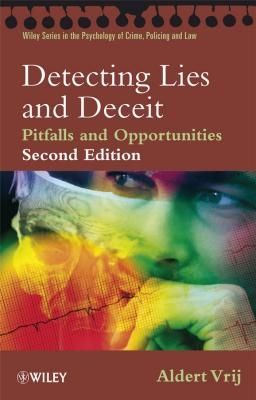
Why do people lie? Do gender and personality differences affect how people lie? How can lies be detected? Detecting Lies and Deceit provides the most comprehensive review of deception to date. This revised edition provides an up-to-date account of deception research and discusses the working and efficacy of the most commonly used lie detection tools, including: Behaviour Analysis Interview Statement Validity Assessment Reality Monitoring Scientific Content Analysis Several different polygraph tests Voice Stress Analysis Thermal Imaging EEG-P300 Functional Magnetic Resonance Imaging (fMRI) All three aspects of deception are covered: nonverbal cues, speech and written statement analysis and (neuro)physiological responses. The most common errors in lie detection are discussed and practical guidelines are provided to help professionals improve their lie detection skills. Detecting Lies and Deceit is a must-have resource for students, academics and professionals in psychology, criminology, policing and law. Published in the Wiley Series in the Psychology of Crime, Policing and Law Seried Editors: Professor Graham Davies and Professor Ray Bull, University of Leicester, UK
Oxford Studies in Metaethics is the only publication devoted exclusively to original philosophical work in the foundations of ethics. It provides an annual selection of much of the best new scholarship being done in the field. Its broad purview includes work being done at the intersection of ethical theory and metaphysics, epistemology, philosophy of language, and philosophy of mind. The essays included in the series provide an excellent basis for understanding recent developments in the field; those who would like to acquaint themselves with the current state of play in metaethics would do well to start here.
This book comes against the unchallenged methods in medicine, such as “evidence-based medicine,” which claim to be, but often are not, scientific. It completes medical care by adding the comprehensive humanistic perspectives and philosophy of medicine.No specific or absolute recommendations are given regarding medical treatment, moral approaches, or legal advice. Given rather is discussion about each issue involved and the strongest arguments indicated. Each argument is subject to further critical analysis. This is the same position as with any philosophical, medical or scientific view.The argument that decision-making in medicine is inadequate unless grounded on a philosophy of medicine is not meant to include all of philosophy and every philosopher. On the contrary, it includes only sound, practical and humanistic philosophy and philosophers who are creative and critical thinkers and who have concerned themselves with the topics relevant to medicine. These would be those philosophers who engage in practical philosophy, such as the pragmatists, humanists, naturalists, and ordinary-language philosophers.A new definition of our own philosophy of life emerges and it is necessary to have one. Good lifestyle no longer means just abstaining from cigarettes, alcohol and getting exercise. It also means living a holistic life, which includes all of one’s thinking, personality and actions.This book also includes new ways of thinking. In this regard the “Metaphorical Method” is explained, used, and exemplified in depth, for example in the chapters on care, egoism and altruism, letting die, etc.
The fox knows many things, the Greeks said, but the hedgehog knows one big thing. In his most comprehensive work the author argues that value in all its forms is one big thing: that what truth is, life means, morality requires, and justice demands are different aspects of the same large question. He develops original theories on a great variety of issues very rarely considered in the same book: moral skepticism, literary, artistic, and historical interpretation, free will, ancient moral theory, being good and living well, liberty, equality, and law among many other topics. What we think about any one of these must stand up, eventually, to any argument we find compelling about the rest. Skepticism in all its forms, philosophical, cynical, or post-modern, threatens that unity. The Galilean revolution once made the theological world of value safe for science. But the new republic gradually became a new empire: the modern philosophers inflated the methods of physics into a totalitarian theory of everything. They invaded and occupied all the honorifics, reality, truth, fact, ground, meaning, knowledge, and being, and dictated the terms on which other bodies of thought might aspire to them, and skepticism has been the inevitable result. The author feels we need a new revolution, and that we must make the world of science safe for value.
ما از اخلاق چه انتظاری داریم؟ این سوال شاید تاحدودی برای عموم مردم و یا متخصصان این رشته قابل پاسخ باشد؛ اینکه خوب بودن را به ما بیاموزد و در تنظیم روابط فردی م...

جشن کتاب تهران به ایستگاه سی و یکم رسیده است. حال و احوال نشر کتاب خوب نیست و باید فرهنگدوستان را به خرید و هدیه دادن کتاب ترغیب نمود. خانه اخلاقپژوهان جوان ب...

بنیاد کتابهای اخلاق اسلامی عمدتا پالایش جان از آلودگیها و آراستن آن به زیباییها است. اندیشه محوری این قبیل کتابها آن است که انسان فعلی آنی نیست که باید باشد...

-
0 Comments