Notice: تابع WP_Block_Type_Registry::register به طورنادرست فراخوانی شد. نامهای نوع بلوک نباید حروف بزرگ داشته باشند. لطفاً برای اطلاعات بیشتر، اشکال زدایی در وردپرس را مشاهده کنید. (این پیام در نگارش 5.0.0 افزوده شده است.) in /home/ethicsho/public_html/wp-includes/functions.php on line 5313
Warning: Use of undefined constant TDC_PATH_LEGACY - assumed 'TDC_PATH_LEGACY' (this will throw an Error in a future version of PHP) in /home/ethicsho/public_html/wp-content/plugins/td-composer/td-composer.php on line 109
Warning: Use of undefined constant TDSP_THEME_PATH - assumed 'TDSP_THEME_PATH' (this will throw an Error in a future version of PHP) in /home/ethicsho/public_html/wp-content/plugins/td-composer/td-composer.php on line 113 بایگانیهای Law / Constitutional - خانه اخلاق پژوهان جوان Notice: Trying to access array offset on value of type bool in /home/ethicsho/public_html/wp-content/plugins/wp-ulike/inc/general-functions.php on line 807
This book traces the development of Marx’s ethics as they underwent various shifts and changes during different periods of his thought. In his early writings, his ethics were based on a concept of essence much like Aristotle’s, which Marx tried to link to a principle of universalization similar to Kant’s “categorical imperative.” In the period 1845-46, Marx abandoned this view, holding morality to be incompatible with his historical materialism. In the later work he was less of a determinist. Though he no longer wished to reject morality, he did want to transcend a morality of burdensome obligation and constraint in order to realize a community built upon spontaneous bonds of solidarity.
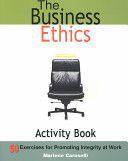
Companies in every industry are recommitting themselves to creating environments of honesty and renewing trust with their customers, employees, and the general public. But it’s not as easy as it sounds. Even in “good” organizations, proactive ethics initiatives are still a very new concept, and the question remains, “How do we do this?” The answer can be found in the 50 exercises in The Business Ethics Activity Book. These ready-to-use, easily adaptable activities will engage individuals, teams, and groups and generate the kind of thought and discussion that ultimately leads to mutual respect and an atmosphere in which ethical behavior defines organizational culture. Book jacket.
We live in a ‘bimoral’ society, in which people govern their lives by two contrasting sets of principles. On the one hand there are the principles associated with traditional morality. Although these allow a modicum of self-interest, their emphasis is on our duties and obligations to others: to treat people honestly and with respect, to treat them fairly and without prejudice, to help and are for them when needed, and ultimately, to put their needs above their own. On the other hand there are the principles associated with the entrepreneurial self-interest. These also impose obligations, but of a much more limited kind. Their emphasis is competitive rather than cooperative: to advance our own interests rather than to meet the needs of others. Both sets of principles have always been present in society but in recent years, traditional moral authorities have lost much of their force and the morality of self-interest has acquired a much greater social legitimacy, over a much wider field of behavior, than ever before. The result of this is that in many situations it is no longer at all apparent which set of principles should take precedence. In this book, John Hendry traces the cultural and historical origins of the ‘bimoral’ society have also led to new, more flexible forms of organizing, which have released people’s entrepreneurial energies and significantly enhanced the creative capacities of business. Working within these organizations, however is fraught with moral tensions as obligations and self-interest conflict and managers are pulled in all sorts of different directions. Managing them successfully poses major new challenges of leadership, and ‘moral’ management, as the technical problem-solving that previously characterized managerial work is increasingly accomplished by technology and market mechanisms. The key role of management becomes the political and moral one of determining purposes and priorities, reconciling divergent interests, and nurturing trust in interpersonal relationships. Exploring these tensions and challenges, Hendry identifies new issues of contemporary management and puts recognized issues into context. He also explores the challenges posed for a post-traditional society as it seeks to regulate and govern an increasingly powerful and global business sector.
ما از اخلاق چه انتظاری داریم؟ این سوال شاید تاحدودی برای عموم مردم و یا متخصصان این رشته قابل پاسخ باشد؛ اینکه خوب بودن را به ما بیاموزد و در تنظیم روابط فردی م...

جشن کتاب تهران به ایستگاه سی و یکم رسیده است. حال و احوال نشر کتاب خوب نیست و باید فرهنگدوستان را به خرید و هدیه دادن کتاب ترغیب نمود. خانه اخلاقپژوهان جوان ب...

بنیاد کتابهای اخلاق اسلامی عمدتا پالایش جان از آلودگیها و آراستن آن به زیباییها است. اندیشه محوری این قبیل کتابها آن است که انسان فعلی آنی نیست که باید باشد...

-
0 Comments