Notice: تابع WP_Block_Type_Registry::register به طورنادرست فراخوانی شد. نامهای نوع بلوک نباید حروف بزرگ داشته باشند. لطفاً برای اطلاعات بیشتر، اشکال زدایی در وردپرس را مشاهده کنید. (این پیام در نگارش 5.0.0 افزوده شده است.) in /home/ethicsho/public_html/wp-includes/functions.php on line 5313
Warning: Use of undefined constant TDC_PATH_LEGACY - assumed 'TDC_PATH_LEGACY' (this will throw an Error in a future version of PHP) in /home/ethicsho/public_html/wp-content/plugins/td-composer/td-composer.php on line 109
Warning: Use of undefined constant TDSP_THEME_PATH - assumed 'TDSP_THEME_PATH' (this will throw an Error in a future version of PHP) in /home/ethicsho/public_html/wp-content/plugins/td-composer/td-composer.php on line 113 بایگانیهای Law And Gospel - خانه اخلاق پژوهان جوان Notice: Trying to access array offset on value of type bool in /home/ethicsho/public_html/wp-content/plugins/wp-ulike/inc/general-functions.php on line 807
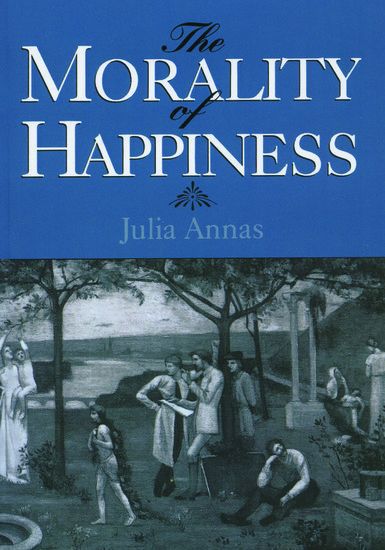
Ancient ethical theories, based on the notions of virtue and happiness, have struck many as an attractive alternative to modern theories. But we cannot find out whether this is true until we understand ancient ethics–and to do this we need to examine the basic structure of ancient ethical theory, not just the details of one or two theories. In this book, Annas brings together the results of a wide-ranging study of ancient ethical philosophy and presents it in a way that is easily accessible to anyone with an interest in ancient or modern ethics. She examines the fundamental notions of happiness and virtue, the role of nature in ethical justification and the relation between concern for self and concern for others. Her careful examination of the ancient debates and arguments shows that many widespread assumptions about ancient ethics are quite mistaken. Ancient ethical theories are not egoistic, and do not depend for their acceptance on metaphysical theories of a teleological kind. Most centrally, they are recognizably theories of morality, and the ancient disputes about the place of virtue in happiness can be seen as akin to modern disputes about the demands of morality.
This Encyclopedia considers both the professional ethics of science and technology, and the ethical and political issues raised by science and technology in an increasingly complex and global society. This broad coverage supports the numerous courses in applied and professional ethics and policy related to the practice of science and technology in education.
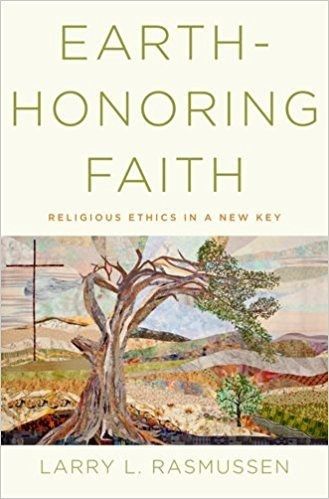
Grand Winner of the 2014 Nautilus Book Awards Thoughtful observers agree that the planetary crisis we now face-climate change; species extinction; the destruction of entire ecosystems; the urgent need for a more just economic-political order-is pushing human civilization to a radical turning point: change or perish. But precisely how to change remains an open question. In Earth-honoring Faith, Larry Rasmussen answers that question with a dramatically new way of thinking about human society, ethics, and the ongoing health of our planet. Rejecting the modern assumption that morality applies to human society alone, Rasmussen insists that we must derive a spiritual and ecological ethic that accounts for the well-being of all creation, as well as the primal elements upon which it depends: earth, air, fire, water, and sunlight. He argues that good science, necessary as it is, will not be enough to inspire fundamental change. We must draw on religious resources as well to make the difficult transition from an industrial-technological age obsessed with consumption to an ecological age that restores wise stewardship of all life. Earth-honoring Faith advocates an alliance of spirituality and ecology, in which the material requirements for planetary life are reconciled with deep traditions of spirituality across religions, traditions that include mysticism, sacramentalism, prophetic practices, asceticism, and the cultivation of wisdom. It is these shared spiritual practices that can produce a chorus of world faiths to counter the consumerism, utilitarianism, alienation, oppression, and folly that have pushed us to the brink. Written with passionate commitment and deep insight, Earth-honoring Faith reminds us that we must live in the present with the knowledge that the eyes of future generations will look back at us.
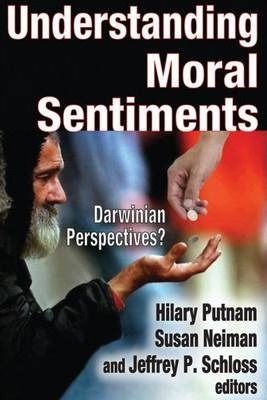
This volume brings together leading scholars to examine Darwinian perspectives on morality from widely ranging disciplines: evolutionary biology, anthropology, psychology, philosophy, and theology. They bring not only varied expertise, but also contrasting judgments about which, and to what extent, differing evolutionary accounts explain morality. They also consider the implications of these explanations for a range of religious and non-religious moral traditions. The book first surveys scientific understandings of morality. Chapters by Joan Silk and Christopher Boehm ask what primatology and anthropology tell us about moral origins. Daniel Batson and Stephen Pinker provide contrasting accounts of how evolution shapes moral psychology, and Jeffrey Schloss assesses a range of biological proposals for morality and altruism. Turning to philosophical issues, Martha Nussbaum argues that recognizing our animal nature does not threaten morality. Stephen Pope and Timothy Jackson explore how Darwinian accounts of moral goodness both enrich and require understandings outside the sciences. Hilary Putnam and Susan Neiman ask whether Darwin is truly useful for helping us to understand what morality actually is and how it functions. The book is a balanced effort to assess the scientific merits and philosophical significance of emerging Darwinian perspectives on morality. how Darwinian accounts of moral goodness both enrich and require understandings outside the sciences. Hilary Putnam and Susan Neiman ask whether Darwin is truly useful for helping us to understand what morality actually is and how it functions. The book is a balanced effort to assess the scientific merits and philosophical significance of emerging Darwinian perspectives on morality.
Decades of work in psychology labs have vastly enhanced our knowledge about how children perceive, think, and reason. But it has also encouraged a distorted view of children, argues psychologist Susan Engel in this provocative and passionate book–a view that has affected every parent who has tried to debate with a six-year-old. By focusing on the thinking processes prized by adults, too many expert opinions have rendered children as little adults. What has been lost is what is truly unique and mysterious–the childlike quality of a child’s mind. Engel draws on keen observations and descriptive research to take us into the nearly forgotten, untidy, phantasmagorical world of children’s inner lives. She reminds us that children fuse thought and emotion, play and reality; they swing wildly between different ways of interpreting and acting in the world. But just as a gawky child may grow into a beauty, illogical and sometimes maddening childishness can foreshadow great adult ability. Engel argues that the “scientist in a crib” view encourages parents and teachers to expect more logical reasoning and emotional self-control from children than they possess. She provides a concise and valuable overview of what modern developmental psychologists have learned about children’s developing powers of perception and capacity for reasoning, but also suggests new ways of studying children that better capture the truth about their young minds.
ما از اخلاق چه انتظاری داریم؟ این سوال شاید تاحدودی برای عموم مردم و یا متخصصان این رشته قابل پاسخ باشد؛ اینکه خوب بودن را به ما بیاموزد و در تنظیم روابط فردی م...

جشن کتاب تهران به ایستگاه سی و یکم رسیده است. حال و احوال نشر کتاب خوب نیست و باید فرهنگدوستان را به خرید و هدیه دادن کتاب ترغیب نمود. خانه اخلاقپژوهان جوان ب...

بنیاد کتابهای اخلاق اسلامی عمدتا پالایش جان از آلودگیها و آراستن آن به زیباییها است. اندیشه محوری این قبیل کتابها آن است که انسان فعلی آنی نیست که باید باشد...

-
0 Comments