


Notice: تابع WP_Block_Type_Registry::register به طورنادرست فراخوانی شد. نامهای نوع بلوک نباید حروف بزرگ داشته باشند. لطفاً برای اطلاعات بیشتر، اشکال زدایی در وردپرس را مشاهده کنید. (این پیام در نگارش 5.0.0 افزوده شده است.) in /home/ethicsho/public_html/wp-includes/functions.php on line 5313
Warning: Use of undefined constant TDC_PATH_LEGACY - assumed 'TDC_PATH_LEGACY' (this will throw an Error in a future version of PHP) in /home/ethicsho/public_html/wp-content/plugins/td-composer/td-composer.php on line 109
Warning: Use of undefined constant TDSP_THEME_PATH - assumed 'TDSP_THEME_PATH' (this will throw an Error in a future version of PHP) in /home/ethicsho/public_html/wp-content/plugins/td-composer/td-composer.php on line 113 بایگانیهای Integrity - خانه اخلاق پژوهان جوان Notice: Trying to access array offset on value of type bool in /home/ethicsho/public_html/wp-content/plugins/wp-ulike/inc/general-functions.php on line 807
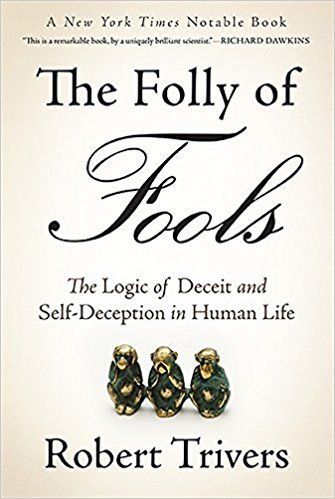
Whether it’s in a cockpit at takeoff or the planning of an offensive war, a romantic relationship or a dispute at the office, there are many opportunities to lie and self-deceive?but deceit and self-deception carry the costs of being alienated from reality and can lead to disaster. So why does deception play such a prominent role in our everyday lives? In short, why do we deceive? In his bold new work, prominent biological theorist Robert Trivers unflinchingly argues that self-deception evolved in the service of deceit?the better to fool others. We do it for biological reasons?in order to help us survive and procreate. From viruses mimicking host behavior to humans misremembering (sometimes intentionally) the details of a quarrel, science has proven that the deceptive one can always outwit the masses. But we undertake this deception at our own peril. Trivers has written an ambitious investigation into the evolutionary logic of lying and the costs of leaving it unchecked.
Covering an important theme in Humean studies, this book focuses on Humes hugely influential account of the relation between reason and morality, found in book three of his Treatise of Human Nature. Arguing that this account includes a fundamental contradiction that has gone unnoticed in modern debate, this fascinating volume contains a refreshing combination of historical-scholarly work and contemporary analysis that seeks to expose this contradiction and therefore provide a significant contribution to current scholarship in the area. Beginning by pointing out a contradiction in the intermediary premise concerning whether reason can influence action, or is wholly powerless, the book then moves on to draw out the consequences for recent meta-ethics of the failure to acknowledge this contradiction. Finally, Botros highlights the root of the arguments power in an article of naturalistic dogma. A significant and thought-provoking addition to this popular field of study, Hume,Reason and Morality is undoubtedly an important resource for moral philosophers interested in meta-ethics and practical reason, as well as Humean scholars.
In the immediate future we are likely to witness significant developments in human genetic science. It is therefore of critical importance that Christian ethics engages with the genetics debate, since it affects not just the way we perceive ourselves and the natural world, but also has wider implications for our society. This book considers ethical issues arising out of specific practices in human genetics, including genetic screening, gene patenting, gene therapy, genetic counselling as well as feminist concerns. Genetics and Christian Ethics argues for a particular theo-ethical approach that derives from a modified version of virtue ethics, drawing particularly on a Thomistic understanding of the virtues, especially prudence or practical wisdom and justice. The book demonstrates that a theological voice is highly relevant to contested ethical debates about genetics.
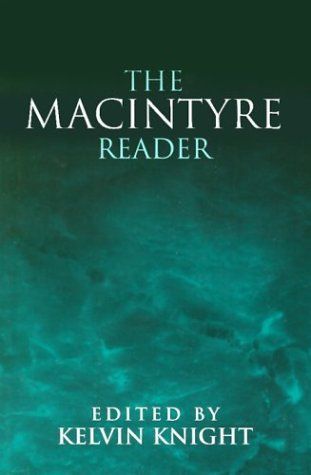
Alasdair MacIntyre is one of the most controversial philosophers and social theorists of our time. He opposes liberalism and postmodernism with the teleological arguments of an updated Thomistic Aristotelianism. It is this tradition, he claims, which presents the best theory so far about the nature of rationality, morality and politics. This is the first Reader of MacIntyre’s work.
ما از اخلاق چه انتظاری داریم؟ این سوال شاید تاحدودی برای عموم مردم و یا متخصصان این رشته قابل پاسخ باشد؛ اینکه خوب بودن را به ما بیاموزد و در تنظیم روابط فردی م...

جشن کتاب تهران به ایستگاه سی و یکم رسیده است. حال و احوال نشر کتاب خوب نیست و باید فرهنگدوستان را به خرید و هدیه دادن کتاب ترغیب نمود. خانه اخلاقپژوهان جوان ب...

بنیاد کتابهای اخلاق اسلامی عمدتا پالایش جان از آلودگیها و آراستن آن به زیباییها است. اندیشه محوری این قبیل کتابها آن است که انسان فعلی آنی نیست که باید باشد...

-
0 Comments