Notice: تابع WP_Block_Type_Registry::register به طورنادرست فراخوانی شد. نامهای نوع بلوک نباید حروف بزرگ داشته باشند. لطفاً برای اطلاعات بیشتر، اشکال زدایی در وردپرس را مشاهده کنید. (این پیام در نگارش 5.0.0 افزوده شده است.) in /home/ethicsho/public_html/wp-includes/functions.php on line 5313
Warning: Use of undefined constant TDC_PATH_LEGACY - assumed 'TDC_PATH_LEGACY' (this will throw an Error in a future version of PHP) in /home/ethicsho/public_html/wp-content/plugins/td-composer/td-composer.php on line 109
Warning: Use of undefined constant TDSP_THEME_PATH - assumed 'TDSP_THEME_PATH' (this will throw an Error in a future version of PHP) in /home/ethicsho/public_html/wp-content/plugins/td-composer/td-composer.php on line 113 بایگانیهای Indians Of North America - Saskatchewan - خانه اخلاق پژوهان جوان Notice: Trying to access array offset on value of type bool in /home/ethicsho/public_html/wp-content/plugins/wp-ulike/inc/general-functions.php on line 807
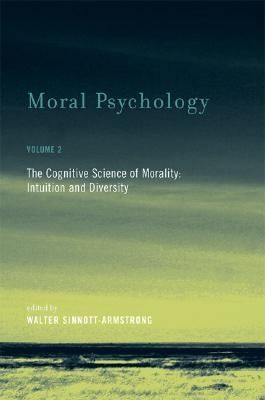
For much of the twentieth century, philosophy and science went their separate ways. In moral philosophy, fear of the so-called naturalistic fallacy kept moral philosophers from incorporating developments in biology and psychology. Since the 1990s, however, many philosophers have drawn on recent advances in cognitive psychology, brain science, and evolutionary psychology to inform their work. This collaborative trend is especially strong in moral philosophy, and these three volumes bring together some of the most innovative work by both philosophers and psychologists in this emerging interdisciplinary field.Contributors to Volume 2:Fredrik Bjorklund (University of Lund), James Blair (National Institute of Mental Health), Paul Bloomfield (University of Connecticut), Fiery Cushman (Harvard University), Justin D’Arms (Ohio State University), John Deigh (University of Texas at Austin), John Doris (Washington University), Julia Driver (Dartmouth College), Ben Fraser (Australian National University Research School of Social Science), Gerd Gigerenzer (Max Plank Institute), Michael Gill (University of Arizona), Jonathan Haidt (University of Virginia) Marc Hauser (Harvard University), Daniel Jacobson (Bowling Green State University), Joshua Knobe (University of North Carolina at Chapel Hill), Brian Leiter (University of Texas at Austin), Don Loeb (University of Vermont), Ron Mallon (University of Utah), Darcia Narvaez (University of Notre Dame), Shaun Nichols (University of Arizona), Alexandra Plakias (University of Michigan), Jesse Prinz (University of North Carolina at Chapel Hill), Geoffrey Sayre-McCord (University of North Carolina, Chapel Hill), Russ Shafer-Landau (University of Wisconsin), Walter Sinnott-Armstrong (Dartmouth College), Cass Sunstein (University of Chicago), William Tolhurst (University of Northern Illinois), Liane Young (Harvard University).
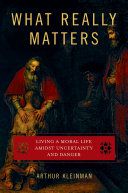
Life can sometimes thrust us into troubling circumstances that threaten to undo our thin mastery over those things that matter most. In this moving and thought-provoking volume, Arthur Kleinman tells the unsettling stories of a handful of men and women, some of whom have lived through some of the most fundamental transitions of the turbulent twentieth century. Here we meet an American veteran of World War II, tortured by the memory of the atrocities he committed while a soldier in the Pacific. A French-American woman aiding refugees in sub-Saharan Africa, facing the utter chaos of a society where life has become meaningless. A Chinese doctor trying to stay alive during Mao’s cultural revolution, discovering that the only values that matter are those that get you beyond the next threat. These individuals have found themselves caught in circumstances where those things that matter most to them–their desires, status, relationships, resources, political and religious commitments, life itself–have been challenged by the society around them. Each is caught up in existential moral experiences that define what it means to be human, with an intensity that makes their life narratives arresting. Their stories reveal just how malleable moral life is, and just how central danger is to our worlds and our livelihood. Indeed, Kleinman offers in this book a groundbreaking approach to ethics, examining “who we are” through some of the most disturbing issues of our time–war, globalization, poverty, social injustice, sex, and religion–all in the context of actual lived moral life. Here then are riveting stories of ordinary men and women, in extraordinary times and threatening situations, making sense of their worlds and facing profound challenges to what matters most in their lives.
The Latin root of the English word culture ties together both worship and the tilling of the soil. In each case, the focus is the same: a rightly-directed culture produces either a bountiful harvest or falls short of the mark, materially or spiritually. This volume critically explores the nature and depth of our contemporary cultural crisis: its lack of traditional orientation and moral understanding. Prime among the issues at stake are the meaning and significance of birth, copulation, suffering, and death, expressed in debates regarding human embryo-experimentation and stem cell research, the character of moral and scientific norms, as well as more fundamentally, the character of an adequate epistemology for coming to appreciate the deep nature of reality and its normative implications. Given varying background ontological, epistemological, and axiological presuppositions, different moral positions and political objections will appear as not merely morally permissible but as socially and politically obligatory. The volume is addressed to philosophers, theologians, bioethicists and public policy professionals as it critically assesses the increasing void between the traditional Christian metaphysical and moral understandings that guided the flourishing of Christian culture and today’s very secular, and frequently empty, cultural backdrop.
Virtue epistemology is an exciting, new movement receiving an enormous amount of attention from top epistemologists and ethicists; this pioneering volume reflects the best work in that vein. Featuring superb writing from contemporary American philosophers, it includes thirteen never before published essays that focus on the place of the concept of virtue in epistemology. In recent years, philosophers have been debating how this concept functions in definitions of knowledge. They question the extent to which knowledge is both normative (i.e., with a moral component) and non-normative, and many of them dispute the focus on justification, which has proven to be too restrictive. Epistemologists are searching for a way to combine the traditional concepts of ethical theory with epistemic concepts; the result is a new approach called virtue epistemology–one that has established itself as a particularly favorable alternative. Containing the fruits of recent study on virtue epistemology, this volume offers a superb selection of contributors–including Robert Audi, Simon Blackburn, Richard Foley, Alvin Goldman, Hilary Kornblith, Keith Lehrer, Ernest Sosa, and Linda Zagzebski–whose work brings epistemology into dialogue with everyday issues.
ما از اخلاق چه انتظاری داریم؟ این سوال شاید تاحدودی برای عموم مردم و یا متخصصان این رشته قابل پاسخ باشد؛ اینکه خوب بودن را به ما بیاموزد و در تنظیم روابط فردی م...

جشن کتاب تهران به ایستگاه سی و یکم رسیده است. حال و احوال نشر کتاب خوب نیست و باید فرهنگدوستان را به خرید و هدیه دادن کتاب ترغیب نمود. خانه اخلاقپژوهان جوان ب...

بنیاد کتابهای اخلاق اسلامی عمدتا پالایش جان از آلودگیها و آراستن آن به زیباییها است. اندیشه محوری این قبیل کتابها آن است که انسان فعلی آنی نیست که باید باشد...

-
0 Comments