Notice: تابع WP_Block_Type_Registry::register به طورنادرست فراخوانی شد. نامهای نوع بلوک نباید حروف بزرگ داشته باشند. لطفاً برای اطلاعات بیشتر، اشکال زدایی در وردپرس را مشاهده کنید. (این پیام در نگارش 5.0.0 افزوده شده است.) in /home/ethicsho/public_html/wp-includes/functions.php on line 5313
Warning: Use of undefined constant TDC_PATH_LEGACY - assumed 'TDC_PATH_LEGACY' (this will throw an Error in a future version of PHP) in /home/ethicsho/public_html/wp-content/plugins/td-composer/td-composer.php on line 109
Warning: Use of undefined constant TDSP_THEME_PATH - assumed 'TDSP_THEME_PATH' (this will throw an Error in a future version of PHP) in /home/ethicsho/public_html/wp-content/plugins/td-composer/td-composer.php on line 113 بایگانیهای Humility - خانه اخلاق پژوهان جوان Notice: Trying to access array offset on value of type bool in /home/ethicsho/public_html/wp-content/plugins/wp-ulike/inc/general-functions.php on line 807
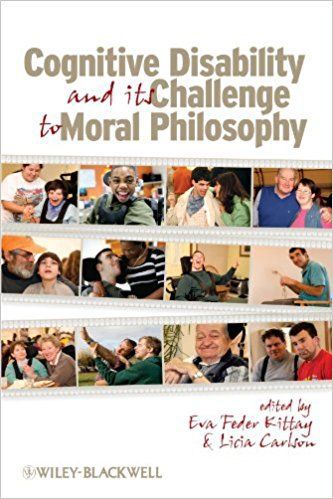
We have been taught that all humans share intrinsic qualities that lend them a common dignity. Philosophers conceive of a certain level of cognitive capacity as the very mark of humanity, and extend the mantle of equal moral fellowship to these “persons.” But what of individuals with diminished cognitive abilities? Cognitive disability poses significant challenges to these fundamental philosophical concepts, prompting a variety of difficult questions. Should those with cognitive disabilities be excluded from the protections and responsibilities we routinely assign to “persons”? Are we forced to reconsider the very concept of “personhood”? How should the interests of people with cognitive disabilities and their caregivers be represented politically? Who is responsible for guaranteeing their care? And to what extent ought they to be granted autonomy?Cognitive Disability and Its Challenge to Moral Philosophy addresses these concerns in a series of thought-provoking Chapters contributed by some of the most prominent moral philosophers of our time, as well as clinicians and medical historians. Collectively, the Chapters represent an important milestone in contemporary thinking about ethical considerations relating to people with cognitive disabilities.Eva Feder Kittay is Distinguished Professor of Philosophy, Women’s Studies Affiliate, and Senior Fellow of the Center for Medical Humanities, Bioethics and Compassionate Care at Stony Brook University, New York. Her published works include Love’s Labor: Essays on Women, Equality, and Dependency (1998); The Blackwell Guide to Feminist Philosophy (co-edited with Linda Martin Alcoff, Wiley-Blackwell, 2006); The Subject of Care: Feminist Perspectives on Dependency (with Ellen K. Feder, 2003); and Metaphor: Its Cognitive Force and Linguistic Structure (1990). She is also the mother of a cognitively disabled woman.Licia Carlson is an assistant professor of philosophy at Providence College. Her research interests include twentieth-century French philosophy, ethics, feminist theory, philosophy and disability, and the philosophy of music. She has published articles on bioethics, feminist theory, disability, and the works of Michel Foucault, and is the author of The Faces of Intellectual Disability: Philosophical Reflections (2010).
This provocative, lucidly written reconstruction of utilitarianism focuses on the practical constraints involved in ethical choice: information may be inadequate, and understanding of causes and effects may be limited. Good decision making may be especially constrained if other people are closely involved in determining an outcome. Hardin demonstrates that many of these structural issues can and should be distinguished from the thornier problems of utilitarian value theory, and he is able to show what kinds of moral conclusions we can reach within the limits of reason.
Perfect as a textbook yet excellent for lay readers, this updated edition builds a positive case for Christianity by applying the latest thought to core theological themes. J. Gresham Machen once said, “False ideas are the greatest obstacles to the reception of the gospel”—which makes apologetics that much more important. Wanting to engage not just academics and pastors but Christian laypeople and seekers, William Lane Craig has revised and updated key sections in this third edition of his classic text to reflect the latest work in astrophysics, philosophy, probability calculus, the arguments for the existence of God, and Reformed epistemology. His approach—that of positive apologetics—gives careful attention to crucial questions and concerns, including: the relationship of faith and reason, the existence of God, the problems of historical knowledge and miracles, the personal claims of Christ, and the historicity of the resurrection of Jesus. He shows that there is good reason to think Christianity is true. As Craig says, “If you have a sound and persuasive case for Christianity, you don’t have to become an expert in comparative religions and Christian cults. A positive justification of the Christian faith automatically overwhelms all competing world views lacking an equally strong case.” “It is hard to overstate the impact that William Lane Craig has had for the cause of Christ. He is simply the finest Christian apologist of the last half century and his academic work justifies ranking him among the top 1 percent of practicing philosophers in the Western world. Besides that, he is a winsome ambassador for Christ, an exceptional debater, and a man with the heart of an evangelist. I know him well and can say that he lives a life of integrity and lives out what he believes. I do not know of a single thinker who has done more to raise the bar of Christian scholarship in our generation than Craig. He is one of a kind and I thank God for his life and work.” J. P. Moreland, Distinguished Professor of Philosophy, Talbot School of Theology “In admirably clear prose, Professor Craig presents important philosophical and historical issues relevant to Christian beliefs. With extraordinary erudition, he sketches the arguments of major thinkers of both past centuries and recent times, and he presents his own reasons for concluding that traditional Christian doctrines about God and Jesus are credible. His replies to those skeptical of the existence of God, of historical knowledge, of the occurrence of miracles, and in particular of the resurrection of Jesus, take debates over those difficult topics an important stage further. Here is an admirable defense of basic Christian faith.” C. Behan McCullagh, Philosophy Program, La Trobe University “Although my philosophical predilections often differ from Dr. Craig’s (as they do from those of everyone else I know), I have found that he is very knowledgeable about science and current cosmological ideas. He provides interesting insights into their implications for our shared Christian beliefs.” Don Nelson Page, Professor of Physics, University of Alberta “Bill Craig is one of my personal heroes! He is among today’s finest defenders of Christianity. He offers a powerful mix of authentic faith, intellectual firepower, debating skill, and the gentleness and respect that the Bible requires.” Lee Strobel, Best-selling author of The Case for Christ and The Case for a Creator “Especially regarding his breadth of scholarship, no contemporary Christian apologist surpasses Bill Craig. Some of Bill’s wide range of interests are evident in this third edition of Reasonable Faith. To be introduced to crucial topics such as God’s existence, creation, Scripture, and the historicity of Jesus, including his deity and resurrection, all under one cover, is an enormous treat. Not a single student of apologetics should miss this volume by a major scholar. Crossway Books deserves much credit for continuing its strong tradition of Christian textbooks.” Gary R. Habermas, Distinguished Research Professor and Chair, Department of Philosophy and Theology, Liberty University “As a former student and now collaborator with him in writing and in ministry, I am one of the numerous beneficiaries indebted to William Craig and his stellar work in the philosophy of religion and Christian apologetics. He has been a model, a mentor, and an inspiration through his scholarship and his commitment to God’s kingdom. His newly-updated Reasonable Faith continues to be the gold standard for apologetics texts: vital historical discussion of issues and arguments; rigorous reasoning and state-of-the art scholarship; and highly relevant, personal application—all permeated with an evident passion for the cause of Christ.” Paul Copan, Professor and Pledger Family Chair of Philosophy and Ethics, Palm Beach Atlantic University; President, Evangelical Philosophical Society “William Lane Craig is both an absolutely topnotch, world-class scholar and a man with a warm heart for apologetics and evangelism. This astute book combines both passions. It gives rigorous and well-documented arguments which are aimed at producing a rational faith that can be commended and defended before the watching and waiting world. Bravo (for the third time)!” Douglas Groothuis, Professor of Philosophy, Denver Seminary “William Lane Craig is not only a world-class philosopher—widely recognized as such in the philosophical community—but he has been a leading defender of the Christian faith for over a quarter of a century. Reasonable Faith includes, in concise and accessible form, some of the best of the best of his thinking on vital areas of apologetics. Powerful, persuasive, and relevant, Craig demonstrates that central Christian beliefs, such as the existence of a personal, intelligent, and exceedingly powerful God, miracles, and Jesus’ Messianic claims and resurrection, are reasonable to believe and based on solid evidence. You won’t find a better book in support of the Christian faith.” Chad Meister, Director of Philosophy, Bethel College; author of Building Belief “For years I’ve recommended Reasonable Faith to my students as the best single-volume apologetic. And now it is even better! Craig’s analysis of the latest scientific arguments and his response to the New Atheists makes it a must-have for those interested in thoroughly defending the cause of Christ.” Clay Jones, Assistant Professor of Christian Apologetics, Christian Apologetics Program, Biola University “William Lane Craig is arguably one of the finest Christian philosophers of our time. His knowledge and skill have placed him on platforms on every continent, engaging the most notable skeptics in dialogue and debate. Reasonable Faith will provide only increased opportunity and impact as he makes his mark on our time with a timeless message.” Ravi Zacharias, Founder and Chairman, Ravi Zacharias International Ministries “The third edition of William Lane Craig’s Reasonable Faith is simply a masterpiece. It combines clarity and applicability without sacrificing depth. Each chapter has three major parts. First, the topic is introduced with an extensive discussion of the historical development of the arguments and objections to the arguments. Second, Bill leads the reader into the depths of the most contemporary discussion. He treats the leading versions of the arguments for Chr
ما از اخلاق چه انتظاری داریم؟ این سوال شاید تاحدودی برای عموم مردم و یا متخصصان این رشته قابل پاسخ باشد؛ اینکه خوب بودن را به ما بیاموزد و در تنظیم روابط فردی م...

جشن کتاب تهران به ایستگاه سی و یکم رسیده است. حال و احوال نشر کتاب خوب نیست و باید فرهنگدوستان را به خرید و هدیه دادن کتاب ترغیب نمود. خانه اخلاقپژوهان جوان ب...

بنیاد کتابهای اخلاق اسلامی عمدتا پالایش جان از آلودگیها و آراستن آن به زیباییها است. اندیشه محوری این قبیل کتابها آن است که انسان فعلی آنی نیست که باید باشد...

-
0 Comments