Notice: تابع WP_Block_Type_Registry::register به طورنادرست فراخوانی شد. نامهای نوع بلوک نباید حروف بزرگ داشته باشند. لطفاً برای اطلاعات بیشتر، اشکال زدایی در وردپرس را مشاهده کنید. (این پیام در نگارش 5.0.0 افزوده شده است.) in /home/ethicsho/public_html/wp-includes/functions.php on line 5313
Warning: Use of undefined constant TDC_PATH_LEGACY - assumed 'TDC_PATH_LEGACY' (this will throw an Error in a future version of PHP) in /home/ethicsho/public_html/wp-content/plugins/td-composer/td-composer.php on line 109
Warning: Use of undefined constant TDSP_THEME_PATH - assumed 'TDSP_THEME_PATH' (this will throw an Error in a future version of PHP) in /home/ethicsho/public_html/wp-content/plugins/td-composer/td-composer.php on line 113 بایگانیهای Humanistic Ethics - خانه اخلاق پژوهان جوان Notice: Trying to access array offset on value of type bool in /home/ethicsho/public_html/wp-content/plugins/wp-ulike/inc/general-functions.php on line 807
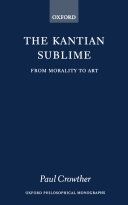
With this, the first volume in the Oxford Philosophical Monographs series, Paul Crowther breaks new ground by providing what is probably the first study in any language to be devoted exclusively to Kant’s theory of the sublime. It fills a gap in an area of scholarship where Kant makes crucial links between morality and aesthetics and will be particularly useful for Continental philosophers, among whom the Kantian sublime is currently receiving widespread discussion in debates about the nature of postmodernism. Crowther’s arguments center on the links which Kant makes between morality and aesthetics, and seek ultimately to modify Kant’s approach in order to establish the sublime as a viable aesthetic concept with a broader cultural significance.
When Did I Begin? investigates the theoretical, moral, and biological issues surrounding the debate over the beginning of human life. With the continuing controversy over the use of in vitro fertilization techniques and experimentation with human embryos, these issues have been forced into the arena of public debate. Following a detailed analysis of the history of the question, Reverend Ford argues that a human individual could not begin before definitive individuation occurs with the appearance of the primitive streak about two weeks after fertilization. This, he argues, is when it becomes finally known whether one or more human individuals are to form from a single egg. Thus, he questions the idea that the fertilized egg itself could be regarded as the beginning of the development of the human individual. The author also differs sharply, however, from those who would delay the beginning of the human person until the brain is formed, or until birth or the onset of conscious states.
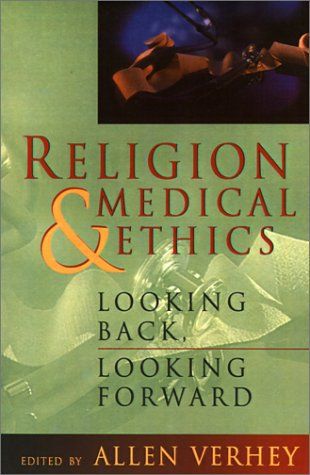
This collection of essays looks back at the contributions of theology to medical ethics in the past and sets an agenda for theological reflection on medical ethics in the future.
ما از اخلاق چه انتظاری داریم؟ این سوال شاید تاحدودی برای عموم مردم و یا متخصصان این رشته قابل پاسخ باشد؛ اینکه خوب بودن را به ما بیاموزد و در تنظیم روابط فردی م...

جشن کتاب تهران به ایستگاه سی و یکم رسیده است. حال و احوال نشر کتاب خوب نیست و باید فرهنگدوستان را به خرید و هدیه دادن کتاب ترغیب نمود. خانه اخلاقپژوهان جوان ب...

بنیاد کتابهای اخلاق اسلامی عمدتا پالایش جان از آلودگیها و آراستن آن به زیباییها است. اندیشه محوری این قبیل کتابها آن است که انسان فعلی آنی نیست که باید باشد...

-
0 Comments