Notice: تابع WP_Block_Type_Registry::register به طورنادرست فراخوانی شد. نامهای نوع بلوک نباید حروف بزرگ داشته باشند. لطفاً برای اطلاعات بیشتر، اشکال زدایی در وردپرس را مشاهده کنید. (این پیام در نگارش 5.0.0 افزوده شده است.) in /home/ethicsho/public_html/wp-includes/functions.php on line 5313
Warning: Use of undefined constant TDC_PATH_LEGACY - assumed 'TDC_PATH_LEGACY' (this will throw an Error in a future version of PHP) in /home/ethicsho/public_html/wp-content/plugins/td-composer/td-composer.php on line 109
Warning: Use of undefined constant TDSP_THEME_PATH - assumed 'TDSP_THEME_PATH' (this will throw an Error in a future version of PHP) in /home/ethicsho/public_html/wp-content/plugins/td-composer/td-composer.php on line 113 بایگانیهای Human Behavior - خانه اخلاق پژوهان جوان Notice: Trying to access array offset on value of type bool in /home/ethicsho/public_html/wp-content/plugins/wp-ulike/inc/general-functions.php on line 807
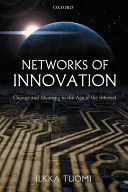
Integrating concepts from multiple theoretical disciplines and detailed analyses of the evolution of Internet-related innovations (including computer networking, the World Wide Web and the Linux open source operating system), this book develops foundations for a new theoretical and practical understanding of innovation. It covers topics ranging from fashion to history of art, and includes the most detailed analysis of the open source development model so far published.
This important new study offers a powerful exposition of the ethical theory underlying Hegel’s philosophy of society, politics, and history. Professor Wood shows how Hegel applies his theory to such topics as human rights, the justification of legal punishment, criteria of moral responsibility, and the authority of individual conscience. The book includes a critical discussion of Hegel’s treatment of other moral philosophers (especially Kant, Fichte and Fries), provides an account of the controversial concept of “ethical life,” and shows the relation between the theory and Hegel’s critical assessment of modern social institutions. The book is nontechnical and should interest anyone concerned with Hegel’s ethical and political thought, including philosophers, political scientists, intellectual historians and students of German culture.
How do we know right from wrong? Do we even have moral knowledge? Moral epistemology studies these and related questions about our understanding of virtue and vice. It is one of philosophy’s perennial problems, reaching back to Plato, Aristotle, Aquinas, Locke, Hume and Kant, and has recently been the subject of intense debate as a result of findings in developmental and social psychology.In this outstanding introduction to the subject Aaron Zimmerman covers the following key topics: What is moral epistemology? What are its methods? Including a discussion of Socrates, Gettier and contemporary theories of knowledgeSkepticism about moral knowledge based on the anthropological record of deep and persistent moral disagreement, including contextualismMoral nihilism, including debates concerning God and morality and the relation between moral knowledge and our motives and reasons to act morallyEpistemic moral scepticism, intuitionism and the possibility of inferring ‘ought’ from ‘is,’ discussing the views of Locke, Hume, Kant, Ross, Audi, Thomson, Harman, Sturgeon and many othersHow children acquire moral concepts and become more reliable judges.Criticisms of those who would reduce moral knowledge to value-neutral knowledge or attempt to replace moral belief with emotion.Throughout the book Zimmerman argues that our belief in moral knowledge can survive sceptical challenges. He also draws on a rich range of examples from Plato’s Meno and Dickens’s David Copperfield to Bernard Madoff and Saddam Hussein.Including chapter summaries and annotated further reading at the end of each chapter, Moral Epistemology is essential reading for all students of ethics, epistemology and moral psychology.
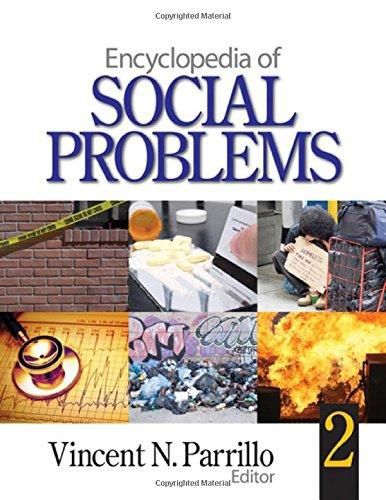
Social problems affect everyone. Because so many actual and potential problems confront us, it is often difficult to decide which ones affect us most severely. Is it the threat of death or injury during a terrorist attack? Is it the threat caused by industrial pollution that may poison us or destroy our physical environment? Or does quiet but viciously damaging gender, age, class, racial, or ethnic discrimination have the most far-reaching effect? Do the problems of cities affect us if we live in the suburbs? Do poorer nations’ problems with overpopulation affect our quality of life? The Encyclopedia of Social Problems offers an interdisciplinary perspective into many social issues that are a continuing concern in our lives, whether we confront them on a personal, local, regional, national, or global level. With more than 600 entries, these two volumes cover all of the major theories, approaches, and contemporary issues in social problems and also provide insight into how social conditions get defined as social problems, and the ways different people and organizations view and try to solve them.Key Features· Provides as comprehensive an approach as possible to this multifaceted field by using experts and scholars from 19 disciplines: anthropology, biology, business, chemistry, communications, criminal justice, demography, economics, education, environmental studies, geography, health, history, languages, political science, psychology, social work, sociology, and women’s studies· Presents a truly international effort with contributors from 17 countries: Argentina, Australia, Canada, England, France, Germany, Greece, Hong Kong, India, Ireland, Italy, Kenya, New Zealand, Romania, Scotland, Turkey, and the United States· Addresses social problems that are fairly new, such as computer crimes and identity theft, and others that are centuries old, such as poverty and prostitution· Examines social problems differently from place to place and from one era to another· Explains the perspectives and foundations of various social theories and offers different lenses to view the same realityKey Themes· Aging and the Life Course· Community, Culture, and Change · Crime and Deviance · Economics and Work · Education· Family · Gender Inequality and Sexual Orientation · Health · Housing and Urbanization · Politics, Power, and War · Population and Environment · Poverty and Social Class · Race and Ethnic Relations · Social Movements · Social Theory · Substance Abuse Readers investigating virtually any social problem will find a rich treasure of information and insights in this reference work, making it a must-have resource for any academic library.
Bioscience ethics facilitates free and accurate information transfer from applied science to applied bioethics. Its major elements are: increased understanding of biological systems, responsible use of technology, and attuning ethnocentric debates to new scientific insights. Pioneered by Irina Pollard in 1994, bioscience ethics has become an internationally recognized discipline, interfacing science and bioethics within professional perspectives such as medical, legal, bio-engineering, and economics. Written for students and professionals alike, the fundamental feature of this book is its breadth, important because bioscience ethics interweaves many diverse subjects in the process of gathering specialist scientific knowledge for bioethical review. It contains chapters which embrace topics affecting human reproduction, end-of-life care and euthanasia, challenge human-dominated ecosystems, and review population growth, economic activity and warfare. A background section describes the evolution of ethical consciousness, explores the future, and proposes that the reworking of ethical boundaries can enhance mature decision-making in harmony with changing technology.
ما از اخلاق چه انتظاری داریم؟ این سوال شاید تاحدودی برای عموم مردم و یا متخصصان این رشته قابل پاسخ باشد؛ اینکه خوب بودن را به ما بیاموزد و در تنظیم روابط فردی م...

جشن کتاب تهران به ایستگاه سی و یکم رسیده است. حال و احوال نشر کتاب خوب نیست و باید فرهنگدوستان را به خرید و هدیه دادن کتاب ترغیب نمود. خانه اخلاقپژوهان جوان ب...

بنیاد کتابهای اخلاق اسلامی عمدتا پالایش جان از آلودگیها و آراستن آن به زیباییها است. اندیشه محوری این قبیل کتابها آن است که انسان فعلی آنی نیست که باید باشد...

-
0 Comments