Notice: تابع WP_Block_Type_Registry::register به طورنادرست فراخوانی شد. نامهای نوع بلوک نباید حروف بزرگ داشته باشند. لطفاً برای اطلاعات بیشتر، اشکال زدایی در وردپرس را مشاهده کنید. (این پیام در نگارش 5.0.0 افزوده شده است.) in /home/ethicsho/public_html/wp-includes/functions.php on line 5313
Warning: Use of undefined constant TDC_PATH_LEGACY - assumed 'TDC_PATH_LEGACY' (this will throw an Error in a future version of PHP) in /home/ethicsho/public_html/wp-content/plugins/td-composer/td-composer.php on line 109
Warning: Use of undefined constant TDSP_THEME_PATH - assumed 'TDSP_THEME_PATH' (this will throw an Error in a future version of PHP) in /home/ethicsho/public_html/wp-content/plugins/td-composer/td-composer.php on line 113 بایگانیهای Human-animal Relationships - Moral And Ethical Aspects - خانه اخلاق پژوهان جوان Notice: Trying to access array offset on value of type bool in /home/ethicsho/public_html/wp-content/plugins/wp-ulike/inc/general-functions.php on line 807
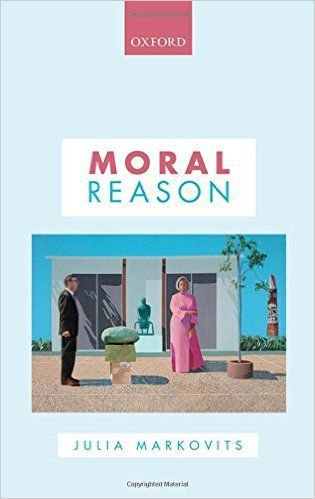
Julia Markovits develops a desire-based, internalist account of what normative reasons are-an account which is compatible with the idea that moral reasons can apply to all of us, regardless of our desires. She builds on Kant’s formula of humanity to defend universal moral reasons, and addresses the age-old question of why we should be moral.
Can we regard ourselves as having free will? What is the place of values in a world of facts? What grounds the authority of moral injunctions, and why should we care about them? Unless we provide satisfactory answers to these questions, ethics has no credible status and is likely to be subsumed by psychology, history, or rational decision theory. According to Ermanno Bencivenga, this outcome is both common and regrettable. Bencivenga points to Immanuel Kant for the solution. Kant’s philosophy is a sustained, bold, and successful effort aiming at offering us the answers we need. Ethics Vindicated is a clear and thorough account of this effort that builds on Bencivenga’s previous interpretation of transcendental philosophy (as articulated in his Kant’s Copernican Revolution) and draws on the entire Kantian corpus.
In this crisply written book, Hanno Sauer offers the first book-length treatment of debunking arguments in ethics, developing an empirically informed and philosophically sophisticated account of genealogical arguments and their significance for the reliability of moral cognition. He breaks new ground by introducing a series of novel distinctions into the current debate, which allows him to develop a framework for assessing the prospects of debunking or vindicating our moral intuitions. He also challenges the justification of some of our moral judgments by showing that they are based on epistemically defective processes.
ما از اخلاق چه انتظاری داریم؟ این سوال شاید تاحدودی برای عموم مردم و یا متخصصان این رشته قابل پاسخ باشد؛ اینکه خوب بودن را به ما بیاموزد و در تنظیم روابط فردی م...

جشن کتاب تهران به ایستگاه سی و یکم رسیده است. حال و احوال نشر کتاب خوب نیست و باید فرهنگدوستان را به خرید و هدیه دادن کتاب ترغیب نمود. خانه اخلاقپژوهان جوان ب...

بنیاد کتابهای اخلاق اسلامی عمدتا پالایش جان از آلودگیها و آراستن آن به زیباییها است. اندیشه محوری این قبیل کتابها آن است که انسان فعلی آنی نیست که باید باشد...

-
0 Comments