Notice: تابع WP_Block_Type_Registry::register به طورنادرست فراخوانی شد. نامهای نوع بلوک نباید حروف بزرگ داشته باشند. لطفاً برای اطلاعات بیشتر، اشکال زدایی در وردپرس را مشاهده کنید. (این پیام در نگارش 5.0.0 افزوده شده است.) in /home/ethicsho/public_html/wp-includes/functions.php on line 5313
Warning: Use of undefined constant TDC_PATH_LEGACY - assumed 'TDC_PATH_LEGACY' (this will throw an Error in a future version of PHP) in /home/ethicsho/public_html/wp-content/plugins/td-composer/td-composer.php on line 109
Warning: Use of undefined constant TDSP_THEME_PATH - assumed 'TDSP_THEME_PATH' (this will throw an Error in a future version of PHP) in /home/ethicsho/public_html/wp-content/plugins/td-composer/td-composer.php on line 113 بایگانیهای Historical Sociology - خانه اخلاق پژوهان جوان Notice: Trying to access array offset on value of type bool in /home/ethicsho/public_html/wp-content/plugins/wp-ulike/inc/general-functions.php on line 807
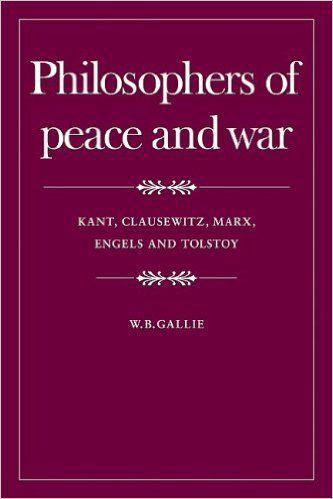
Intellectual eminence apart, what did Kant, Clausewitz, Marx and Engels, and Tolstoy have in common? Professor Gallic argues that they made contributions to ‘international theory’ – to the understanding of the character and causes of war and of the possibility of peace between nations – which were of unrivalled originality in their own times and remain of undiminished importance in ours. But these contributions have been either ignored or much misunderstood ; chiefly because, as with all intellectual efforts in unexplored fields, they were often imperfectly expressed, and were also overshadowed by their author’s more striking achievements. Professor Gallic has sorted out, compared and contrasted, criticised and re-phrased the teachings of his chosen authors on peace and war.
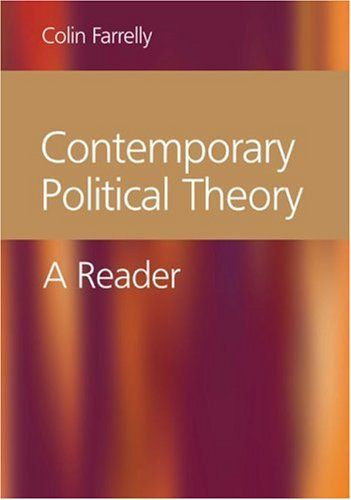
`Colin Farrelly has gathered together in one volume several of the key texts that have shaped recent developments in political theory. The structure of the book reflects that of many courses offering surveys of recent debates between liberals and their critics. It is an excellent teaching resource’ – Shane O’Neill, Queen’s University, Belfast `An excellent selection of key pieces that have shaped the debates that dominate contemporary political philosophy. Each section is prefaced with a clear and insightful introduction which gives a valuable commentary on each piece, sets it in its context, and indicates its influence on the field. This book will be a very useful resource for students of these debates from all backgrounds’ – Catriona McKinnon, University of York Contemporary Political Theory provides an accessible introduction to the key works of major contemporary political theorists. Key theorists and writers include John Rawls, Robert Nozick, Michael Walzer, Michael Sandel, Susan Okin, Will Kymlicka, Iris Marion Young, Charles Taylor, Nancy Fraser and John Dryzek. The readings are organized thematically into seven sections on egalitarian-liberalism, libertarianism, communitarianism, republicanism, feminism, deliberative democracy, and multiculturalism. A substantial introduction is provided to each to identify the main issues and the significance of the carefully selected excerpts that follow. The result is a complete but concise guide through the literature and major topics and areas of debate in contemporary political theory and political philosophy. Colin Farrelly is Assistant Professor in the Department of Political Science at the University of Waterloo, Canada. Contemporary Political Theory: A Reader will complement his textbook Introduction to Contemporary Political Theory also published by SAGE Publications.
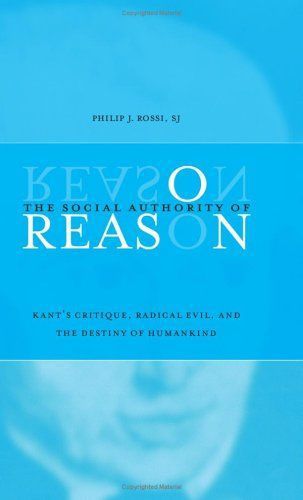
In “The Social Authority of Reason, Philip J. Rossi, SJ argues that the current cultural milieu of globalization is strikingly reflective of the human condition appraised by kant, in which mutual social interaction for human good is hamstrung by our contentious “unsociable sociability.” He situates the paradoxical nature of contemporary society–“its opportunities for deepening the bonds of our common human mutuality along with its potential for enlarging the fissures that arise from our human differences–“in the context of Kant’s notion of radical evil. As a corrective, Rossi proposes that we draw upon the social charcater of Kant’s critique of reason, which offers a communal trajectory for human moral effort and action. This trajectory still has power to open the path to what Kant called “the highest political good”–“lasting peace among nations.
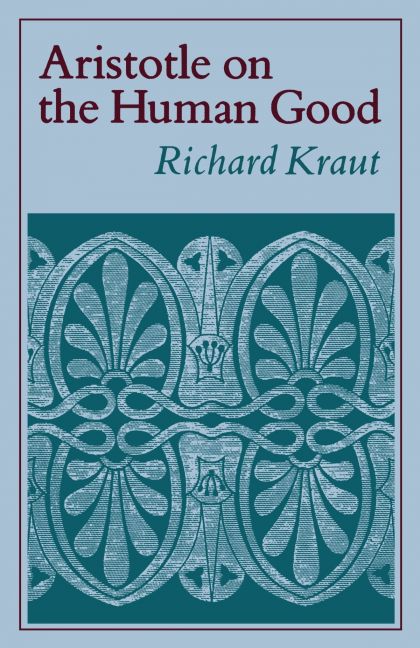
Aristotle’s Nicomachean Ethics, which equates the ultimate end of human life with happiness (eudaimonia), is thought by many readers to argue that this highest goal consists in the largest possible aggregate of intrinsic goods. Richard Kraut proposes instead that Aristotle identifies happiness with only one type of good: excellent activity of the rational soul. In defense of this reading, Kraut discusses Aristotle’s attempt to organize all human goods into a single structure, so that each subordinate end is desirable for the sake of some higher goal.This book also emphasizes the philosopher’s hierarchy of natural kinds, in which every type of creature achieves its good by imitating divine life. As Kraut argues, Aristotle’s belief that thinking is the sole activity of the gods leads him to an intellectualist conception of the ethical virtues. Aristotle values these traits because, by subordinating emotion to reason, they enhance our ability to lead a life devoted to philosophy or politics.
ما از اخلاق چه انتظاری داریم؟ این سوال شاید تاحدودی برای عموم مردم و یا متخصصان این رشته قابل پاسخ باشد؛ اینکه خوب بودن را به ما بیاموزد و در تنظیم روابط فردی م...

جشن کتاب تهران به ایستگاه سی و یکم رسیده است. حال و احوال نشر کتاب خوب نیست و باید فرهنگدوستان را به خرید و هدیه دادن کتاب ترغیب نمود. خانه اخلاقپژوهان جوان ب...

بنیاد کتابهای اخلاق اسلامی عمدتا پالایش جان از آلودگیها و آراستن آن به زیباییها است. اندیشه محوری این قبیل کتابها آن است که انسان فعلی آنی نیست که باید باشد...

-
0 Comments