Notice: تابع WP_Block_Type_Registry::register به طورنادرست فراخوانی شد. نامهای نوع بلوک نباید حروف بزرگ داشته باشند. لطفاً برای اطلاعات بیشتر، اشکال زدایی در وردپرس را مشاهده کنید. (این پیام در نگارش 5.0.0 افزوده شده است.) in /home/ethicsho/public_html/wp-includes/functions.php on line 5313
Warning: Use of undefined constant TDC_PATH_LEGACY - assumed 'TDC_PATH_LEGACY' (this will throw an Error in a future version of PHP) in /home/ethicsho/public_html/wp-content/plugins/td-composer/td-composer.php on line 109
Warning: Use of undefined constant TDSP_THEME_PATH - assumed 'TDSP_THEME_PATH' (this will throw an Error in a future version of PHP) in /home/ethicsho/public_html/wp-content/plugins/td-composer/td-composer.php on line 113 بایگانیهای General & Miscellaneous Philosophy - خانه اخلاق پژوهان جوان Notice: Trying to access array offset on value of type bool in /home/ethicsho/public_html/wp-content/plugins/wp-ulike/inc/general-functions.php on line 807
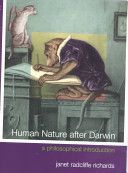
“Human Nature After Darwin” is an original investigation of the implications of Darwinism for our understanding of ourselves and our situation. It casts new light on current Darwinian controversies, and in doing so provides an introduction to philosophical reasoning and a range of philosophical problems. Janet Radcliffe Richards claims that many current battles about Darwinism, in particular about evolutionary psychology and religion, are based on mistaken assumptions about the implications of the rival views. Her analysis of these implications provides a much-needed guide to the fundamentals of Darwinism and the so-called Darwin-wars, as well as providing a set of philosophical techniques relevant to wide areas of moral and political debate. It also raises philosophical problems of knowledge and certainly, free will and responsibility, altruism, the status of ethics, and the relevance of Darwinism to questions of ethics, politics and religion. The lucid presentation makes the book an ideal introduction to both philosophy and Darwinism, as well as a substantive contribution to topics of intense current controversy. It will be of interest to students of philosophy, science and the social sciences, and critical thinking.
This book explores the historical and contemporary relationships of Protestant Puritanism to political and social authoritarianism. It focuses on Puritanism’s original, subsequent and modern influences on and legacies in political democracy and civil society within historically Puritan Western societies, with emphasis on Great Britain and particularly America, from the 17th to the 21th century. The Protestant Ethic and the Spirit of Authoritarianism: Puritanism, Democracy and Society’s importance and novelty lie in its original theoretical argument and empirical demonstration that Puritanism constitutes or reproduces political-social authoritarianism rather than liberal-secular political democracy and free civil society, contrary to the conventional wisdom in Puritan societies, especially America. The book’s methodological approach is thoroughly interdisciplinary by integrating methods, theories and data in sociology with those in other social sciences such as political science, history and economics. In addition, the book uses a comparative-historical method through comparisons of Western (and other) societies at various points of history in terms of the impact of Puritanism on authoritarianism.
Information technology is an integral part of the practices and institutions of post-industrial society. It is also a source of hard moral questions and thus is both a probing and relevant area for moral theory. In this volume, an international team of philosophers sheds light on many of the ethical issues arising from information technology, including informational privacy, digital divide and equal access, e-trust and tele-democracy. Collectively, these essays demonstrate how accounts of equality and justice, property and privacy benefit from taking into account how information technology has shaped our social and epistemic practices and our moral experiences. Information technology changes the way that we look at the world and deal with one another. It calls, therefore, for a re-examination of notions such as friendship, care, commitment and trust.
ما از اخلاق چه انتظاری داریم؟ این سوال شاید تاحدودی برای عموم مردم و یا متخصصان این رشته قابل پاسخ باشد؛ اینکه خوب بودن را به ما بیاموزد و در تنظیم روابط فردی م...

جشن کتاب تهران به ایستگاه سی و یکم رسیده است. حال و احوال نشر کتاب خوب نیست و باید فرهنگدوستان را به خرید و هدیه دادن کتاب ترغیب نمود. خانه اخلاقپژوهان جوان ب...

بنیاد کتابهای اخلاق اسلامی عمدتا پالایش جان از آلودگیها و آراستن آن به زیباییها است. اندیشه محوری این قبیل کتابها آن است که انسان فعلی آنی نیست که باید باشد...

-
0 Comments