Notice: تابع WP_Block_Type_Registry::register به طورنادرست فراخوانی شد. نامهای نوع بلوک نباید حروف بزرگ داشته باشند. لطفاً برای اطلاعات بیشتر، اشکال زدایی در وردپرس را مشاهده کنید. (این پیام در نگارش 5.0.0 افزوده شده است.) in /home/ethicsho/public_html/wp-includes/functions.php on line 5313
Warning: Use of undefined constant TDC_PATH_LEGACY - assumed 'TDC_PATH_LEGACY' (this will throw an Error in a future version of PHP) in /home/ethicsho/public_html/wp-content/plugins/td-composer/td-composer.php on line 109
Warning: Use of undefined constant TDSP_THEME_PATH - assumed 'TDSP_THEME_PATH' (this will throw an Error in a future version of PHP) in /home/ethicsho/public_html/wp-content/plugins/td-composer/td-composer.php on line 113 بایگانیهای Existentialism In Literature - خانه اخلاق پژوهان جوان Notice: Trying to access array offset on value of type bool in /home/ethicsho/public_html/wp-content/plugins/wp-ulike/inc/general-functions.php on line 807
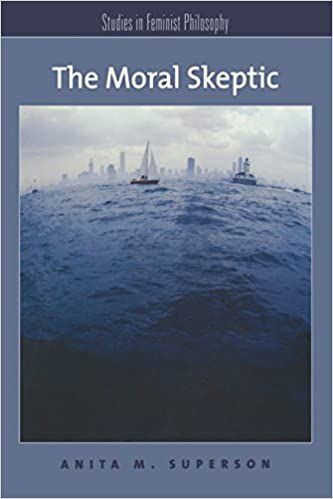
Anita Superson challenges the traditional picture of the skeptic who asks, “Why be moral?” While holding that the skeptic’s position is important, she builds an argument against it by understanding it more deeply, and then shows what it would take to successfully defeat it. Superson argues that we must defeat not only the action skeptic, but the disposition skeptic, who denies that being morally disposed is rationally required, and the motive skeptic, who believes that merely going through the motions in acting morally is rationally permissible. We also have to address the amoralist, who is not moved by moral reasons he recognizes. Superson argues for expanding the skeptic’s position from self-interest to privilege to include morally unjustified behavior targeting disenfranchised social groups, as well as revising the traditional expected utility model to exclude desires deformed by patriarchy as irrational. Lastly she argues that the challenge can be answered if it can be shown that it is, in an important way, inconsistent and therefore irrational to privilege oneself over others. The Moral Skeptic makes an important contribution to both metaethics/moral theory and feminist philosophy, and brings feminist thinking into the larger discussion of the skeptical challenge.
InClassical Individualism,Tibor Machan argues that individualism is far from being dead. Machan identifies, develops and defends what he calls classical individualism: the sort with roots in Aristotle rather than Hobbes. This type of individualism does not reject the social nature of the human being, but finds that every human being is also a self-directed agent who is responsible for what he or she does. Machan rejects all types of collectivism, including communitarianism, ethnic solidarity, racial unity, and gender identity. The ideas inClassical Individualismhave important social and political implications, and will be of interest to anyone concerned with the notion of individuality and individual responsibility.
Do national boundaries have fundamental moral significance, or do we have moral obligations to foreigners that are equal to our obligations to our compatriots? The latter position is known as cosmopolitanism, and this volume brings together a number of distinguished political philosophers and theorists to explore cosmopolitanism and the positive arguments that can be made for it. Their essays provide a comprehensive overview of the current state of the debate as well as the alternative visions of cosmopolitanism that will interest a wide range of readers in philosophy, political theory, and law.
ما از اخلاق چه انتظاری داریم؟ این سوال شاید تاحدودی برای عموم مردم و یا متخصصان این رشته قابل پاسخ باشد؛ اینکه خوب بودن را به ما بیاموزد و در تنظیم روابط فردی م...

جشن کتاب تهران به ایستگاه سی و یکم رسیده است. حال و احوال نشر کتاب خوب نیست و باید فرهنگدوستان را به خرید و هدیه دادن کتاب ترغیب نمود. خانه اخلاقپژوهان جوان ب...

بنیاد کتابهای اخلاق اسلامی عمدتا پالایش جان از آلودگیها و آراستن آن به زیباییها است. اندیشه محوری این قبیل کتابها آن است که انسان فعلی آنی نیست که باید باشد...

-
0 Comments