Notice: تابع WP_Block_Type_Registry::register به طورنادرست فراخوانی شد. نامهای نوع بلوک نباید حروف بزرگ داشته باشند. لطفاً برای اطلاعات بیشتر، اشکال زدایی در وردپرس را مشاهده کنید. (این پیام در نگارش 5.0.0 افزوده شده است.) in /home/ethicsho/public_html/wp-includes/functions.php on line 5313
Warning: Use of undefined constant TDC_PATH_LEGACY - assumed 'TDC_PATH_LEGACY' (this will throw an Error in a future version of PHP) in /home/ethicsho/public_html/wp-content/plugins/td-composer/td-composer.php on line 109
Warning: Use of undefined constant TDSP_THEME_PATH - assumed 'TDSP_THEME_PATH' (this will throw an Error in a future version of PHP) in /home/ethicsho/public_html/wp-content/plugins/td-composer/td-composer.php on line 113 بایگانیهای Ethnic Conflict - خانه اخلاق پژوهان جوان Notice: Trying to access array offset on value of type bool in /home/ethicsho/public_html/wp-content/plugins/wp-ulike/inc/general-functions.php on line 807
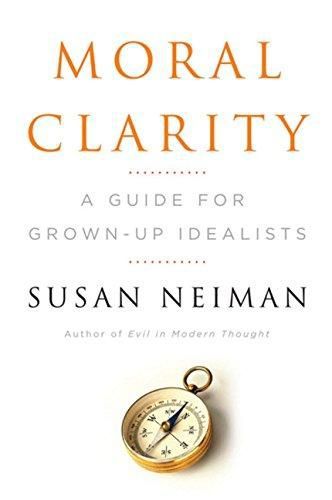
Susan Neiman is a moral philosopher committed to making the tools of her trade relevant to real life. In Moral Clarity, she shows how resurrecting a moral vocabulary good and evil, heroism and nobility can steer us clear of the dogmas of the right and the helpless pragmatism of the left. In search of a framework for forming clear opinions and taking responsible action on today’s urgent political and social questions, Neiman reaches back to the eighteenth century, retrieving a set of virtues happiness, reason, reverence, and hope that were held high by every Enlightenment thinker. She shows that the pursuit of moral clarity is not a matter of religious faith but is open to all who are committed to these ideals, believers and nonbelievers alike. And she draws on literature, evolutionary theory, and other contemporary research to show why, by keeping before us the distinction between the real and the possible, these ideals continue to guide and inspire.
Short but philosophically rich, and written with impressive precision and intellectual candour, ‘Ethics’ is a minor classic which repays careful study. This edition includes Moore’s essay ‘The Nature of Moral Philosophy’ as well as editorial notes, an introduction, and a guide to further reading.
In the aftermath of the Cold War the hope for a more stable and just international order rapidly dissolved underneath the pressure of internecine conflicts raging on all continents.The Rwanda and Srebrenica genocides especially proved that promoting peace is a particularly fraught challenge in the face of intra-state conflict and sub-national groups that boldy confront nation-states.Tim Murithi investigates the role that ethics plays in promoting and consolidating peacebuilding, synthesizing the fields of moral philosophy and international relations through an analysis of the ethics of negotiation, mediation, forgiveness, and reconciliation. In its exploration of the extent to which ethical concerns influence and inform peacebuilding, this book contributes to a growing body of literature on ethics and international relations that enable students, scholars, and practitioners to contextualize their understanding of a principled peacebuilding.
Resisting Ethics is a new contribution to an ongoing debate on how the world can be improved. Starting with the notion that resistance and ethics are theoretically and practically intertwined, Scott Schaffer develops a new socially oriented ethics based on the practical experience of resistance and ethics. Borrowing from and extending the ideas of Sartre, Merleau-Ponty, and Bourdieu, and using case studies of the Algerian Revolution and the Zapatista rebellion, Schaffer argues that existentialism can give us new insights into how we can and should act ethically in the world. Resisting Ethics is a wide-ranging work and represents a new kind of intervention into issues of social justice and resistance.
In the context of the current financial crisis, and at a time of deep global change, growing attention is paid to the global norms and ethical values that could underpin future global policy. Water is a key global resource. At the 3rd Marcelino Botin Foundation Water Workshop, held in Santander, Spain, June 12-14, 2007, the role of ethics in the deep roots, values, and the potential commonalities of the global water policy were discussed. Experts from different cultural, geographic and religious backgrounds considered the different ethical points of view to enhance the debate on how ethical considerations can play a more significant and explicit role in water development and management. Common ground for all contributing authors was considered to be the UN Declaration of 1948, and more specifically the basic aspects related to water ethics: 1. the dignity of every human being and 2. the necessity of solidarity among all human beings.The book is divided in 8 sections which correspond to the papers presented at the Workshop: Some Cultural Traditional Approaches on Water Ethics Some Ethical Aspects of New Water Management Water as a Human Right and as an Economic Resource Water and Poverty Groundwater Use and its Ethical Aspects Ethics of Water Ownership and Management Corruption, Transparency and Participation in the Water Sector Ethical Aspects of Unforeseen and Extreme Events Management such as Floods and Droughts
ما از اخلاق چه انتظاری داریم؟ این سوال شاید تاحدودی برای عموم مردم و یا متخصصان این رشته قابل پاسخ باشد؛ اینکه خوب بودن را به ما بیاموزد و در تنظیم روابط فردی م...

جشن کتاب تهران به ایستگاه سی و یکم رسیده است. حال و احوال نشر کتاب خوب نیست و باید فرهنگدوستان را به خرید و هدیه دادن کتاب ترغیب نمود. خانه اخلاقپژوهان جوان ب...

بنیاد کتابهای اخلاق اسلامی عمدتا پالایش جان از آلودگیها و آراستن آن به زیباییها است. اندیشه محوری این قبیل کتابها آن است که انسان فعلی آنی نیست که باید باشد...

-
0 Comments