Notice: تابع WP_Block_Type_Registry::register به طورنادرست فراخوانی شد. نامهای نوع بلوک نباید حروف بزرگ داشته باشند. لطفاً برای اطلاعات بیشتر، اشکال زدایی در وردپرس را مشاهده کنید. (این پیام در نگارش 5.0.0 افزوده شده است.) in /home/ethicsho/public_html/wp-includes/functions.php on line 5313
Warning: Use of undefined constant TDC_PATH_LEGACY - assumed 'TDC_PATH_LEGACY' (this will throw an Error in a future version of PHP) in /home/ethicsho/public_html/wp-content/plugins/td-composer/td-composer.php on line 109
Warning: Use of undefined constant TDSP_THEME_PATH - assumed 'TDSP_THEME_PATH' (this will throw an Error in a future version of PHP) in /home/ethicsho/public_html/wp-content/plugins/td-composer/td-composer.php on line 113 بایگانیهای Ethique Appliquee - خانه اخلاق پژوهان جوان Notice: Trying to access array offset on value of type bool in /home/ethicsho/public_html/wp-content/plugins/wp-ulike/inc/general-functions.php on line 807
Most people believe that it is sometimes morally permissible for a person to use force to defend herself or others against harm. In Defensive Killing, Helen Frowe offers a detailed exploration of when and why the use of such force is permissible. She begins by considering the use of force between individuals, investigating both the circumstances under which an attacker forfeits her right not to be harmed, and the distinct question of when it is all-things-considered permissible to use force against an attacker. Frowe then extends this enquiry to war, defending the view that we should judge the ethics of killing in war by the moral rules that govern killing between individuals. She argues that this requires us to significantly revise our understanding of the moral status of non-combatants in war. Non-combatants who intentionally contribute to an unjust war forfeit their rights not to be harmed, such that they are morally liable to attack by combatants fighting a just war.
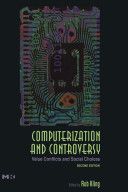
The Second Edition of Computerization and Controversy: Value Conflicts and Social Choices is a collection of 78 articles that examine the social aspects of computerization from a variety of perspectives, many presenting important viewpoints not often discussed in the conventional literature. A number of paired articles comprise thought-provoking head-on debate. Fields represented include computer science, information systems, management, journalism, psychology, law, library science, and sociology.This volume introduces some of the major controversies surrounding the computerization of society and helps readers recognize the social processes that drive and shape computerization.Division into eight provocatively titled sections facilitates course planning for classroom or seminar use. A lead article for each section frames the major controversies, locates the selections within the debates, and points to other relevant literature.Key Features* A fully revised and updated version of the first anthological treatment of the subject* Organized to facilitate course planning for classroom or seminar use* Provides coverage of the influence of computers on a wide variety of fields including computer science, information systems, management, journalism, psychology, law, library science, and sociology* Includes discussion of the following issues related to computerization:* Does computerization demonstrably improve the productivity of organizations?* Should computer systems be designed to empower workers?* Does electronic mail facilitate the formation of new communities, or does it undermine intimate interaction?* Is computerization likely to reduce privacy and personal freedom?
“Thoreau’s Living Ethics is the first full, rigorous account of Henry Thoreau’s ethical philosophy. Focused on “Walden but ranging widely across his writings, the study situates Thoreau within a long tradition of ethical thinking in the West, from the ancients to the romantics and on to the present day. Philip Cafaro shows Thoreau grappling with important ethical questions that agitated his own society and discusses his value for those seeking to understand contemporary ethical issues. Cafaro’s particular interest is in Thoreau’s treatment of virtue ethics: the branch of ethics centered on personal and social flourishing. Ranging across the central elements of Thoreau’s philosophy–life, virtue, economy, solitude and society, nature, and politics–Cafaro shows Thoreau developing a comprehensive virtue ethics, less based in ancient philosophy than many recent efforts and more grounded in modern life and experience. He presents Thoreau’s evolutionary, experimental ethics as superior to the more static foundational efforts of current virtue ethicists. Another main focus is Thoreau’s environmental ethics. The book shows Thoreau not only anticipating recent arguments for wild nature’s intrinsic value, but also demonstrating how a personal connection to nature furthers self-development, moral character, knowledge, and creativity. Thoreau’s life and writings, argues Cafaro, present a positive, life-affirming environmental ethics, combining respect and restraint with an appreciation for human possibilities for flourishing within nature.
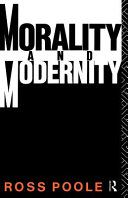
Ross Poole displays the social content of the various conceptions of morality at work in contemporary society, and casts a strikingly fresh light on such fundamental problems as the place of reason in ethics, moral objectivity and the distinction between duty and virtue. The book provides a critical account of the moral theories of a number of major philosophers, including Kant, Marx, Nietzsche, Habermas, Rawls, Gewirth and MacIntyre. It also presents a systematic critique of three of the most significant responses to modernity: liberalism, nationalism and nihilism. It takes seriously the suggestion that men and women are subject to different conceptions of morality, and places the issue of gender at the centre of moral philosophy.
ما از اخلاق چه انتظاری داریم؟ این سوال شاید تاحدودی برای عموم مردم و یا متخصصان این رشته قابل پاسخ باشد؛ اینکه خوب بودن را به ما بیاموزد و در تنظیم روابط فردی م...

جشن کتاب تهران به ایستگاه سی و یکم رسیده است. حال و احوال نشر کتاب خوب نیست و باید فرهنگدوستان را به خرید و هدیه دادن کتاب ترغیب نمود. خانه اخلاقپژوهان جوان ب...

بنیاد کتابهای اخلاق اسلامی عمدتا پالایش جان از آلودگیها و آراستن آن به زیباییها است. اندیشه محوری این قبیل کتابها آن است که انسان فعلی آنی نیست که باید باشد...

-
0 Comments