Notice: تابع WP_Block_Type_Registry::register به طورنادرست فراخوانی شد. نامهای نوع بلوک نباید حروف بزرگ داشته باشند. لطفاً برای اطلاعات بیشتر، اشکال زدایی در وردپرس را مشاهده کنید. (این پیام در نگارش 5.0.0 افزوده شده است.) in /home/ethicsho/public_html/wp-includes/functions.php on line 5313
Warning: Use of undefined constant TDC_PATH_LEGACY - assumed 'TDC_PATH_LEGACY' (this will throw an Error in a future version of PHP) in /home/ethicsho/public_html/wp-content/plugins/td-composer/td-composer.php on line 109
Warning: Use of undefined constant TDSP_THEME_PATH - assumed 'TDSP_THEME_PATH' (this will throw an Error in a future version of PHP) in /home/ethicsho/public_html/wp-content/plugins/td-composer/td-composer.php on line 113 بایگانیهای Ethics, Medical/ Case Reports - خانه اخلاق پژوهان جوان Notice: Trying to access array offset on value of type bool in /home/ethicsho/public_html/wp-content/plugins/wp-ulike/inc/general-functions.php on line 807
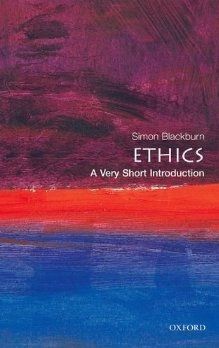
Our self-image as moral, well-behaved creatures is dogged by scepticism, relativism, hypocrisy, and nihilism, by the fear that in a Godless world science has unmasked us as creatures fated by our genes to be selfish and tribalistic, or competitive and aggressive. In this clear introduction to ethics Simon Blackburn tackles the major moral questions surrounding birth, death, happiness, desire and freedom, showing us how we should think about the meaning of life, and how we should mistrust the soundbite-sized absolutes that often dominate moral debates.
This landmark text is the first introduction to concepts and issues in critical discourse analysis for educational researchers. The central premise is that critical discourse analysis must be conducted “systematically,” which means conducting inquiry into the ways in which language form and function correlate with social practices. Bringing together the work of New Literacy Studies, situated literacy, critical discourse theory and analysis with theories of learning, the text is distinctive in providing not just useful analytic accounts of discourse in classroom and other settings, but going on to identify ways in which these forms of language are connected to theories of learning. Contributions from two pioneers in the field–James Gee and Norman Fairclough–are combined with empirically grounded chapters that illustrate variations of their approaches to critical discourse analysis. Each chapter presents examples of systematical critical discourse analysis and its relevance in education settings, and provides detailed information on analytic procedures. An Introduction to Critical Discourse Analysis in Education: *introduces key concepts in critical discourse analysis and answers some of the frequently asked questions; *situates critical discourse analysis within educational research; and *provides detailed analytic procedures, to demystify the process, allow researchers to have a conversation about issues of trustworthiness of interpretations and value to educational contexts, and enable replication of studies. The new synthesis of theoretical and empirical studies in critical discourse analysis and education the book presents will interest newcomers to critical discourse analysis, as well as researchers and educators interested in discourse, identity, and learning. The descriptive, critical ethnographic and interpretive approaches to critical discourse analysis developed in each chapter make the book accessible yet theoretically rich. Pedagogical features make critical discourse analysis accessible to students. The text is cross-disciplinary, intended for courses in qualitative methodology, discourse analysis, critical discourse studies, and literacy education. It will appeal not only to education researchers but to a wide readership within literacy studies, linguistics, sociology, and other social sciences concerned with contemporary approaches to describing and explaining the role of language in learning and education.
“The Cambridge Companion to Socrates is a collection of essays providing a comprehensive guide to Socrates, the most famous Greek philosopher. Because Socrates himself wrote nothing, our evidence comes from the writings of his friends (above all Plato), his enemies, and later writers. Socrates is thus a literary figure as well as a historical person. Both aspects of Socrates’ legacy are covered in this volume. Socrates’ character is full of paradox, and so are his philosophical views. These paradoxes have led to deep differences in scholar’s interpretation of Socrates and his thought. Mirroring this wide range of thought about Socrates, this volume’s contributors are unusually diverse in their background and perspective. The essays in this volume were authored by classical philologists, philosophers, and historians from Germany, Francophone Canada, Britain, and the United States, and they represent a range of interpretive and philosophical traditions”–
This book seeks to explain why different systems of sovereign states have built different types of fundamental institutions to govern interstate relations. Why, for example, did the ancient Greeks operate a successful system of third-party arbitration, while international society today rests on a combination of international law and multilateral diplomacy? Why did the city-states of Renaissance Italy develop a system of oratorical diplomacy, while the states of absolutist Europe relied on naturalist international law and “old diplomacy”? Conventional explanations of basic institutional practices have difficulty accounting for such variation. Christian Reus-Smit addresses this problem by presenting an alternative, “constructivist” theory of international institutional development, one that emphasizes the relationship between the social identity of the state and the nature and origin of basic institutional practices.Reus-Smit argues that international societies are shaped by deep constitutional structures that are based on prevailing beliefs about the moral purpose of the state, the organizing principle of sovereignty, and the norm of procedural justice. These structures inform the imaginations of institutional architects as they develop and adjust institutional arrangements between states. As he shows with detailed reference to ancient Greece, Renaissance Italy, absolutist Europe, and the modern world, different cultural and historical contexts lead to profoundly different constitutional structures and institutional practices. The first major study of its kind, this book is a significant addition to our theoretical and empirical understanding of international relations, past and present.
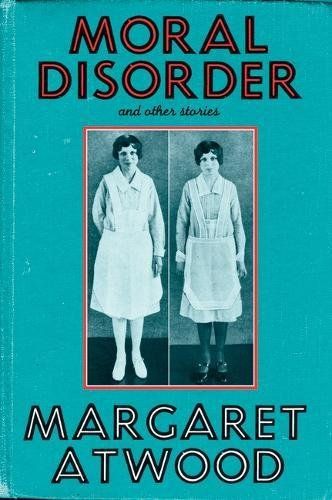
Margaret Atwood has frequently been cited as one of the foremost writers of our time. Moral Disorder, her new work of fiction, could be seen as a collection of ten stories that is almost a novel … or a novel broken up into ten stories. It resembles a photograph album – a series of clearly observed moments that trace the course of a life, and the lives intertwined with it – those of parents, siblings, children, friends, enemies, teachers and even animals. And as in a photograph album, times change; every decade is here, from the 1930s through the 50s, 60s and 70s to the present day. The settings are equally varied: large cities, suburbs, farms, northern forests. The first story, ‘The Bad News,’ is set in the present, as a couple no longer young situate themselves in a larger world no longer safe. Then the narrative switches time, as the central character moves through childhood and adolescence, in ‘The Art of Cooking and Serving’, ‘The Headless Horseman’ and ‘My Last Duchess’. We follow her into young adulthood in ‘The Other Place’, and then through a complex relationship, traced in three of the stories – ‘Monopoly’, ‘Moral Disorder’ and ‘The Entities’. The last two stories, ‘The Labrador Fiasco’ and ‘The Boys at the Lab’, deal with the heartbreaking old age of parents, but circle back to childhood again, to complete the cycle. By turns funny, moving, lyrical, incisive, tragic, earthy, shocking and deeply personal, Moral Disorder displays Atwood’s celebrated storytelling gifts and inimitable style to their best advantage. As the New York Times has said, ‘Atwood has complete access to her people’s emotional histories, complete understanding of their hearts and imaginations.’
ما از اخلاق چه انتظاری داریم؟ این سوال شاید تاحدودی برای عموم مردم و یا متخصصان این رشته قابل پاسخ باشد؛ اینکه خوب بودن را به ما بیاموزد و در تنظیم روابط فردی م...

جشن کتاب تهران به ایستگاه سی و یکم رسیده است. حال و احوال نشر کتاب خوب نیست و باید فرهنگدوستان را به خرید و هدیه دادن کتاب ترغیب نمود. خانه اخلاقپژوهان جوان ب...

بنیاد کتابهای اخلاق اسلامی عمدتا پالایش جان از آلودگیها و آراستن آن به زیباییها است. اندیشه محوری این قبیل کتابها آن است که انسان فعلی آنی نیست که باید باشد...

-
0 Comments