
Notice: تابع WP_Block_Type_Registry::register به طورنادرست فراخوانی شد. نامهای نوع بلوک نباید حروف بزرگ داشته باشند. لطفاً برای اطلاعات بیشتر، اشکال زدایی در وردپرس را مشاهده کنید. (این پیام در نگارش 5.0.0 افزوده شده است.) in /home/ethicsho/public_html/wp-includes/functions.php on line 5313
Warning: Use of undefined constant TDC_PATH_LEGACY - assumed 'TDC_PATH_LEGACY' (this will throw an Error in a future version of PHP) in /home/ethicsho/public_html/wp-content/plugins/td-composer/td-composer.php on line 109
Warning: Use of undefined constant TDSP_THEME_PATH - assumed 'TDSP_THEME_PATH' (this will throw an Error in a future version of PHP) in /home/ethicsho/public_html/wp-content/plugins/td-composer/td-composer.php on line 113 بایگانیهای Ethics/ History/ 18th Century - خانه اخلاق پژوهان جوان Notice: Trying to access array offset on value of type bool in /home/ethicsho/public_html/wp-content/plugins/wp-ulike/inc/general-functions.php on line 807
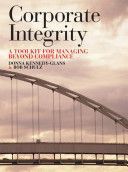
How good companies build a culture of integrity In the present environment of corporate governance brought on by high-profile executive scandals, this book makes a strong case for encouraging business leaders to manage beyond compliance. Achieving the bare minimum of compliance isn’t enough. By making corporate responsibility and integrity a strategic priority-rather than something companies are forced to comply with-companies can realize tangible financial returns and benefits. This book provides practical advice, effective tools, and time-tested best practices for approaching corporate integrity strategically and managing an integrity program on a day-to-day basis. There is a growing realization that compliance with the rules is only a minimum standard of performance, and an increasing demand from stakeholders at every level — shareholders, employees, customers along the entire supply chain, consumers, advocacy groups, and the local community at large — for more transparency and accountability from corporations. But most businesses have little experience and few tools to deal with the urgent demand to increase corporate responsibility. Corporate Integrity provides practical tools and proven processes to manage complex integrity dilemmas and support implementation: Explains how to create a culture of integrity in your organization and how to motivate the appropriate corporate behaviors. Coverage includes: How to assess and measure integrity; how to align corporate integrity commitments and actions; how to design and implement dependable and strategic corporate accountability systems and processes; how to develop corporate integrity standards and report on them, and much more. Includes a wealth of practical business tools and best practices that readers can apply to improve the level of corporate integrity in their own company. Features three detailed case studies and numerous other examples that illustrate corporate integrity dilemmas and solutions in action. Shows how managing corporate responsibility strategically and proactively can go beyond a mere public relations exercise to foster a corporate “win” in the court of popular opinion and in the marketplace. Bridges the gaps between corporations, governments, employees, interest groups, and consumers. Offers tools and solutions that apply to both for-profit corporations and non-profit organizations.
What are our reasons for acting? Morality purports to give us these reasons, and so do norms of prudence and the laws of society. The theory of practical reason assesses the authority of these potentially competing claims, and for this reason philosophers with a wide range of interests have converged on the topic of reasons for action. This volume contains eleven new essays on practical reason by leading and emerging philosophers. Topics include the differences between practical and theoretical rationality, practical conditionals and the wide-scope ought, the explanation of action, the sources of reasons, and the relationship between morality and reasons for action. The volume will be essential reading for all philosophers interested in ethics and practical reason.
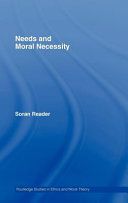
EM P Needs and Moral Necessity analyses ethics as a practice, explains why we have three moral theory-types, consequentialism, deontology and virtue ethics, and argues for a fourth needs-based theory. /P /EM
Philosophy of Language: a Contemporary Introduction introduces the student to the main issues and theories in twentieth-century philosophy of language, focusing specifically on linguistic phenomena. Topics are structured in three parts in the book. Part I, Reference and Referring Expressions, includes topics such as Russell’s Theory of Desciptions, Donnellan’s distinction, problems of anaphora, the description theory of proper names, Searle’s cluster theory, and the causal-historical theory. Part II, Theories of Meaning, surveys the competing theories of linguistic meaning and compares their various advantages and liabilities. Part III, Pragmatics and Speech Acts, introduces the basic concepts of linguistic pragmatics, includes a detailed discussion of the problem of indirect force and surveys approaches to metaphor. Part IV, new to this edition, examines the four theories of metaphor. Features of Philosophy of Language include: New chapters on Frege and puzzles, inferentialism, illocutionary theories ofmeaning and relevance theory chapter overviews and summaries clear supportive examples study questions annotated further reading glossary
ما از اخلاق چه انتظاری داریم؟ این سوال شاید تاحدودی برای عموم مردم و یا متخصصان این رشته قابل پاسخ باشد؛ اینکه خوب بودن را به ما بیاموزد و در تنظیم روابط فردی م...

جشن کتاب تهران به ایستگاه سی و یکم رسیده است. حال و احوال نشر کتاب خوب نیست و باید فرهنگدوستان را به خرید و هدیه دادن کتاب ترغیب نمود. خانه اخلاقپژوهان جوان ب...

بنیاد کتابهای اخلاق اسلامی عمدتا پالایش جان از آلودگیها و آراستن آن به زیباییها است. اندیشه محوری این قبیل کتابها آن است که انسان فعلی آنی نیست که باید باشد...

-
0 Comments