Notice: تابع WP_Block_Type_Registry::register به طورنادرست فراخوانی شد. نامهای نوع بلوک نباید حروف بزرگ داشته باشند. لطفاً برای اطلاعات بیشتر، اشکال زدایی در وردپرس را مشاهده کنید. (این پیام در نگارش 5.0.0 افزوده شده است.) in /home/ethicsho/public_html/wp-includes/functions.php on line 5313
Warning: Use of undefined constant TDC_PATH_LEGACY - assumed 'TDC_PATH_LEGACY' (this will throw an Error in a future version of PHP) in /home/ethicsho/public_html/wp-content/plugins/td-composer/td-composer.php on line 109
Warning: Use of undefined constant TDSP_THEME_PATH - assumed 'TDSP_THEME_PATH' (this will throw an Error in a future version of PHP) in /home/ethicsho/public_html/wp-content/plugins/td-composer/td-composer.php on line 113 بایگانیهای Environmental Policy - Cost Effectiveness - خانه اخلاق پژوهان جوان Notice: Trying to access array offset on value of type bool in /home/ethicsho/public_html/wp-content/plugins/wp-ulike/inc/general-functions.php on line 807
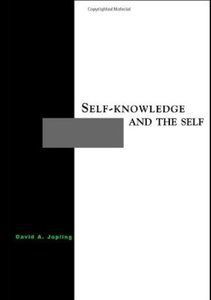
Can we ever really answer the question, “who am I”? In this remarkably clear, fresh and persuasive treatment of a long-standing philosophical question, Jopling argues that we can acquire self-knowledge, but that our attempts to know ourselves shape and alter the very self that is their object; that is, the self we come to know is dependent on how it is known. Self-knowledge is a dynamic and self-transformative process which is only possible in interaction with others.
Religion is one of the most powerful forces running through human history, and although often presented as a force for good, its impact is frequently violent and divisive. This provocative work brings together cutting-edge research from both evolutionary and cognitive psychology to help readers understand the psychological structure of religious morality and the origins of religious violence. Introduces a fundamentally new approach to the analysis of religion in a style accessible to the general reader Applies insights from evolutionary and cognitive psychology to both Judaism and Christianity, and their texts, to help understand the origins of religious violence Argues that religious violence is grounded in the moral psychology of religion Illustrates its controversial argument with reference to the 9/11 terrorist attacks, and the response to the attacks from both the terrorists and the President. Suggests strategies for beginning to counter the divisive aspects of religion. Discusses the role of religion and religious criticism in the contemporary world. Argues for a position sceptical of the moral authority of religion, while also critiquing the excesses of the “new atheists” for failing to appreciate the moral contributions of religion.
Nearly everyone has wronged another. Who among us has not longed to be forgiven? Nearly everyone has suffered the bitter injustice of wrongdoing. Who has not struggled to forgive? Charles Griswold has written the first comprehensive philosophical book on forgiveness in both its interpersonal and political contexts, as well as its relation to reconciliation. Having examined the place of forgiveness in ancient philosophy and in modern thought, he discusses what forgiveness is, what conditions the parties to it must meet, its relation to revenge and hatred, when it is permissible and whether it is obligatory, and why it is a virtue.
What distinguishes evils from ordinary wrongs? Is hatred a necessarily evil? Are some evils unforgivable? Are there evils we should tolerate? What can make evils hard to recognize? Are evils inevitable? How can we best respond to and live with evils? Claudia Card offers a secular theory of evil that responds to these questions and more. Evils, according to her theory, have two fundamental components. One component is reasonably foreseeable intolerable harm — harm that makes a life indecent and impossible or that makes a death indecent. Theother component is culpable wrongdoing. Atrocities, such as genocides, slavery, war rape, torture, and severe child abuse, are Card’s paradigms because in them these key elements are writ large. Atrocities deserve more attention than secular philosophers have so far paid them. They are distinguishedfrom ordinary wrongs not by the psychological states of evildoers but by the seriousness of the harm that is done. Evildoers need not be sadistic: they may simply be negligent or unscrupulous in pursuing their goals. Card’s theory represents a compromise between classic utilitarian and stoic alternatives (including Kant’s theory of radical evil). Utilitarians tend to reduce evils to their harms; Stoics tend to reduce evils to the wickedness of perpetrators: Card accepts neither reduction. She also responds toNietzsche’s challenges about the worth of the concept of evil, and she uses her theory to argue that evils are more important than merely unjust inequalities. She applies the theory in explorations of war rape and violence against intimates. She also takes up what Primo Levi called “the gray zone”,where victims become complicit in perpetrating on others evils that threaten to engulf themselves. While most past accounts of evil have focused on perpetrators, Card begins instead from the position of the victims, but then considers more generally how to respond to — and live with — evils, asvictims, as perpetrators, and as those who have become both.
ما از اخلاق چه انتظاری داریم؟ این سوال شاید تاحدودی برای عموم مردم و یا متخصصان این رشته قابل پاسخ باشد؛ اینکه خوب بودن را به ما بیاموزد و در تنظیم روابط فردی م...

جشن کتاب تهران به ایستگاه سی و یکم رسیده است. حال و احوال نشر کتاب خوب نیست و باید فرهنگدوستان را به خرید و هدیه دادن کتاب ترغیب نمود. خانه اخلاقپژوهان جوان ب...

بنیاد کتابهای اخلاق اسلامی عمدتا پالایش جان از آلودگیها و آراستن آن به زیباییها است. اندیشه محوری این قبیل کتابها آن است که انسان فعلی آنی نیست که باید باشد...

-
0 Comments