Notice: تابع WP_Block_Type_Registry::register به طورنادرست فراخوانی شد. نامهای نوع بلوک نباید حروف بزرگ داشته باشند. لطفاً برای اطلاعات بیشتر، اشکال زدایی در وردپرس را مشاهده کنید. (این پیام در نگارش 5.0.0 افزوده شده است.) in /home/ethicsho/public_html/wp-includes/functions.php on line 5313
Warning: Use of undefined constant TDC_PATH_LEGACY - assumed 'TDC_PATH_LEGACY' (this will throw an Error in a future version of PHP) in /home/ethicsho/public_html/wp-content/plugins/td-composer/td-composer.php on line 109
Warning: Use of undefined constant TDSP_THEME_PATH - assumed 'TDSP_THEME_PATH' (this will throw an Error in a future version of PHP) in /home/ethicsho/public_html/wp-content/plugins/td-composer/td-composer.php on line 113 بایگانیهای England - Intellectual Life - خانه اخلاق پژوهان جوان Notice: Trying to access array offset on value of type bool in /home/ethicsho/public_html/wp-content/plugins/wp-ulike/inc/general-functions.php on line 807
This is the most comprehensive, and most comprehensively chilling, study of modern torture yet written. Darius Rejali, one of the world’s leading experts on torture, takes the reader from the late nineteenth century to the aftermath of Abu Ghraib, from slavery and the electric chair to electrotorture in American inner cities, and from French and British colonial prison cells and the Spanish-American War to the fields of Vietnam, the wars of the Middle East, and the new democracies of Latin America and Europe. As Rejali traces the development and application of one torture technique after another in these settings, he reaches startling conclusions. As the twentieth century progressed, he argues, democracies not only tortured, but set the international pace for torture. Dictatorships may have tortured more, and more indiscriminately, but the United States, Britain, and France pioneered and exported techniques that have become the lingua franca of modern torture: methods that leave no marks. Under the watchful eyes of reporters and human rights activists, low-level authorities in the world’s oldest democracies were the first to learn that to scar a victim was to advertise iniquity and invite scandal. Long before the CIA even existed, police and soldiers turned instead to “clean” techniques, such as torture by electricity, ice, water, noise, drugs, and stress positions. As democracy and human rights spread after World War II, so too did these methods. Rejali makes this troubling case in fluid, arresting prose and on the basis of unprecedented research–conducted in multiple languages and on several continents–begun years before most of us had ever heard of Osama bin Laden or Abu Ghraib. The author of a major study of Iranian torture, Rejali also tackles the controversial question of whether torture really works, answering the new apologists for torture point by point. A brave and disturbing book, this is the benchmark against which all future studies of modern torture will be measured.
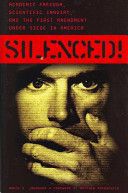
This book is about people whose beliefs and affiliations have opposed powerful interests in the present-day United States. This eclectic group of people and controversial issues, from climate-change scientists who have been censored by the Bush administration to Muslims accused of terrorism, have one thing in common. All of them straddle the limits of what Noam Chomsky has called permissible debate as defined by dominant political and economic institutions and individuals. The central thesis is that restriction of free inquiry is harmful to our culture because it inhibits the search for knowledge. Johansen presents case studies in the borderlands of free speech in a Jeffersonian cast-an intellectual framework assuming that open debate-even of unpopular ideas-is essential to accurate perception of reality. This book is about people whose ideological circumstances have found them opposing established beliefs in our times-scholars advocating the Palestinian cause in a very hostile intellectual environment, for example, as well as climate scientists defending themselves against the de-funding of their laboratories by defenders of fossil-fuel interests; opponents of creation science under assault for teaching what once was regarded as household-variety biology (a.k.a. Darwinism); Marxists in a political system dominated by neoconservatives. The central thesis that unites this diverse array of controversies is that shutting down free inquiry-most notably for points of view deemed unpopular-dumbs us all down by restraining the search for knowledge, which demands open inquiry. We have been told when going to war, as in Iraq, that freedom isn’t free, the unstated assumption being that our armed forces are fighting and dying to safeguard our civil rights at home and abroad. During recent years, however, freedom to inquire and debate without retribution has been under assault in the United States. This assault has been carried out under a distinctly Orwellian cast, under Newspeak titles such as the Patriot Act, parts of which might as well be described more honestly as the Restriction of Freedom of Inquiry Act. The information gathered here will interest (and probably anger) anyone who is concerned with protecting robust, free inquiry in a nation that takes seriously its freedom to speak out, and to define truth through open debate.
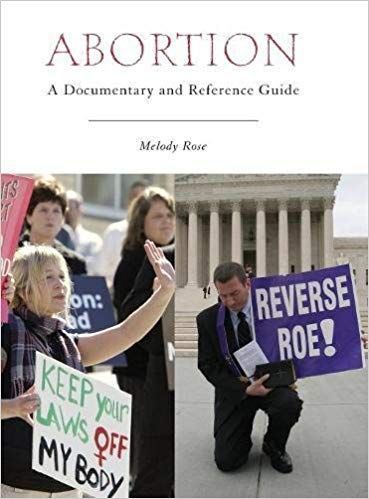
Today abortion is America’s most contentious political and religious rallying point. Yet 150 years ago it was a virtual non-issue, quietly performed for centuries by women and mid-wives. What changed? This thought-provoking reference work explores the evolution of America’s abortion debate in a balanced selection of over 40 primary documents by doctors, feminists, religious leaders, politicians, extremists, and judges from the 19th century to the present day. This guide not only examines the key laws and court cases, like Roe v. Wade and the Partial Birth Abortion Ban, that have determined abortion policy, but offers insight into America’s changing attitudes towards women, race, the medical field, and the role of government in its citizens’ personal lives. Memoirs of early abortion providers, excerpts from popular women’s self-help books, the complete text of Pope Paul VI’s Humanae Vitae, and personal writings from key liberal and conservative figures on both sides of the debate provide a more complete picture of an issue that is deeply personal, deeply divisive, and anything but clear-cut. A straightforward and accessible book, ideal for both students and general readers looking to expand their understanding of one of the most complicated, and still unresolved, issues of our day. Documents are presented in easy-to-use chronological order, divided into 7 chapters exploring the various eras of the abortion debate. Chapter 1: (19th century) The state’s minimal role in abortions, the nascent women’s movement, and a medical movement to restrict abortion provision. Chapter 2: (1905 – 1960) America’s strictest era of abortion policy. The ideology of motherhood vs. post-suffrage women’s desire to control their fertility. Chapter 3: (1965-1971). Voices for decreased abortion restrictions and tragic consequences of illegal abortions. Chapter 4: (1973 – 983) Results of and immediate academic responses to the movement to liberalize abortion policy. Chapter 5: (1984 -1989) The growing role of political parties in abortion politics. Chapter 6: (1991-1996) The movement to protect the fetus. Chapter 7: (2001-2005) Impact of the fetal rights movement and successes in restricting abortion access. Each excerpt is preceded by a brief explanation of its significance and followed by author analysis to help readers understand its implications and the historical context in which is it was written. Readers gain direct access to America’s most important legal papers and transcripts on abortion, complimented by a well rounded view of the public beliefs and sentiments that have fueled abortion debates. Suggestions for further reading conclude each chapter, perfect for research or to guide interested readers in their search for material. The front matter includes a Timeline of major events in abortion history, and the back matter, offers a Bibliography of 50 titles on abortion and over 30 Web links.
Wittgenstein and Levinasexamines the oft-neglected relationship between the philosophies of two of the most important and notoriously difficult thinkers of the twentieth century. By bringing the work of each philosopher to bear upon the other, Plant navigates between the antagonistic intellectual traditions that they helped to share. The central focus on the book is the complex yet illuminating interplay between a number of ethical-religious themes in both Wittgenstein’s mature thinking and Levinas’s distinctive account of ethical responsibility.
ما از اخلاق چه انتظاری داریم؟ این سوال شاید تاحدودی برای عموم مردم و یا متخصصان این رشته قابل پاسخ باشد؛ اینکه خوب بودن را به ما بیاموزد و در تنظیم روابط فردی م...

جشن کتاب تهران به ایستگاه سی و یکم رسیده است. حال و احوال نشر کتاب خوب نیست و باید فرهنگدوستان را به خرید و هدیه دادن کتاب ترغیب نمود. خانه اخلاقپژوهان جوان ب...

بنیاد کتابهای اخلاق اسلامی عمدتا پالایش جان از آلودگیها و آراستن آن به زیباییها است. اندیشه محوری این قبیل کتابها آن است که انسان فعلی آنی نیست که باید باشد...

-
0 Comments