Notice: تابع WP_Block_Type_Registry::register به طورنادرست فراخوانی شد. نامهای نوع بلوک نباید حروف بزرگ داشته باشند. لطفاً برای اطلاعات بیشتر، اشکال زدایی در وردپرس را مشاهده کنید. (این پیام در نگارش 5.0.0 افزوده شده است.) in /home/ethicsho/public_html/wp-includes/functions.php on line 5313
Warning: Use of undefined constant TDC_PATH_LEGACY - assumed 'TDC_PATH_LEGACY' (this will throw an Error in a future version of PHP) in /home/ethicsho/public_html/wp-content/plugins/td-composer/td-composer.php on line 109
Warning: Use of undefined constant TDSP_THEME_PATH - assumed 'TDSP_THEME_PATH' (this will throw an Error in a future version of PHP) in /home/ethicsho/public_html/wp-content/plugins/td-composer/td-composer.php on line 113 بایگانیهای Economic Development Projects - Moral And Ethical Aspects - خانه اخلاق پژوهان جوان Notice: Trying to access array offset on value of type bool in /home/ethicsho/public_html/wp-content/plugins/wp-ulike/inc/general-functions.php on line 807
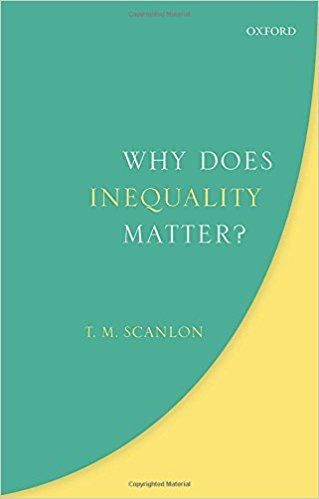
Inequality is widely regarded as morally objectionable: T. M. Scanlon investigates why it matters to us. Demands for greater equality can seem puzzling, because it can be unclear what reason people have for objecting to the difference between what they have and what others have, as opposed simply to wanting to be better off. This book examines six such reasons. Inequality can be objectionable because it arises from a failure of some agent to give equal concern to the interests of different parties to whom it is obligated to provide some good. It can be objectionable because it involves or gives rise to objectionable inequalities in status. It can be objectionable because it gives the rich unacceptable forms of control over the lives of those who have less. It can be objectionable because it interferes with the procedural fairness of economic institutions, or because it deprives some people of substantive opportunity to take part in those institutions. Inequality can be objectionable because it interferes with the fairness of political institutions. Finally, inequality in wealth and income can be objectionable because it is unfair: the institutional mechanisms that produce it cannot be justified in the relevant way. Scanlon’s aims is to provide a moral anatomy of these six reasons, and the ideas of equality that they involve. He also examines objections to the pursuit of equality on the ground that it involves objectionable interference with individual liberty, and argues that ideas of desert do not provide a basis either for justifying significant economic inequality or for objecting to it.
Biotechnology-the use of biological organisms and processes to provide useful products in industry and medicine-is revolutionizing our lives. From the making of cheese and wine to the production of new medicines and crops, the application of biotechnological processes to industry is wide and varied and will continue to expand in the coming decades. But no discussion of biotechnology would be complete without discussion of the ethical issues that surround this growing field. Biotechnology in the 21st Century examines the different global aspects of the biotech industry-healthcare, agriculture, data processing, and ethics-and provides the reader with the knowledge necessary to form his or her own conclusions about this exciting new field of science. Book jacket.
“Human Nature After Darwin” is an original investigation of the implications of Darwinism for our understanding of ourselves and our situation. It casts new light on current Darwinian controversies, and in doing so provides an introduction to philosophical reasoning and a range of philosophical problems. Janet Radcliffe Richards claims that many current battles about Darwinism, in particular about evolutionary psychology and religion, are based on mistaken assumptions about the implications of the rival views. Her analysis of these implications provides a much-needed guide to the fundamentals of Darwinism and the so-called Darwin-wars, as well as providing a set of philosophical techniques relevant to wide areas of moral and political debate. It also raises philosophical problems of knowledge and certainly, free will and responsibility, altruism, the status of ethics, and the relevance of Darwinism to questions of ethics, politics and religion. The lucid presentation makes the book an ideal introduction to both philosophy and Darwinism, as well as a substantive contribution to topics of intense current controversy. It will be of interest to students of philosophy, science and the social sciences, and critical thinking.
ما از اخلاق چه انتظاری داریم؟ این سوال شاید تاحدودی برای عموم مردم و یا متخصصان این رشته قابل پاسخ باشد؛ اینکه خوب بودن را به ما بیاموزد و در تنظیم روابط فردی م...

جشن کتاب تهران به ایستگاه سی و یکم رسیده است. حال و احوال نشر کتاب خوب نیست و باید فرهنگدوستان را به خرید و هدیه دادن کتاب ترغیب نمود. خانه اخلاقپژوهان جوان ب...

بنیاد کتابهای اخلاق اسلامی عمدتا پالایش جان از آلودگیها و آراستن آن به زیباییها است. اندیشه محوری این قبیل کتابها آن است که انسان فعلی آنی نیست که باید باشد...

-
0 Comments