Notice: تابع WP_Block_Type_Registry::register به طورنادرست فراخوانی شد. نامهای نوع بلوک نباید حروف بزرگ داشته باشند. لطفاً برای اطلاعات بیشتر، اشکال زدایی در وردپرس را مشاهده کنید. (این پیام در نگارش 5.0.0 افزوده شده است.) in /home/ethicsho/public_html/wp-includes/functions.php on line 5313
Warning: Use of undefined constant TDC_PATH_LEGACY - assumed 'TDC_PATH_LEGACY' (this will throw an Error in a future version of PHP) in /home/ethicsho/public_html/wp-content/plugins/td-composer/td-composer.php on line 109
Warning: Use of undefined constant TDSP_THEME_PATH - assumed 'TDSP_THEME_PATH' (this will throw an Error in a future version of PHP) in /home/ethicsho/public_html/wp-content/plugins/td-composer/td-composer.php on line 113 بایگانیهای DNA Fingerprinting - Law And Legislation - Congresses - خانه اخلاق پژوهان جوان Notice: Trying to access array offset on value of type bool in /home/ethicsho/public_html/wp-content/plugins/wp-ulike/inc/general-functions.php on line 807
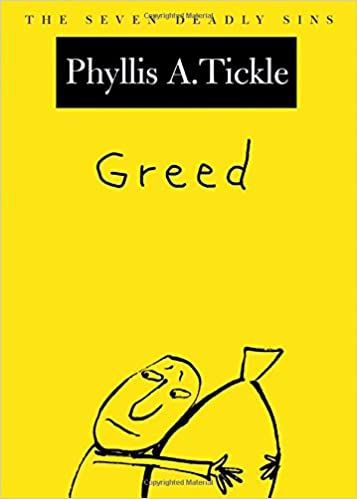
Grasping. Avarice. Covetousness. Miserliness. Insatiable cupidity. Overreaching ambition. Desire spun out of control. The deadly sin of Greed goes by many names, appears in many guises, and wreaks havoc on individuals and nations alike. In this lively and generous book, Phyllis A. Tickle argues that Greed is “the Matriarch of the Deadly Clan,” the ultimate source of Pride, Envy, Sloth, Gluttony, Lust, and Anger. She shows that the major faiths, from Hinduism and Taoism to Buddhism and Christianity regard Greed as the greatest calamity humans can indulge in, engendering further sins and eviscerating all virtues. As the Sikh holy book Adi Granth asks: “Where there is greed, what love can there be?” Tickle takes a long view of Greed, from St. Paul to the present, focusing particularly on changing imaginative representations of Greed in Western literature and art. Looking at such works as the Psychomachia, or “Soul Battle” of the fifth-century poet Aurelius Clemens Prudentius, the paintings of Peter Bruegel and Hieronymous Bosch, the 1987 film Wall Street, and the contemporary Italian artist Mario Donizetti, Tickle shows how our perceptions have evolved from the medieval understanding of Greed as a spiritual enemy to a nineteenth-century sociological construct to an early twentieth-century psychological deficiency, and finally to a new view, powerfully articulated in Donizetti’s mystical paintings, of Greed as both tragic and beautiful. Engaging, witty, brilliantly insightful, Greed explores the full range of this deadly sin’s subtle, chameleon-like qualities, and the enormous destructive power it wields, evidenced all too clearly in the world today.
Morality: An Anthropological Perspective provides the first account of anthropological approaches to the question of morality. By considering how morality is viewed and enacted in different cultures, and how it is related to key social institutions such as religion, law, gender, sexuality and medical practice, Morality takes a closer look at some of the most central questions of the morality debates of our time. The book is accessibly written and combines theory with practical case studies for student use. Drawing on anthropological, philosophical and general social scientific literature, the book will be useful for both undergraduate students and researchers.
Living Together and Christian Ethics is the first positive, in-depth study of cohabitation outside marriage from a mainstream Christian theological perspective. The book retrieves the traditions of betrothal from the Bible and church history, and shows how these can transform Christian attitudes to living together before marriage. A crucial distinction is made between prenuptial cohabitation where marriage is intended, and nonnuptial cohabitation where it is avoided. Since betrothal was widely understood as a real beginning of marriage, the book argues for a complete pastoral, theological and liturgical renewal that reclaims the riches of forgotten Christian marital traditions and redeploys them in conveying the good news of the faith to women and men who are not yet married. The book takes issue with theologians who marginalize marriage, and suggests that the recognition of marital values can act as a helpful bridge between Christian teaching and people who are not formally married.
With a new foreword by Jonathan Lear’Remarkably lively and enjoyable’ŚIt is a very rich book, containing excellent descriptions of a variety of moral theories, and innumerable and often witty observations on topics encountered on the way.’ – Times Literary SupplementBernard Williams was one of the greatest philosophers of his generation. Ethics and the Limits of Philosophy is not only widely acknowledged to be his most important book, but also hailed a contemporary classic of moral philosophy. Drawing on the ideas of the Greek philosophers, Williams reorients ethics away from a preoccupation with universal moral theories towards ‘truth, truthfulness and the meaning of an individual life’. He explores and reflects upon the most difficult problems in contemporary philosophy and identifies new ideas about central issues such as relativism, objectivity and the possibility of ethical knowledge.This edition also includes a commentary on the text by A.W.Moore.At the time of his death in 2003, Bernard Williams was hailed by the Times as ‘the outstanding moral philosopher of his age.’ He taught at the Universities of Cambridge, Berkeley and Oxford and is the author of many influential books, including Morality; Descartes: The Project of Pure Enquiry (available from Routledge) and Truth and Truthfulness .
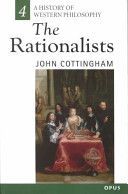
The seventeenth century saw a major revolution in our ways of thinking about such issues as the method appropriate to philosophy and science, the relation between mind and body, the nature of substance, and the place of humanity in nature. While not neglecting the lesser but still influential figures, such as Arnauld and Malebranche, John Cottingham focuses primarily on the three great “rationalists”: Descartes, Spinoza, and Leibniz. He examines how they approached central problems of philosophy, and shows how closely their ideas are related, despite the radically different philosophical systems they produced. He not only places the major thinkers in their historical and philosophical contexts, but engages their ideas in a vigorously critical way, revealing their capacity to throw light on major philosophical topics that are still very much alive today.
ما از اخلاق چه انتظاری داریم؟ این سوال شاید تاحدودی برای عموم مردم و یا متخصصان این رشته قابل پاسخ باشد؛ اینکه خوب بودن را به ما بیاموزد و در تنظیم روابط فردی م...

جشن کتاب تهران به ایستگاه سی و یکم رسیده است. حال و احوال نشر کتاب خوب نیست و باید فرهنگدوستان را به خرید و هدیه دادن کتاب ترغیب نمود. خانه اخلاقپژوهان جوان ب...

بنیاد کتابهای اخلاق اسلامی عمدتا پالایش جان از آلودگیها و آراستن آن به زیباییها است. اندیشه محوری این قبیل کتابها آن است که انسان فعلی آنی نیست که باید باشد...

-
0 Comments