
Notice: تابع WP_Block_Type_Registry::register به طورنادرست فراخوانی شد. نامهای نوع بلوک نباید حروف بزرگ داشته باشند. لطفاً برای اطلاعات بیشتر، اشکال زدایی در وردپرس را مشاهده کنید. (این پیام در نگارش 5.0.0 افزوده شده است.) in /home/ethicsho/public_html/wp-includes/functions.php on line 5313
Warning: Use of undefined constant TDC_PATH_LEGACY - assumed 'TDC_PATH_LEGACY' (this will throw an Error in a future version of PHP) in /home/ethicsho/public_html/wp-content/plugins/td-composer/td-composer.php on line 109
Warning: Use of undefined constant TDSP_THEME_PATH - assumed 'TDSP_THEME_PATH' (this will throw an Error in a future version of PHP) in /home/ethicsho/public_html/wp-content/plugins/td-composer/td-composer.php on line 113 بایگانیهای Dementia - Patients - خانه اخلاق پژوهان جوان Notice: Trying to access array offset on value of type bool in /home/ethicsho/public_html/wp-content/plugins/wp-ulike/inc/general-functions.php on line 807
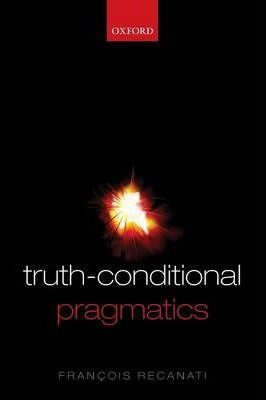
Francois Recanati argues against the traditional understanding of the semantics/pragmatics divide and puts forward a radical alternative. Through half a dozen case studies, he shows that what an utterance says cannot be neatly separated from what the speaker means. In particular, the speaker’s meaning endows words with senses that are tailored to the situation of utterance and depart from the conventional meanings carried by the words in isolation. This phenomenon of ‘pragmatic modulation’ must be taken into account in theorizing about semantic content, for it interacts with the grammar-driven process of semantic composition. Because of that interaction, Recanati argues, the content of a sentence always depends upon the context in which it is used. This claim defines Contextualism, a view which has attracted considerable attention in recent years, and of which Recanati is one of the main proponents.
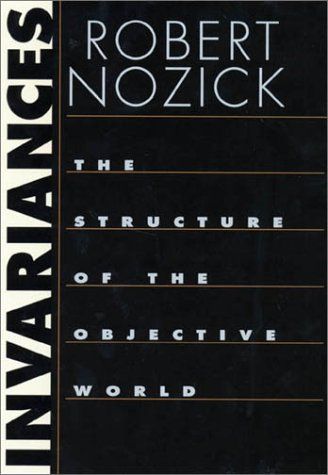
Excerpts from Robert Nozick’s “Invariances” Necessary truths are invariant across all possible worlds, contingent ones across only some. No wonder necessity lures philosophers. It is the flame, the philosopher the moth. Our intuitions that certain statements are necessary do not powerfully support this claim when natural selection would produce strong intuitions of their self-evidence, even were these statements (only) contingently true. Contemporary philosophers who give great weight to intuitions need to offer some account of why such intuitions are reliable and are to be trusted. Of course, if the purpose of such philosophy is merely to codify and systematize the intuitions that (for whatever reason) are held, then a philosophy built upon intuitions will need no further basis. And it will have no further validity. You might think that an insight into metaphysical impossibility could save the physicists much useless work by thereby excluding something as physically possible. Things seem to have worked in the opposite direction, though. Driven by a need to explain strange data, physicists formulate theories that countenance what previously was held to be metaphysically impossible. . . The physical tail wags the metaphysical dog. Why is there an objective world? Within evolutionary cosmology scientific laws might be viewed as the heritable structure of a universe, akin to what in biology would be an organism’s genetic endowment. . . Suppose that the reproductive process of a universe produces transformed offspring universes that differ from their parent. The greater the transformations that a law is invariant under, and the wider their number, the greater is that law’s heritability. The vast majority of the universes that exist through the processes of evolutionary cosmology, therefore, will exhibit laws that are invariant under a wide range of significant transformations. Such invariance, we have seen, is exactly what constitutes objectiveness. Evolutionary cosmology gives us objective worlds.
Ranging from moral realism to virtue ethics, this superb new volume presents a complete state-of-the-art survey of ethical theory.Written by an international assembly of leading moral philosophers, each of the twenty-one newly-commissioned papers develops the main tenets, arguments, themes, and problems of the main normative and meta-ethical philosophical outlooks. Contributors are Michael Smith, Simon Blackburn, Philip L. Quinn, James Rachels, Jeff McMahan, John D. Caputo, Elliott Sober, Laurence Thomas, R. G. Frey, Brad Hooker, F. M. Kamm, Thomas E. Hill, Jr., Geoffrey Sayre-McCord, David McNaughton, L. W. Sumner, Jan Narveson, Michael Slote, Alison Jagger, William R. Schroeder, Hugh LaFollette, and James P. Sterba.This volume is arguably the most ambitious and authoritative survey of ethical theory available today. It serves as a groundbreaking resource as well as a comprehensive guide for both students and general readers alike.
ما از اخلاق چه انتظاری داریم؟ این سوال شاید تاحدودی برای عموم مردم و یا متخصصان این رشته قابل پاسخ باشد؛ اینکه خوب بودن را به ما بیاموزد و در تنظیم روابط فردی م...

جشن کتاب تهران به ایستگاه سی و یکم رسیده است. حال و احوال نشر کتاب خوب نیست و باید فرهنگدوستان را به خرید و هدیه دادن کتاب ترغیب نمود. خانه اخلاقپژوهان جوان ب...

بنیاد کتابهای اخلاق اسلامی عمدتا پالایش جان از آلودگیها و آراستن آن به زیباییها است. اندیشه محوری این قبیل کتابها آن است که انسان فعلی آنی نیست که باید باشد...

-
0 Comments