Notice: تابع WP_Block_Type_Registry::register به طورنادرست فراخوانی شد. نامهای نوع بلوک نباید حروف بزرگ داشته باشند. لطفاً برای اطلاعات بیشتر، اشکال زدایی در وردپرس را مشاهده کنید. (این پیام در نگارش 5.0.0 افزوده شده است.) in /home/ethicsho/public_html/wp-includes/functions.php on line 5313
Warning: Use of undefined constant TDC_PATH_LEGACY - assumed 'TDC_PATH_LEGACY' (this will throw an Error in a future version of PHP) in /home/ethicsho/public_html/wp-content/plugins/td-composer/td-composer.php on line 109
Warning: Use of undefined constant TDSP_THEME_PATH - assumed 'TDSP_THEME_PATH' (this will throw an Error in a future version of PHP) in /home/ethicsho/public_html/wp-content/plugins/td-composer/td-composer.php on line 113 بایگانیهای Copyright - History - خانه اخلاق پژوهان جوان Notice: Trying to access array offset on value of type bool in /home/ethicsho/public_html/wp-content/plugins/wp-ulike/inc/general-functions.php on line 807
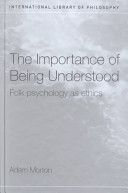
The Importance of Being Understoodargues for an alternative to traditional accounts in contemporary philosophy of the power of folk psychology to explain our actions and beliefs. Morton examines key concepts in moral psychology including motive, belief and simulation, arguing that folk psychology plays a vital role in building co-operation between individuals. He challenges many contemporary philosophical assumptions about its usefulness for understanding our actions and beliefs and shows that folk psychology can make an important contribution to understanding ethics.
Virtue epistemology is an exciting, new movement receiving an enormous amount of attention from top epistemologists and ethicists; this pioneering volume reflects the best work in that vein. Featuring superb writing from contemporary American philosophers, it includes thirteen never before published essays that focus on the place of the concept of virtue in epistemology. In recent years, philosophers have been debating how this concept functions in definitions of knowledge. They question the extent to which knowledge is both normative (i.e., with a moral component) and non-normative, and many of them dispute the focus on justification, which has proven to be too restrictive. Epistemologists are searching for a way to combine the traditional concepts of ethical theory with epistemic concepts; the result is a new approach called virtue epistemology–one that has established itself as a particularly favorable alternative. Containing the fruits of recent study on virtue epistemology, this volume offers a superb selection of contributors–including Robert Audi, Simon Blackburn, Richard Foley, Alvin Goldman, Hilary Kornblith, Keith Lehrer, Ernest Sosa, and Linda Zagzebski–whose work brings epistemology into dialogue with everyday issues.
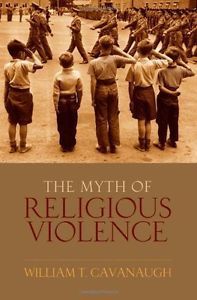
The idea that religion has a dangerous tendency to promote violence is part of the conventional wisdom of Western societies, and it underlies many of our institutions and policies, from limits on the public role of religion to efforts to promote liberal democracy in the Middle East. William T. Cavanaugh challenges this conventional wisdom by examining how the twin categories of religion and the secular are constructed. A growing body of scholarly work explores how the category ‘religion’ has been constructed in the modern West and in colonial contexts according to specific configurations of political power. Cavanaugh draws on this scholarship to examine how timeless and transcultural categories of ‘religion and ‘the secular’ are used in arguments that religion causes violence. He argues three points: 1) There is no transhistorical and transcultural essence of religion. What counts as religious or secular in any given context is a function of political configurations of power; 2) Such a transhistorical and transcultural concept of religion as non-rational and prone to violence is one of the foundational legitimating myths of Western society; 3) This myth can be and is used to legitimate neo-colonial violence against non-Western others, particularly the Muslim world.
Richard Brandt is one of the most influential moral philosophers of the second half of the twentieth century. He is especially important in the field of ethics for his lucid and systematic exposition of utilitarianism. This new book represents in some ways a summation of his views and includes many useful applications of his theory. The focus of the book is how value judgments and moral belief can be justified. More generally, the book assesses different moral systems and theories of justice, and considers specific problems such as the optional level of charity and the moral tenability of the criminal law.
ما از اخلاق چه انتظاری داریم؟ این سوال شاید تاحدودی برای عموم مردم و یا متخصصان این رشته قابل پاسخ باشد؛ اینکه خوب بودن را به ما بیاموزد و در تنظیم روابط فردی م...

جشن کتاب تهران به ایستگاه سی و یکم رسیده است. حال و احوال نشر کتاب خوب نیست و باید فرهنگدوستان را به خرید و هدیه دادن کتاب ترغیب نمود. خانه اخلاقپژوهان جوان ب...

بنیاد کتابهای اخلاق اسلامی عمدتا پالایش جان از آلودگیها و آراستن آن به زیباییها است. اندیشه محوری این قبیل کتابها آن است که انسان فعلی آنی نیست که باید باشد...

-
0 Comments