Notice: تابع WP_Block_Type_Registry::register به طورنادرست فراخوانی شد. نامهای نوع بلوک نباید حروف بزرگ داشته باشند. لطفاً برای اطلاعات بیشتر، اشکال زدایی در وردپرس را مشاهده کنید. (این پیام در نگارش 5.0.0 افزوده شده است.) in /home/ethicsho/public_html/wp-includes/functions.php on line 5313
Warning: Use of undefined constant TDC_PATH_LEGACY - assumed 'TDC_PATH_LEGACY' (this will throw an Error in a future version of PHP) in /home/ethicsho/public_html/wp-content/plugins/td-composer/td-composer.php on line 109
Warning: Use of undefined constant TDSP_THEME_PATH - assumed 'TDSP_THEME_PATH' (this will throw an Error in a future version of PHP) in /home/ethicsho/public_html/wp-content/plugins/td-composer/td-composer.php on line 113 بایگانیهای Constructivism (Philosophy) - Congresses - خانه اخلاق پژوهان جوان Notice: Trying to access array offset on value of type bool in /home/ethicsho/public_html/wp-content/plugins/wp-ulike/inc/general-functions.php on line 807
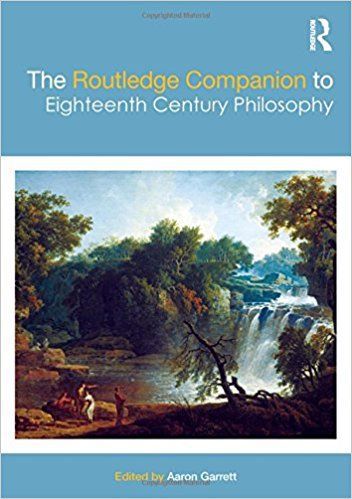
“The Eighteenth century is one of the most important periods in the history of Western philosophy, witnessing the philosophical, scientific, religious, and social and political change of the Enlightenment on a massive scale. In spite of this, there are few overviews of the philosophy of the period as a whole. The Routledge Companion to Eighteenth Century Philosophy is an authoritative survey and assessment of this momentous period, covering major thinkers, topics and movements in Eighteenth century philosophy. The thirty-six specially commissioned chapters by a team of international contributors offer an extensive treatment of the Enlightenment, metaphysics and religion, mind, knowledge, perception, passions, morals, politics and aesthetics. A section on Philosophy and the Arts and Sciences shows the connections between philosophy and other areas of inquiry, and the final part is devoted to major figures of the period: Hume, Kant, and Rousseau. The Routledge Companion to Eighteenth Century Philosophy provides students of philosophy and those from related disciplines with an outstanding and accessible guide to this fascinating period in the history of philosophy”–
Centore’s work is an inquiry into the weaknesses and strengths of the two basic positions in ethics: the man-centered model and the God-centered model for deciding between right and wrong behavior. The philosophical paradigm for the man-centered approach is absolute relativism, while the paradigm for the God-centered approach is relative absolutism. Centore argues that the man-centered model in actual practice proves not to be realistic as an ethical guide, while the God-centered model, if properly understood, is the most useful approach. This work penetrates difficult ethical issues by examining human experience and reasoning in conjunction with actual choices of action. Although the God-centered approach is shown to be the most practical, Centore argues for a natural moral law that avoids any specific theology. Each chapter discusses the historical and theoretical background of the approaches and two possible compromises. The work is enlivened with examples of possible contexts in which moral decisions must take place. Various ethical dilemmas are presented with an examination of the potential consequences of applying either the atheistic or the theistic ethical approach. Centore’s argument is complex, but he explains the elements clearly and his conclusion is strengthened by real-life cases and an extensive Bibliography.
Do citizens have an obligation to obey the law? This book differs from standard approaches by shifting from the language of obedience (orders) to that of deference (normative judgments). The popular view that law claims authority but does not have it is here reversed on both counts: Law does not claim authority but has it. Though the focus is on political obligation, the author approaches that issue indirectly by first developing a more general account of when deference is due to the view of others. Two standard practices that political theorists often consider in exploring the question of political obligation – fair-play and promise-keeping – can themselves be seen as examples of a duty of deference. In this respect the book defends a more general theory of ethics whose scope extends beyond the question of political obligation to questions of duty in the case of law, promises, fair play and friendship.
This collection brings together Thomas Reid’s manuscript lectures and papers on practical ethics, adding considerably to our understanding not only of Reid but of the thought of the Scottish Enlightenment and of the education system of the time.
ما از اخلاق چه انتظاری داریم؟ این سوال شاید تاحدودی برای عموم مردم و یا متخصصان این رشته قابل پاسخ باشد؛ اینکه خوب بودن را به ما بیاموزد و در تنظیم روابط فردی م...

جشن کتاب تهران به ایستگاه سی و یکم رسیده است. حال و احوال نشر کتاب خوب نیست و باید فرهنگدوستان را به خرید و هدیه دادن کتاب ترغیب نمود. خانه اخلاقپژوهان جوان ب...

بنیاد کتابهای اخلاق اسلامی عمدتا پالایش جان از آلودگیها و آراستن آن به زیباییها است. اندیشه محوری این قبیل کتابها آن است که انسان فعلی آنی نیست که باید باشد...

-
0 Comments