Notice: تابع WP_Block_Type_Registry::register به طورنادرست فراخوانی شد. نامهای نوع بلوک نباید حروف بزرگ داشته باشند. لطفاً برای اطلاعات بیشتر، اشکال زدایی در وردپرس را مشاهده کنید. (این پیام در نگارش 5.0.0 افزوده شده است.) in /home/ethicsho/public_html/wp-includes/functions.php on line 5313
Warning: Use of undefined constant TDC_PATH_LEGACY - assumed 'TDC_PATH_LEGACY' (this will throw an Error in a future version of PHP) in /home/ethicsho/public_html/wp-content/plugins/td-composer/td-composer.php on line 109
Warning: Use of undefined constant TDSP_THEME_PATH - assumed 'TDSP_THEME_PATH' (this will throw an Error in a future version of PHP) in /home/ethicsho/public_html/wp-content/plugins/td-composer/td-composer.php on line 113 بایگانیهای Conspiracies - Fiction - خانه اخلاق پژوهان جوان Notice: Trying to access array offset on value of type bool in /home/ethicsho/public_html/wp-content/plugins/wp-ulike/inc/general-functions.php on line 807
In Goodness and Justice, Joseph Mendola develops a unified moral theory that defends the hedonism of classical utilitarianism while evading utilitarianism’s familiar difficulties by two modifications. His theory incorporates a new form of consequentialism. When, as is common, someone is engaged in conflicting group acts, it requires that one perform the role in that group that is most beneficent. The theory holds that overall value is distribution-sensitive, ceding maximum weight to the well-being of the worst-off sections of sentient lives. It is properly congruent with commonsense intuition and required by the true metaphysics of value, by the unconstituted natural good found in our world.
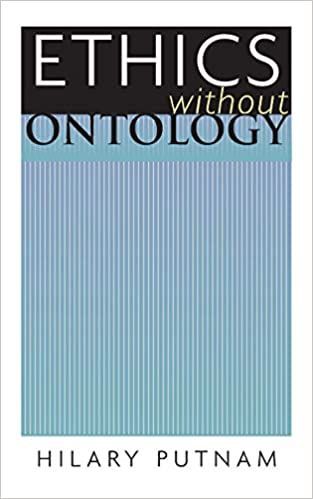
In this brief book one of the most distinguished living American philosophers takes up the question of whether ethical judgments can properly be considered objective–a question that has vexed philosophers over the past century. Looking at the efforts of philosophers from the Enlightenment through the twentieth century, Putnam traces the ways in which ethical problems arise in a historical context. Hilary Putnam’s central concern is ontology–indeed, the very idea of ontology as the division of philosophy concerned with what (ultimately) exists. Reviewing what he deems the disastrous consequences of ontology’s influence on analytic philosophy–in particular, the contortions it imposes upon debates about the objective of ethical judgments–Putnam proposes abandoning the very idea of ontology. He argues persuasively that the attempt to provide an ontological explanation of the objectivity of either mathematics or ethics is, in fact, an attempt to provide justifications that are extraneous to mathematics and ethics–and is thus deeply misguided.
To what extent should parents be allowed to use reproductive technologies to determine the characteristics of their future children? And is there something morally wrong with parents who wish to do this? Choosing Tomorrow’s Children provides answers to these (and related) questions. In particular, the book looks at issues raised by selective reproduction, the practice of choosing between different possible future persons by selecting or deselecting (for example) embryos, eggs, and sperm. Wilkinson offers answers to questions including the following. Do children have a ‘right to an open future’ and, if they do, what moral constraints does this place upon selective reproduction? Should parents be allowed to choose their future children’s sex? Should we ‘screen out’ as much disease and disability as possible before birth, or would that be an objectionable form of eugenics? Is it acceptable to create or select a future person in order to provide lifesaving tissue for an existing relative? Is there a moral difference between selecting to avoid disease and selecting to produce an ‘enhanced’ child? Should we allow deaf parents to use reproductive technologies to ensure that they have a deaf child?
ما از اخلاق چه انتظاری داریم؟ این سوال شاید تاحدودی برای عموم مردم و یا متخصصان این رشته قابل پاسخ باشد؛ اینکه خوب بودن را به ما بیاموزد و در تنظیم روابط فردی م...

جشن کتاب تهران به ایستگاه سی و یکم رسیده است. حال و احوال نشر کتاب خوب نیست و باید فرهنگدوستان را به خرید و هدیه دادن کتاب ترغیب نمود. خانه اخلاقپژوهان جوان ب...

بنیاد کتابهای اخلاق اسلامی عمدتا پالایش جان از آلودگیها و آراستن آن به زیباییها است. اندیشه محوری این قبیل کتابها آن است که انسان فعلی آنی نیست که باید باشد...

-
0 Comments