Notice: تابع WP_Block_Type_Registry::register به طورنادرست فراخوانی شد. نامهای نوع بلوک نباید حروف بزرگ داشته باشند. لطفاً برای اطلاعات بیشتر، اشکال زدایی در وردپرس را مشاهده کنید. (این پیام در نگارش 5.0.0 افزوده شده است.) in /home/ethicsho/public_html/wp-includes/functions.php on line 5313
Warning: Use of undefined constant TDC_PATH_LEGACY - assumed 'TDC_PATH_LEGACY' (this will throw an Error in a future version of PHP) in /home/ethicsho/public_html/wp-content/plugins/td-composer/td-composer.php on line 109
Warning: Use of undefined constant TDSP_THEME_PATH - assumed 'TDSP_THEME_PATH' (this will throw an Error in a future version of PHP) in /home/ethicsho/public_html/wp-content/plugins/td-composer/td-composer.php on line 113 بایگانیهای Conscience - خانه اخلاق پژوهان جوان Notice: Trying to access array offset on value of type bool in /home/ethicsho/public_html/wp-content/plugins/wp-ulike/inc/general-functions.php on line 807
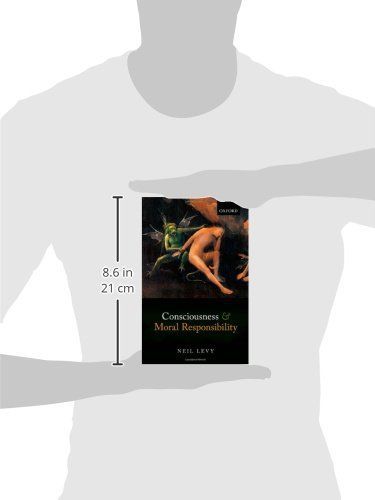
Neil Levy presents an original theory of freedom and responsibility. Cognitive neuroscience and psychology provide a great deal of evidence that our actions are often shaped by information of which we are not conscious; some psychologists have concluded that we are actually conscious of very few of the facts we respond to. But most people seem to assume that we need to be conscious of the facts we respond to in order to be responsible for what we do. Some thinkers have argued that this naive assumption is wrong, and we need not be conscious of these facts to be responsible, while others think it is correct and therefore we are never responsible. Levy argues that both views are wrong. He sets out and defends a particular account of consciousness-the global workspace view-and argues this account entails that consciousness plays an especially important role in action. We exercise sufficient control over the moral significance of our acts to be responsible for them only when we are conscious of the facts that give to our actions their moral character. Further, our actions are expressive of who we are as moral agents only when we are conscious of these same facts. There are therefore good reasons to think that the naive assumption, that consciousness is needed for moral responsibility, is in fact true. Levy suggests that this entails that people are responsible less often than we might have thought, but the consciousness condition does not entail that we are never morally responsible. — Provided by publisher.
Widely acknowledged to be the perfect introduction to the subject, this important text presents in concise form an insightful yet exceptionally complete history of moral philosophy in the West, from the Greeks to contemporary times.
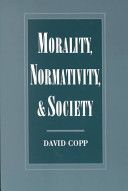
Moral claims not only assume to be true, but they also guide our choices. This fascinating book presents a new theory of normative judgment, the “standard-based theory,” which offers a schematic account of the truth conditions of normative propositions of all kinds, including moral propositions and propositions about reasons. Here, David Copp argues that because any society needs a social moral code in order to enable its members to live together successfully, and because it would be rational for a society to choose such a system, certain moral codes–and the standards they include–are justified. In this work, Copp raises a number of important issues in moral theory, as well as in metaphysics and the philosophy of language.
Most recent texts in moral philosophy have either concentrated on practical moral issues or else, if theoretical, have tended toward one-sided presentations of recent, fashionable views. Discussions of applied ethics cannot go very far without revealing underlying philosophical assumptions about how deeper, more general issues are treated. Similarly, recent approaches to ethics are difficult to understand without a knowledge of the context of the historical views against which these approaches are reacting. The Nature of Moral Thinkingwill satisfy the intellectually curious student, providing a solid and fair discussion of the classical philosophical questions about our moral thinking, surveying the main types of meta-ethical and normative ethical theories, while not excluding the more recent discussions of moral realism, of anti-realism, and of virtue morality. Francis Snare demonstrates that glib intellectualistic thinking about morality, especially in regard to relativism andsubjectivism, is seriously flawed. He also focuses attention on the question of whether particular theories of the origins of morality (for example, those of Nietzsche and Marx) undermine morality. All students and teachers of ethics and philosophy will find this book one of the most complete and detailed introductory-level surveys of the foundations of ethics with emphasis on the problems of the subjectivity, the relativity, and the origins of morality.
John Broome’s work has always combined sophisticated economic and philosophical expertise, and Ethics Out of Economics brings together some of his most important essays, augmented by a new introduction. This book examines some of the practical issues that lie between economics and ethics, and shows how utility theory can contribute to ethics, as many economic problems are also ethical problems. Professor Broome raises some fundamental questions about economic equality, preserving the environment, and the allocation of medical resources, and powerfully shows how economic methods can contribute to moral philosophy.
ما از اخلاق چه انتظاری داریم؟ این سوال شاید تاحدودی برای عموم مردم و یا متخصصان این رشته قابل پاسخ باشد؛ اینکه خوب بودن را به ما بیاموزد و در تنظیم روابط فردی م...

جشن کتاب تهران به ایستگاه سی و یکم رسیده است. حال و احوال نشر کتاب خوب نیست و باید فرهنگدوستان را به خرید و هدیه دادن کتاب ترغیب نمود. خانه اخلاقپژوهان جوان ب...

بنیاد کتابهای اخلاق اسلامی عمدتا پالایش جان از آلودگیها و آراستن آن به زیباییها است. اندیشه محوری این قبیل کتابها آن است که انسان فعلی آنی نیست که باید باشد...

-
0 Comments