Notice: تابع WP_Block_Type_Registry::register به طورنادرست فراخوانی شد. نامهای نوع بلوک نباید حروف بزرگ داشته باشند. لطفاً برای اطلاعات بیشتر، اشکال زدایی در وردپرس را مشاهده کنید. (این پیام در نگارش 5.0.0 افزوده شده است.) in /home/ethicsho/public_html/wp-includes/functions.php on line 5313
Warning: Use of undefined constant TDC_PATH_LEGACY - assumed 'TDC_PATH_LEGACY' (this will throw an Error in a future version of PHP) in /home/ethicsho/public_html/wp-content/plugins/td-composer/td-composer.php on line 109
Warning: Use of undefined constant TDSP_THEME_PATH - assumed 'TDSP_THEME_PATH' (this will throw an Error in a future version of PHP) in /home/ethicsho/public_html/wp-content/plugins/td-composer/td-composer.php on line 113 بایگانیهای Computers / Intelligence (AI) & Semantics - خانه اخلاق پژوهان جوان Notice: Trying to access array offset on value of type bool in /home/ethicsho/public_html/wp-content/plugins/wp-ulike/inc/general-functions.php on line 807
Why does society allow, or even encourage, private appropriation of inventions? When do patents encourage competition, when do they hamper it? How should society design the compromise between the interest of the inventor and the interest of the users of patented inventions? How should the patent system adapt to new technological areas? These questions and many more are addressed by the authors in this groundbreaking analysis of the economics behind the European patent system. Beginning with the history and principles of the patent system, the book then examines the economic effects of patenting on innovation and the diffusion of technology and growth. Throughout the book the theory and the reality are discussed alongside real world examples and comparison between the European, USA, and Japanese patent systems.
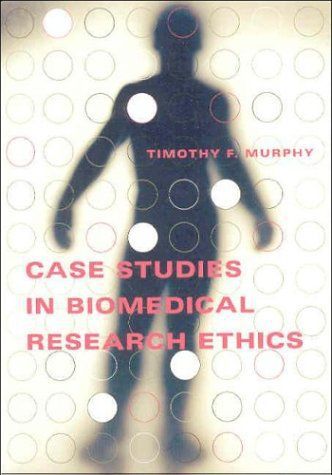
This textbook for instruction in biomedical research ethics can also serve as a valuable reference for professionals in the field of bioethics. The 149 cases included in the book are grouped in nine chapters, each of which covers a key area of debate in the field. Some of the case studies are classics, including the famous cases of the Tuskegee Syphilis Study (in which subjects with syphilis were not given treatment) and the Willowbrook hepatitis studies (in which institutionalized subjects were intentionally exposed to hepatitis). Others focus on such current issues as human embryonic stem cell research, cloning by somatic nuclear transfer, and the design and function of institutional review boards. Each chapter begins with a brief introduction that places the issues raised in context; this is followed by a number of cases (each of which is no more than a few pages). Study questions meant to encourage further discussion follow each case.After an introductory discussion of the history and tenets of ethics in medical research, the book’s chapters cover the topics of oversight and study design; informed consent; the selection of subjects; conflicts of interest; the social effects of research; embryos, fetuses, and children; genetic research; the use of animals; and authorship and publication. Following these chapters are appendixes with the texts of the Nuremburg Code and the World Declaration of Geneva, two key documents in the establishment of bioethical standards for research. Also included are a glossary, a table of cases by general category, and an alphabetical listing of cases.
Hendrik Lorenz presents a comprehensive study of Plato’s and Aristotle’s conceptions of non-rational desire. They see this as something that humans share with animals, and which aims primarily at the pleasures of food, drink, and sex. Lorenz explores the cognitive resources that both philosophers make available for the explanation of such desires, and what they take rationality to add to the motivational structure of human beings. In doing so, he exposes a remarkable degree of continuity between Plato’s and Aristotle’s thought in this area. He also sheds fresh light, not only on both philosophers’ theories of motivation, but also on how they conceive of the mind, both in itself and in relation to the body.
What are the roots of human nature and what is wrong with the scientific picture of what and who we are? Was Thomas Hobbes right to say that human life is “solitary, poor, nasty, brutish, and short?” In this new work, biologist Mary Clark argues that the Western view of human nature is built around a highly atomistic and ideological framework that encourages us to think about the world and ourselves in the wrong way. Beginning with some of the problems that emerge from building “laws” of human nature upon “laws” of physics, Mary Clark tackles an astonishing array of problems: what role genes play in the development of the brain, how we generated the concepts of mind and meaning we accept today and what is wrong with them, to the way we think about the formation of individual and group identity, conflict resolution and the environment. Throughout the book, she critically scrutinizes many widely-held views, whether it is what Darwin actually said about adaptive fitness and survival, received models of human nature such as man the “warrior” or “hunter,” or whether it is right to think of emotions as an unfortunate legacy of our evolutionary heritage. Arguing for a more expansive view of science and human nature, she makes a strong case for the role of culture in constructing what and who we are without falling into the trap of relativism.
The Oxford Handbook of Epistemology contains 19 previously unpublished chapters by today’s leading figures in the field. These chapters function not only as a survey of key areas, but as original scholarship on a range of vital topics. Written accessibly for advanced undergraduates, graduate students, and professional philosophers, the Handbook explains the main ideas and problems of contemporary epistemology while avoiding overly technical detail.
ما از اخلاق چه انتظاری داریم؟ این سوال شاید تاحدودی برای عموم مردم و یا متخصصان این رشته قابل پاسخ باشد؛ اینکه خوب بودن را به ما بیاموزد و در تنظیم روابط فردی م...

جشن کتاب تهران به ایستگاه سی و یکم رسیده است. حال و احوال نشر کتاب خوب نیست و باید فرهنگدوستان را به خرید و هدیه دادن کتاب ترغیب نمود. خانه اخلاقپژوهان جوان ب...

بنیاد کتابهای اخلاق اسلامی عمدتا پالایش جان از آلودگیها و آراستن آن به زیباییها است. اندیشه محوری این قبیل کتابها آن است که انسان فعلی آنی نیست که باید باشد...

-
0 Comments