Notice: تابع WP_Block_Type_Registry::register به طورنادرست فراخوانی شد. نامهای نوع بلوک نباید حروف بزرگ داشته باشند. لطفاً برای اطلاعات بیشتر، اشکال زدایی در وردپرس را مشاهده کنید. (این پیام در نگارش 5.0.0 افزوده شده است.) in /home/ethicsho/public_html/wp-includes/functions.php on line 5313
Warning: Use of undefined constant TDC_PATH_LEGACY - assumed 'TDC_PATH_LEGACY' (this will throw an Error in a future version of PHP) in /home/ethicsho/public_html/wp-content/plugins/td-composer/td-composer.php on line 109
Warning: Use of undefined constant TDSP_THEME_PATH - assumed 'TDSP_THEME_PATH' (this will throw an Error in a future version of PHP) in /home/ethicsho/public_html/wp-content/plugins/td-composer/td-composer.php on line 113 بایگانیهای Complementary Therapies - Ethics - خانه اخلاق پژوهان جوان Notice: Trying to access array offset on value of type bool in /home/ethicsho/public_html/wp-content/plugins/wp-ulike/inc/general-functions.php on line 807
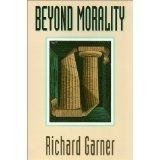
“Morality and religion have failed because they are based on duplicity and fantasy. We need something new….” With this startling statement, Richard Garner begins to define a system of behavior that will nurture our capabilities for love and language, for creation and cooperation.The satisfying personal and social strategy for living Garner proposes is “informed, compassionate amoralism.” To do without morality, he argues, is to reject the idea that there are intrinsic values, objective duties, and natural rights. Leaving illusions behind us and learning to listen to others and to ourselves may be what we need to lead us out of the darkness.Garner builds his case on a survey of moral definitions and arguments from ancient Greece forward. Beyond Morality revisits the tenets of Christianity and Eastern religious, providing readers with a meaningful overview of the history of moral thought.Quotations illuminate and illustrate the text, adding to the value of Beyond Morality as a textbook for ethics courses. Author note: Richard Garner is Professor of Philosophy at The Ohio State University.
What are the goals of agricultural science? What should the goals of agricultural science be? How do and how should the practitioners of agriculture address complex ethical questions? These questions are explored in this monumental book so that those in agriculture will begin an open dialoge on the ethics of agriculture. Discussion of foundational values, of why we practice agriculture as we do, should become a central, rather than peripheral, part of agricultural practice and education. If agricultural scientists do not venture forth to understand and shape the ethical base of the future, it will be imposed by others. Largely autobiographical, this book covers topics such as scientific truth and myth, what agricultural research should be done, an introduction to ethics, moral confidence in agriculture, the relevance of ethics to agriculture, sustainability, and biotechnology. * Written by an expert who has been engaged in agricultural education and research for over 35 years * Content is easily understandable by non-philosophers * The concepts of scientific truth and myth are contrasted and compared * Chapter sidebars highlight important concepts and can be used to engage students in further discussion * Companion website will accompany the book with further teaching aids and a discussion board
The utility maximization paradigm forms the basis of many economic, psychological, cognitive and behavioral models. Since it was first devised in the eighteenth century, numerous examples have revealed the deficiencies of the concept. This book makes a contribution to overcome those deficiencies by taking into account insensitivity of measurement threshold and context of choice. It covers classic theory as a special, context-free case and gives a systematic overview of new models of utility maximization within a context-dependent threshold as well as related preference and choice models. The second edition has been updated to include the most recent developments and a new chapter on classic and new results for infinite sets. The presented models will be helpful to scientists in economics, decision making theory, social choice theory, behavioral and cognitive sciences, and related fields.
ما از اخلاق چه انتظاری داریم؟ این سوال شاید تاحدودی برای عموم مردم و یا متخصصان این رشته قابل پاسخ باشد؛ اینکه خوب بودن را به ما بیاموزد و در تنظیم روابط فردی م...

جشن کتاب تهران به ایستگاه سی و یکم رسیده است. حال و احوال نشر کتاب خوب نیست و باید فرهنگدوستان را به خرید و هدیه دادن کتاب ترغیب نمود. خانه اخلاقپژوهان جوان ب...

بنیاد کتابهای اخلاق اسلامی عمدتا پالایش جان از آلودگیها و آراستن آن به زیباییها است. اندیشه محوری این قبیل کتابها آن است که انسان فعلی آنی نیست که باید باشد...

-
0 Comments