Notice: تابع WP_Block_Type_Registry::register به طورنادرست فراخوانی شد. نامهای نوع بلوک نباید حروف بزرگ داشته باشند. لطفاً برای اطلاعات بیشتر، اشکال زدایی در وردپرس را مشاهده کنید. (این پیام در نگارش 5.0.0 افزوده شده است.) in /home/ethicsho/public_html/wp-includes/functions.php on line 5313
Warning: Use of undefined constant TDC_PATH_LEGACY - assumed 'TDC_PATH_LEGACY' (this will throw an Error in a future version of PHP) in /home/ethicsho/public_html/wp-content/plugins/td-composer/td-composer.php on line 109
Warning: Use of undefined constant TDSP_THEME_PATH - assumed 'TDSP_THEME_PATH' (this will throw an Error in a future version of PHP) in /home/ethicsho/public_html/wp-content/plugins/td-composer/td-composer.php on line 113 بایگانیهای Civil Service Ethics - خانه اخلاق پژوهان جوان Notice: Trying to access array offset on value of type bool in /home/ethicsho/public_html/wp-content/plugins/wp-ulike/inc/general-functions.php on line 807
” . . . one of the most important works on philosophical ethics written in recent years. . . . Caputo speaks with a passion and a concern that are rare in academic philosophy. His profound sense of humor deepens the passion of the viewpoints he develops.Oacute; Ntilde;Mark C. Taylor Ograve; . . . a counterethics whose multiple voices will be heard long after the trivializing arguments of many analytic ethicists have vanished and the arcane formulations of many postmoderns jettisoned. . . . The either/or of this dialogue is shown as the topos of a postmodern ethics.Oacute; Ntilde;Edith Wyschogrod In Against Ethics John D. Caputo undertakes a passionate, poetic, and satiric search for the basis of an ethics in the postmodern situation. Restaging Fear and Trembling, Caputo defends the notion of obligation without ethics, of responsibility without the support of ethical foundations. Retelling the story of Abraham and Isaac, Caputo strikes the pose of a postmodern-day Johannes de Silentio, accompanied by communications from such startling figures as Johanna de Silentio, Felix Sineculpa, and Magdalena de la Cruz. In dialogue with the thought of Kierkegaard, Nietzsche, Levinas, Derrida, and Lyotard, Caputo forges a challenging, original account of what is possible and what is not possible for a continentalist ethics today.
As our scientific and technical abilities expand at breathtaking speeds, concern that modern genetics and bioengineering are leading us to a posthuman future is growing. Is Human Nature Obsolete? poses the overarching question of what it is to be human against the background of these current advances in biotechnology. Its perspective is philosophical and interdisciplinary rather than technical; the focus is on questions of fundamental ontological importance rather than the specifics of medical or scientific practice.The authors—all distinguished scholars in their fields—take on questions about technology’s goals and values that are often ignored or sidelined in the face of rapid scientific advances and the highly specialized nature of technical knowledge. The essays included represent a rich variety of thought, ranging from finely nuanced philosophical and theological arguments to historical studies and cultural commentaries. Several explore the historical background of today’s biotechnology: Timothy Casey traces such developments as the emergence of cybernetic humanity from Cartesian dualism, and Diane Paul presents the history of “positive” versus coerced eugenics. Jean Bethke Elshtain discusses cloning as a “messianic project” to perfect the body and exclude natural diversity—giving as an example the elimination of Down Syndrome as an acceptable human type—while Harold Baillie calls for an examination of the metaphysical roots of personhood. Robert Proctor finds no evidence in paleontology for any “essence of humanity,” and Tom Shannon argues against materialist reductionism. Addressing social concerns, Lisa Sowle Cahill finds the possibility of a political solution to the problems raised by genetic engineering in Catholic teachings on social justice, and Langdon Winner looks critically at the “scientific enthusiasts of a posthuman future.” Taken as a whole, the book provides a humanistic overview of a subject too often considered only in its technological aspect.
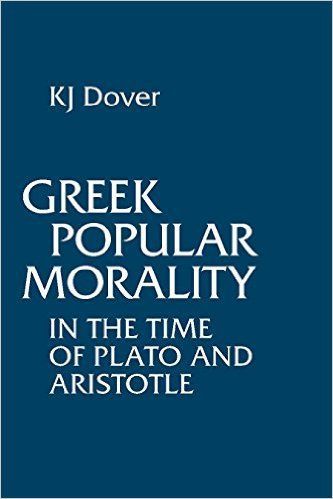
In ancient Greece, as today, popular moral attitudes differed importantly from the theories of moral philosophers. While for the latter we have Plato and Aristotle, this insightful work explores the everyday moral conceptions to which orators appealed in court and political assemblies, and which were reflected in non-philosophical literature. Oratory and comedy provide the primary testimony, and reference is also made to Sophocles, Euripides, Herodotus, Thucydides, Xenophon, and other sources. The selection of topics, the contrasts and comparisons with modern religious, social and legal principles, and accessibility to the non-specialist ensure the work’s appeal to all readers with an interest in ancient Greek culture and social life.
ما از اخلاق چه انتظاری داریم؟ این سوال شاید تاحدودی برای عموم مردم و یا متخصصان این رشته قابل پاسخ باشد؛ اینکه خوب بودن را به ما بیاموزد و در تنظیم روابط فردی م...

جشن کتاب تهران به ایستگاه سی و یکم رسیده است. حال و احوال نشر کتاب خوب نیست و باید فرهنگدوستان را به خرید و هدیه دادن کتاب ترغیب نمود. خانه اخلاقپژوهان جوان ب...

بنیاد کتابهای اخلاق اسلامی عمدتا پالایش جان از آلودگیها و آراستن آن به زیباییها است. اندیشه محوری این قبیل کتابها آن است که انسان فعلی آنی نیست که باید باشد...

-
0 Comments