Notice: تابع WP_Block_Type_Registry::register به طورنادرست فراخوانی شد. نامهای نوع بلوک نباید حروف بزرگ داشته باشند. لطفاً برای اطلاعات بیشتر، اشکال زدایی در وردپرس را مشاهده کنید. (این پیام در نگارش 5.0.0 افزوده شده است.) in /home/ethicsho/public_html/wp-includes/functions.php on line 5313
Warning: Use of undefined constant TDC_PATH_LEGACY - assumed 'TDC_PATH_LEGACY' (this will throw an Error in a future version of PHP) in /home/ethicsho/public_html/wp-content/plugins/td-composer/td-composer.php on line 109
Warning: Use of undefined constant TDSP_THEME_PATH - assumed 'TDSP_THEME_PATH' (this will throw an Error in a future version of PHP) in /home/ethicsho/public_html/wp-content/plugins/td-composer/td-composer.php on line 113 بایگانیهای Business Ethics/ Juvenile Literature - خانه اخلاق پژوهان جوان Notice: Trying to access array offset on value of type bool in /home/ethicsho/public_html/wp-content/plugins/wp-ulike/inc/general-functions.php on line 807
The need for a global ethics has its origin in the human situation as such (i.e. in the fact of hominisation that has dismissed us from the natural security of animal instincts and thrown us into the state of freedom) and especially in the present situation of humankind that is characterised by an extreme increase of external challenges to our co-responsability, brought about by the results of natural science, technology, politics and economy, and – as it appears – lacking internal resources of ethical reason. The present book tries to show that the transcentendal-pragmatic approach to discourse ethics can reconstruct the genesis of this situation and provide a rational response to the external challenges to and the internal deficits of global ethics. (Peeters 2001)
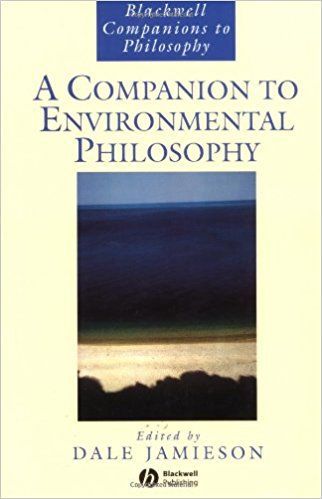
A Companion to Environmental Philosophy is a pioneering work in the burgeoning field of environmental philosophy. This ground-breaking volume contains thirty-six original articles exemplifying the rich diversity of scholarship in this field. Contains thirty-six original articles, written by international scholars. Traces the roots of environmental philosophy through the exploration of cultural traditions from around the world. Brings environmental philosophy into conversation with other fields and disciplines such as literature, economics, ecology, and law. Discusses environmental problems that stimulate current debates.
What is ethics? Where does it come from? Can we really hope to find any rational way of deciding how we ought to live? If we can, what would it be like, and how are we going to know when we have found it? To capture the essentials of what we know about the origins and nature of ethics, Peter Singer has drawn on anthropology, evolution, game theory, and works of fiction, in addition to the classic moral philosophy of such thinkers as Nietzsche, Kant, and Confucius. By choosing some of the finest pieces of writing, old and new, in and about ethics, he conveys the intellectual excitement of the search for answers to basic questions about how we ought to live. From the debates of Socrates and the profound writing of Rousseau to Jane Goodall’s reflections on the ethics of chimpanzee kinship and Luther’s commentary on the Sixth Commandment (thou shalt not kill), this engaging reader offers a complete and thorough introduction to the fascinating world of ethical debate.
Programs of ethical relativism notoriously face two great difficulties: 1) how can they account for our need to make ethical judgements about other groups and individuals with whom we come into conflict? and 2) how can they allow for us to criticize the group, set of desires, etc. to which our ethical norms are said to be relative? “Integrity and Moral Relativism develops a moderate version of cultural relativism that can answer these questions. After examining and defending the notion of a “world-picture,” and of incommensurable differences across world-pictures, the book brings its theoretical framework together with the history of anthropology to argue that a culture is indeed the appropriate expression of a world picture. It then draws on literary, philosophical and historical resources to illustrate the way in which Western society, specifically, contains traditions distinguishing legitimate cross-cultural judgment, and legitimate from illegitimate cultural self-criticism. As long as there is a language for these possibilities, an individual can see ethics as culturally based without compromising his or her integrity.
ما از اخلاق چه انتظاری داریم؟ این سوال شاید تاحدودی برای عموم مردم و یا متخصصان این رشته قابل پاسخ باشد؛ اینکه خوب بودن را به ما بیاموزد و در تنظیم روابط فردی م...

جشن کتاب تهران به ایستگاه سی و یکم رسیده است. حال و احوال نشر کتاب خوب نیست و باید فرهنگدوستان را به خرید و هدیه دادن کتاب ترغیب نمود. خانه اخلاقپژوهان جوان ب...

بنیاد کتابهای اخلاق اسلامی عمدتا پالایش جان از آلودگیها و آراستن آن به زیباییها است. اندیشه محوری این قبیل کتابها آن است که انسان فعلی آنی نیست که باید باشد...

-
0 Comments