Notice: تابع WP_Block_Type_Registry::register به طورنادرست فراخوانی شد. نامهای نوع بلوک نباید حروف بزرگ داشته باشند. لطفاً برای اطلاعات بیشتر، اشکال زدایی در وردپرس را مشاهده کنید. (این پیام در نگارش 5.0.0 افزوده شده است.) in /home/ethicsho/public_html/wp-includes/functions.php on line 5313
Warning: Use of undefined constant TDC_PATH_LEGACY - assumed 'TDC_PATH_LEGACY' (this will throw an Error in a future version of PHP) in /home/ethicsho/public_html/wp-content/plugins/td-composer/td-composer.php on line 109
Warning: Use of undefined constant TDSP_THEME_PATH - assumed 'TDSP_THEME_PATH' (this will throw an Error in a future version of PHP) in /home/ethicsho/public_html/wp-content/plugins/td-composer/td-composer.php on line 113 بایگانیهای Business & Economics / Knowledge Capital - خانه اخلاق پژوهان جوان Notice: Trying to access array offset on value of type bool in /home/ethicsho/public_html/wp-content/plugins/wp-ulike/inc/general-functions.php on line 807
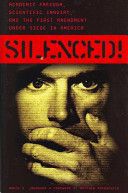
This book is about people whose beliefs and affiliations have opposed powerful interests in the present-day United States. This eclectic group of people and controversial issues, from climate-change scientists who have been censored by the Bush administration to Muslims accused of terrorism, have one thing in common. All of them straddle the limits of what Noam Chomsky has called permissible debate as defined by dominant political and economic institutions and individuals. The central thesis is that restriction of free inquiry is harmful to our culture because it inhibits the search for knowledge. Johansen presents case studies in the borderlands of free speech in a Jeffersonian cast-an intellectual framework assuming that open debate-even of unpopular ideas-is essential to accurate perception of reality. This book is about people whose ideological circumstances have found them opposing established beliefs in our times-scholars advocating the Palestinian cause in a very hostile intellectual environment, for example, as well as climate scientists defending themselves against the de-funding of their laboratories by defenders of fossil-fuel interests; opponents of creation science under assault for teaching what once was regarded as household-variety biology (a.k.a. Darwinism); Marxists in a political system dominated by neoconservatives. The central thesis that unites this diverse array of controversies is that shutting down free inquiry-most notably for points of view deemed unpopular-dumbs us all down by restraining the search for knowledge, which demands open inquiry. We have been told when going to war, as in Iraq, that freedom isn’t free, the unstated assumption being that our armed forces are fighting and dying to safeguard our civil rights at home and abroad. During recent years, however, freedom to inquire and debate without retribution has been under assault in the United States. This assault has been carried out under a distinctly Orwellian cast, under Newspeak titles such as the Patriot Act, parts of which might as well be described more honestly as the Restriction of Freedom of Inquiry Act. The information gathered here will interest (and probably anger) anyone who is concerned with protecting robust, free inquiry in a nation that takes seriously its freedom to speak out, and to define truth through open debate.
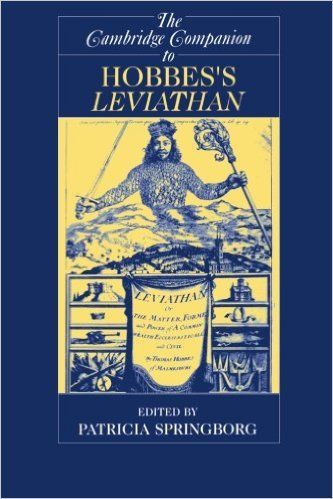
This Companion makes a new departure in Hobbes scholarship, addressing a philosopher whose impact was as great on Continental European theories of state and legal systems as it was at home. This volume is a systematic attempt to incorporate work from both the Anglophone and Continental traditions, bringing together newly commissioned work by scholars from ten different countries in a topic-by-topic sequence of essays that follows the structure of Leviathan, re-examining the relationship among Hobbes’s physics, metaphysics, politics, psychology, and religion. Collectively they showcase important revisionist scholarship that re-examines both the context for Leviathan and its reception, demonstrating the degree to which Hobbes was indebted to the long tradition of European humanist thought. This Cambridge Companion shows that Hobbes’s legacy was never lost and that he belongs to a tradition of reflection on political theory and governance that is still alive, both in Europe and in the diaspora.
This text introduces readers to the tools necessary for making moral and ethical decisions regarding the use of mass media. The focus is on the three mass media industries most pervasive in today’s society: the news media (journalism), advertising, and public relations. In his exploration of ethical issues and media, author Thomas Bivins guides students to understand not what the “right” answers are, but to identify those answers that are most appropriate within the given context. Identifying those to whom the answers are the most appropriate is a major concern of this book. Readers come away with a greater appreciation for the complexities of making a moral decision and develop a personal “yardstick” by which to measure their decisions. The chapters in this text offer insights on: similarities and differences among the ethical dilemmas faced by the mass media; common ground on which to evaluate media behavior; media obligations; professional ethics; ethical theory and its application to the modern media; and considerations of truth and harm. This text has been developed for courses covering ethics in public relations, advertising, and journalism. Offering valuable lessons applicable to all forms of communication, Mixed Media serves as a critical starting point for understanding and developing answers to ethical questions. These lessons serve not only to better students’ ability to make ethical decisions, but also to better the media professions as they become practitioners in the mass media industry.
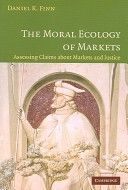
Disagreements about the morality of markets, and about self-interested behavior within markets, run deep. They arise from perspectives within economics and political philosophy that appear to have nothing in common. In this book, Daniel Finn provides a framework for understanding these conflicting points of view. Recounting the arguments for and against markets and self-interest, he argues that every economy must address four fundamental problems: allocation, distribution, scale, and the quality of relations. In addition, every perspective on the morality of markets addresses explicitly or implicitly the economic, political, and cultural contexts of markets, or what Finn terms ‘the moral ecology of markets’. His book enables a dialogue among the various participants in the debate over justice in markets. In this process, Finn engages with major figures in political philosophy, including John Rawls, Robert Nozick, and Michael Walzer, as well as in economics, notably Milton Friedman, Friedrich Hayek, and James Buchannan.
ما از اخلاق چه انتظاری داریم؟ این سوال شاید تاحدودی برای عموم مردم و یا متخصصان این رشته قابل پاسخ باشد؛ اینکه خوب بودن را به ما بیاموزد و در تنظیم روابط فردی م...

جشن کتاب تهران به ایستگاه سی و یکم رسیده است. حال و احوال نشر کتاب خوب نیست و باید فرهنگدوستان را به خرید و هدیه دادن کتاب ترغیب نمود. خانه اخلاقپژوهان جوان ب...

بنیاد کتابهای اخلاق اسلامی عمدتا پالایش جان از آلودگیها و آراستن آن به زیباییها است. اندیشه محوری این قبیل کتابها آن است که انسان فعلی آنی نیست که باید باشد...

-
0 Comments