Notice: تابع WP_Block_Type_Registry::register به طورنادرست فراخوانی شد. نامهای نوع بلوک نباید حروف بزرگ داشته باشند. لطفاً برای اطلاعات بیشتر، اشکال زدایی در وردپرس را مشاهده کنید. (این پیام در نگارش 5.0.0 افزوده شده است.) in /home/ethicsho/public_html/wp-includes/functions.php on line 5313
Warning: Use of undefined constant TDC_PATH_LEGACY - assumed 'TDC_PATH_LEGACY' (this will throw an Error in a future version of PHP) in /home/ethicsho/public_html/wp-content/plugins/td-composer/td-composer.php on line 109
Warning: Use of undefined constant TDSP_THEME_PATH - assumed 'TDSP_THEME_PATH' (this will throw an Error in a future version of PHP) in /home/ethicsho/public_html/wp-content/plugins/td-composer/td-composer.php on line 113 بایگانیهای Biotechnology/ Moral And Ethical Aspects/ Encyclopedias - خانه اخلاق پژوهان جوان Notice: Trying to access array offset on value of type bool in /home/ethicsho/public_html/wp-content/plugins/wp-ulike/inc/general-functions.php on line 807
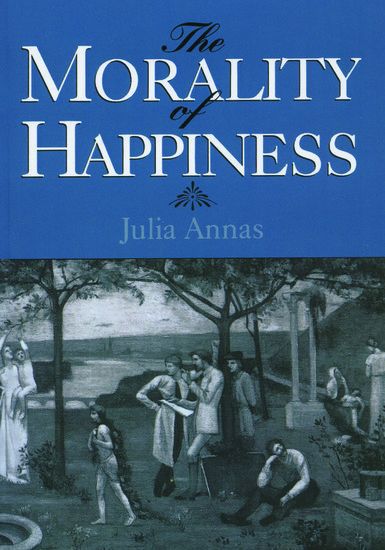
Ancient ethical theories, based on the notions of virtue and happiness, have struck many as an attractive alternative to modern theories. But we cannot find out whether this is true until we understand ancient ethics–and to do this we need to examine the basic structure of ancient ethical theory, not just the details of one or two theories. In this book, Annas brings together the results of a wide-ranging study of ancient ethical philosophy and presents it in a way that is easily accessible to anyone with an interest in ancient or modern ethics. She examines the fundamental notions of happiness and virtue, the role of nature in ethical justification and the relation between concern for self and concern for others. Her careful examination of the ancient debates and arguments shows that many widespread assumptions about ancient ethics are quite mistaken. Ancient ethical theories are not egoistic, and do not depend for their acceptance on metaphysical theories of a teleological kind. Most centrally, they are recognizably theories of morality, and the ancient disputes about the place of virtue in happiness can be seen as akin to modern disputes about the demands of morality.
This work is an investigation of the ongoing methodical reconstruction of Catholic moral theology. As such it is based on and honors the work of Norbert Rigali, S.J., one of the most important contributors to this reconstruction.The decisive break from the traditional manual approach to moral theology represented by Vatican II reoriented moral theology away from universal natural law morality based on the commandments to a morality based on specifically Christian sources. This reorientation, however, was not an either/or but a both/and proposition. Father Norbert Rigali, S.J. has been an inspiration and a challenge to moral theologians working toward reconstruction. This essays in this collection address four questions in the renewal movement: an investigation of normative methods, a clarification of sources, an investigation of the tension between natural law morality and Christian ethics and/or morality, and a combination of methodical insights of philosophy and traditional Christian sources in their investigation of biomedical ethical issues.
Renowned scholar Robert Adams explores the relation between religion and ethics through a comprehensive philosophical account of a theistically-based framework for ethics. Adams’ framework begins with the good rather than the right, and with excellence rather than usefulness. He argues that loving the excellent, of which adoring God is a clear example, is the most fundamental aspect of a life well lived. Developing his original and detailed theory, Adams contends that devotion, the sacred, grace, martyrdom, worship, vocation, faith, and other concepts drawn from religious ethics have been sorely overlooked in moral philosophy and can enrich the texture of ethical thought.
The author’s purpose is to understand the philosophical foundations of Hegel’s social theory by articulating the normative standards at work in his claim that the three central social institutions of the modern era–the nuclear family, civil society, and the constitutional state–are rational or good. Its central question is: what, for Hegel, makes a rational social order rational? In addressing this question the book aspires to be faithful to Hegel’s texts and to articulate a compelling theory of rational social institutions; its aim is not only to interpret Hegel correctly but also to demonstrate the richness and power that his vision of the rational social order possesses.Frederick Neuhouser’s task is to understand the conceptions of freedom on which Hegel’s theory rests and to show how they ground his arguments in defense of the modern social world. In doing so, the author focuses on Hegel’s most important and least understood contribution to social philosophy, the idea of “social freedom.”Neuhouser’s strategy for making sense of social freedom is to show its affinities with Rousseau’s conception of the general will. The main idea that Hegel appropriates from Rousseau is that rational social institutions must satisfy two conditions: first, they must furnish the basic social preconditions of their members’ freedom; and, second, all social members must be able subjectively to affirm their freedom-conditioning institutions as good and thus to regard the principles that govern their social participation as coming from their own wills.
ما از اخلاق چه انتظاری داریم؟ این سوال شاید تاحدودی برای عموم مردم و یا متخصصان این رشته قابل پاسخ باشد؛ اینکه خوب بودن را به ما بیاموزد و در تنظیم روابط فردی م...

جشن کتاب تهران به ایستگاه سی و یکم رسیده است. حال و احوال نشر کتاب خوب نیست و باید فرهنگدوستان را به خرید و هدیه دادن کتاب ترغیب نمود. خانه اخلاقپژوهان جوان ب...

بنیاد کتابهای اخلاق اسلامی عمدتا پالایش جان از آلودگیها و آراستن آن به زیباییها است. اندیشه محوری این قبیل کتابها آن است که انسان فعلی آنی نیست که باید باشد...

-
0 Comments