Notice: تابع WP_Block_Type_Registry::register به طورنادرست فراخوانی شد. نامهای نوع بلوک نباید حروف بزرگ داشته باشند. لطفاً برای اطلاعات بیشتر، اشکال زدایی در وردپرس را مشاهده کنید. (این پیام در نگارش 5.0.0 افزوده شده است.) in /home/ethicsho/public_html/wp-includes/functions.php on line 5313
Warning: Use of undefined constant TDC_PATH_LEGACY - assumed 'TDC_PATH_LEGACY' (this will throw an Error in a future version of PHP) in /home/ethicsho/public_html/wp-content/plugins/td-composer/td-composer.php on line 109
Warning: Use of undefined constant TDSP_THEME_PATH - assumed 'TDSP_THEME_PATH' (this will throw an Error in a future version of PHP) in /home/ethicsho/public_html/wp-content/plugins/td-composer/td-composer.php on line 113 بایگانیهای Bioethics - Research - Case Studies - خانه اخلاق پژوهان جوان Notice: Trying to access array offset on value of type bool in /home/ethicsho/public_html/wp-content/plugins/wp-ulike/inc/general-functions.php on line 807
The vast amount of suffering in the world is often held as a particularly powerful reason to deny that God exists. Now, one of the world’s most distinguished philosophers of religion presents his own position on the problem of evil. Highly accessible and sensitively argued, Peter van Inwagen’s book argues that such reasoning does not hold: his conclusion is not that God exists, but that suffering cannot be shown to prove that He does not.
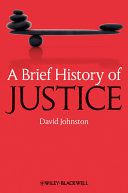
“A Brief History of Justice traces the development of the idea of justice from the ancient world until the present day, with special attention to the emergence of the modern idea of social justice. An accessible introduction to the history of ideas about justice Shows how complex ideas are anchored in ordinary intuitions about justice Traces the emergence of the idea of social justice Identifies connections as well as differences between distributive and corrective justice Offers accessible, concise introductions to the thought of several leading figures and schools of thought in the history of philosophy “–
The idea that we are in some significant sense responsible for our emotions is an idea that Robert Solomon has developed for almost three decades. Here, in a single volume, he traces the development of this theory of emotions and elaborate it in detail. Two themes run through his work: the first presents a “cognitive” theory of emotions in which emotions are construed primarily as evaluative judgments. The second proposes an “existentialist” perspective in which he defends the idea that, as we are responsible for our emotions. Indeed, sometimes it even makes sense to say that we “choose” them. While the first claim has gained increasing currency in the literature, his claim about responsibility for emotions has continued to meet with considerable resistance and misinterpretation. The new emphasis on evolutionary biology and neurology has (mistakenly) reinforced the popular prejudice that emotions “happen” to us and are entirely beyond our control. This volume is also a kind of intellectual memoir of Solomon1s own development as a thinker. The essays written in the 1980s elaborate the themes of the “intentionality” of emotion and the claim that emotions are “judgments”; in this period, he is also increasingly preoccupied with how emotions vary and are identified in a variety of cultures. In the 1990’s, his interests evolve to consider the social and political role of emotions and theories about emotion. The final section presents his current philosophical position on the seeming “passivity” of the passions. Despite his own critical assessment of his earlier work, he continues to argue that, in the final analysis, we are responsible for our emotions and existential quality of our lives.
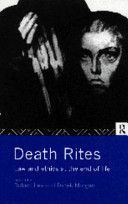
A timely and provocative collection which surveys the legal and ethical issues surrounding the medical and legal management of death and dying. Aimed to be accessible to those from both the worlds of law and medicine, this volume focuses uniquely upon questions increasingly significant for both sets of practitioners, as new medical technologies are used more often to intervene to save and extend lives, sometimes without regard for the quality of life of those who are being kept alive.
ما از اخلاق چه انتظاری داریم؟ این سوال شاید تاحدودی برای عموم مردم و یا متخصصان این رشته قابل پاسخ باشد؛ اینکه خوب بودن را به ما بیاموزد و در تنظیم روابط فردی م...

جشن کتاب تهران به ایستگاه سی و یکم رسیده است. حال و احوال نشر کتاب خوب نیست و باید فرهنگدوستان را به خرید و هدیه دادن کتاب ترغیب نمود. خانه اخلاقپژوهان جوان ب...

بنیاد کتابهای اخلاق اسلامی عمدتا پالایش جان از آلودگیها و آراستن آن به زیباییها است. اندیشه محوری این قبیل کتابها آن است که انسان فعلی آنی نیست که باید باشد...

-
0 Comments