Notice: تابع WP_Block_Type_Registry::register به طورنادرست فراخوانی شد. نامهای نوع بلوک نباید حروف بزرگ داشته باشند. لطفاً برای اطلاعات بیشتر، اشکال زدایی در وردپرس را مشاهده کنید. (این پیام در نگارش 5.0.0 افزوده شده است.) in /home/ethicsho/public_html/wp-includes/functions.php on line 5313
Warning: Use of undefined constant TDC_PATH_LEGACY - assumed 'TDC_PATH_LEGACY' (this will throw an Error in a future version of PHP) in /home/ethicsho/public_html/wp-content/plugins/td-composer/td-composer.php on line 109
Warning: Use of undefined constant TDSP_THEME_PATH - assumed 'TDSP_THEME_PATH' (this will throw an Error in a future version of PHP) in /home/ethicsho/public_html/wp-content/plugins/td-composer/td-composer.php on line 113 بایگانیهای Assassins - Fiction - خانه اخلاق پژوهان جوان Notice: Trying to access array offset on value of type bool in /home/ethicsho/public_html/wp-content/plugins/wp-ulike/inc/general-functions.php on line 807
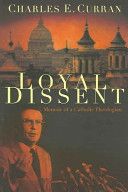
“Engrossing, enlightening, salted with humor, poignant, and profoundly inspiring, this memoir recounts the journey of one of the leading theologians of the Catholic Church in this country. “?Elizabeth A. Johnson, C. S. J., Distinguished Professor of Theology, Fordham University”In this memoir, the reader discovers the intellect of a scholar, the clarity of a teacher, and the heart of a pastor. With the realistic sense of history, saving sense of humor, acute intelligence, and love of the Church for which he is known, Charles Curran gives witness to the meaning and cost of being called to a stance of ‘faithful dissent.'”?Mary Catherine Hilkert, Professor of Theology, University of Notre Dame
Request a free 30-day online trial to this title at www.sagepub.com/freetrialPower is a central concept in many disciplines in the social sciences, including political science, sociology, social-psychology, organization studies, urban politics and planning. This encyclopedia provides a much needed authoritative and comprehensive coverage of the use of power in those different discourses, enabling the different language communities to learn from each other. It provides a compendium of the concepts that build the ways in which power is conceptualized and provides analyses of related concepts. It also provides a sourcebook for those interested in studying power, and it cross references the many insights that have been provided by theorists over the years. With comprehensive coverage of the use of power in the social sciences, the encyclopedia serves as a one-stop point of reference for the diverse and complex ways in which power has been used. It also provides a reference for debates central to the issues of power in different contexts and for related topics, showing how these disparate topics are related to power.Key Themes- Biography- Concepts Related to Power- Decisions and Game Theory- Institutional Issues- International Relations- Interpersonal Relationships- Intrapersonal Matters- Key Debates- Methodological Issues- Political Science- Political Theory- Social Psychology- Social Theory- Theories of Power- Types of Power- Urban Studies
In this crisply written book, Hanno Sauer offers the first book-length treatment of debunking arguments in ethics, developing an empirically informed and philosophically sophisticated account of genealogical arguments and their significance for the reliability of moral cognition. He breaks new ground by introducing a series of novel distinctions into the current debate, which allows him to develop a framework for assessing the prospects of debunking or vindicating our moral intuitions. He also challenges the justification of some of our moral judgments by showing that they are based on epistemically defective processes.
What is good? How can we know, and how important is it? In this book Richard Kraut, one of our most respected analytical philosophers, reorients these questions around the notion of what causes human beings to flourish–that is, what is good for us. Observing that we can sensibly talk about what is good for plants and animals no less than what is good for people, Kraut advocates a general principle that applies to the entire world of living things: what is good for complex organisms consists in the maturation and exercise of their natural powers.Drawing on the insights of ancient Greek philosophy, Kraut develops this thought into a good-centered moral philosophy, an “ethics of well-being” that requires all of our efforts to do some good. Even what is good of a kind–good poems no less than good people–must be good for someone. Pleasure plays a key role in this idea of flourishing life, but Kraut opposes the current philosophical orthodoxy of well-being, which views a person’s welfare as a construct of rational desires or plans, actual or ideal. The practical upshot of Kraut’s theory is that many common human pursuits–for riches, fame, domination–are in themselves worthless, while some of the familiar virtues–justice, honesty, and autonomy–are good for every human being.
ما از اخلاق چه انتظاری داریم؟ این سوال شاید تاحدودی برای عموم مردم و یا متخصصان این رشته قابل پاسخ باشد؛ اینکه خوب بودن را به ما بیاموزد و در تنظیم روابط فردی م...

جشن کتاب تهران به ایستگاه سی و یکم رسیده است. حال و احوال نشر کتاب خوب نیست و باید فرهنگدوستان را به خرید و هدیه دادن کتاب ترغیب نمود. خانه اخلاقپژوهان جوان ب...

بنیاد کتابهای اخلاق اسلامی عمدتا پالایش جان از آلودگیها و آراستن آن به زیباییها است. اندیشه محوری این قبیل کتابها آن است که انسان فعلی آنی نیست که باید باشد...

-
0 Comments