Notice: تابع WP_Block_Type_Registry::register به طورنادرست فراخوانی شد. نامهای نوع بلوک نباید حروف بزرگ داشته باشند. لطفاً برای اطلاعات بیشتر، اشکال زدایی در وردپرس را مشاهده کنید. (این پیام در نگارش 5.0.0 افزوده شده است.) in /home/ethicsho/public_html/wp-includes/functions.php on line 5313
Warning: Use of undefined constant TDC_PATH_LEGACY - assumed 'TDC_PATH_LEGACY' (this will throw an Error in a future version of PHP) in /home/ethicsho/public_html/wp-content/plugins/td-composer/td-composer.php on line 109
Warning: Use of undefined constant TDSP_THEME_PATH - assumed 'TDSP_THEME_PATH' (this will throw an Error in a future version of PHP) in /home/ethicsho/public_html/wp-content/plugins/td-composer/td-composer.php on line 113 بایگانیهای Aristotle - Ancient Greek Philosophy - خانه اخلاق پژوهان جوان Notice: Trying to access array offset on value of type bool in /home/ethicsho/public_html/wp-content/plugins/wp-ulike/inc/general-functions.php on line 807
In Oughts and Thoughts, Anandi Hattiangadi provides an innovative response to the argument for meaning skepticism set out by Saul Kripke in Wittgenstein on Rules and Private Language. Kripke asks what makes it the case that anybody ever means anything by any word, and argues that there are no facts of the matter as to what anybody ever means. Kripke’s argument has inspired a lively and extended debate in the philosophy of language, as it raises some of the most fundamental issues in the field: namely, the reality, privacy, and normativity of meaning. Hattiangadi argues that in order to achieve the radical conclusion that there are no facts as to what a person means by a word, the skeptic must rely on the thesis that meaning is normative, and that this thesis fails. Since any “skeptical solution” to the skeptical problem is irremediably incoherent, Hattiangadi concludes that there must be a fact of the matter about what we mean. In addition to providing an overview of the debate on meaning and content skepticism, Hattiangadi presents a detailed discussion of the contributions made by Simon Blackburn, Paul Boghossian, Robert Brandom, Fred Dretske, John McDowell, and Crispin Wright, among others, to the controversy surrounding Kripke’s argument. The issues considered include the normativity of meaning and its relation to the normativity of moral judgments, reductive and non-reductive theories of meaning, deflationism about truth and meaning, and the privacy of meaning.
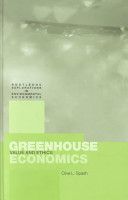
Greenhouse Economics: Values and Ethics examines the serious nature of global warming. In particular it explores the responsibilities the current generation might have to its successors, and how this should influence our economic approach. It challenges current literature on greenhouse economics, which has tended to shy away from these issues. The book will be of interest to advanced undergraduates and post graduates in environmental economics and ecological economics.
Request a free 30-day online trial to this title at www.sagepub.com/freetrialPower is a central concept in many disciplines in the social sciences, including political science, sociology, social-psychology, organization studies, urban politics and planning. This encyclopedia provides a much needed authoritative and comprehensive coverage of the use of power in those different discourses, enabling the different language communities to learn from each other. It provides a compendium of the concepts that build the ways in which power is conceptualized and provides analyses of related concepts. It also provides a sourcebook for those interested in studying power, and it cross references the many insights that have been provided by theorists over the years. With comprehensive coverage of the use of power in the social sciences, the encyclopedia serves as a one-stop point of reference for the diverse and complex ways in which power has been used. It also provides a reference for debates central to the issues of power in different contexts and for related topics, showing how these disparate topics are related to power.Key Themes- Biography- Concepts Related to Power- Decisions and Game Theory- Institutional Issues- International Relations- Interpersonal Relationships- Intrapersonal Matters- Key Debates- Methodological Issues- Political Science- Political Theory- Social Psychology- Social Theory- Theories of Power- Types of Power- Urban Studies
ما از اخلاق چه انتظاری داریم؟ این سوال شاید تاحدودی برای عموم مردم و یا متخصصان این رشته قابل پاسخ باشد؛ اینکه خوب بودن را به ما بیاموزد و در تنظیم روابط فردی م...

جشن کتاب تهران به ایستگاه سی و یکم رسیده است. حال و احوال نشر کتاب خوب نیست و باید فرهنگدوستان را به خرید و هدیه دادن کتاب ترغیب نمود. خانه اخلاقپژوهان جوان ب...

بنیاد کتابهای اخلاق اسلامی عمدتا پالایش جان از آلودگیها و آراستن آن به زیباییها است. اندیشه محوری این قبیل کتابها آن است که انسان فعلی آنی نیست که باید باشد...

-
0 Comments