Notice: تابع WP_Block_Type_Registry::register به طورنادرست فراخوانی شد. نامهای نوع بلوک نباید حروف بزرگ داشته باشند. لطفاً برای اطلاعات بیشتر، اشکال زدایی در وردپرس را مشاهده کنید. (این پیام در نگارش 5.0.0 افزوده شده است.) in /home/ethicsho/public_html/wp-includes/functions.php on line 5313
Warning: Use of undefined constant TDC_PATH_LEGACY - assumed 'TDC_PATH_LEGACY' (this will throw an Error in a future version of PHP) in /home/ethicsho/public_html/wp-content/plugins/td-composer/td-composer.php on line 109
Warning: Use of undefined constant TDSP_THEME_PATH - assumed 'TDSP_THEME_PATH' (this will throw an Error in a future version of PHP) in /home/ethicsho/public_html/wp-content/plugins/td-composer/td-composer.php on line 113 بایگانیهای Anthropology - Psychology - خانه اخلاق پژوهان جوان Notice: Trying to access array offset on value of type bool in /home/ethicsho/public_html/wp-content/plugins/wp-ulike/inc/general-functions.php on line 807
The central thesis of philosopher David Boonin is that the moral case against abortion can be shown to be unsuccessful on terms that critics of abortion can and do accept. Critically examining a wide array of arguments that have attempted to establish that every human fetus has a right to life, Boonin posits that all of these arguments fail on their own terms. He then argues that even if the fetus does have a right to life, abortion can still be shown to be morally permissible on the critic of abortion’s own terms. Finally, Boonin considers a number of arguments against abortion that do not depend on the claim that the fetus has a right to life, including those based on the golden rule, considerations of uncertainty and a commitment to certain feminist principles, and asserts that these positions, too, are ultimately unsuccessful. The result is the most thorough and detailed case for the moral permissibility of abortion that has yet been written. David Boonin is professor of philosophy at the University of Colorado. He is the author of Thomas Hobbes and the Science of Moral Virtue (Cambridge, 1994).
History and truth — Back to Kant? No way — Attending to reasons — John Rawls and moral philosophy — The autonomy of morality — The moral basis of political liberalism — The meanings of political freedom — Public reason — Nietzsche and the will to truth — The idea of a life plan.
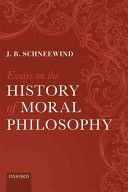
J. B. Schneewind presents a selection of his published essays on ethics, the history of ethics and moral psychology, together with a new piece offering an intellectual autobiography. The volume ranges across the seventeenth, eighteenth, and nineteenth centuries: it includes Schneewind’s early anti-foundationalist “Moral Knowledge and Moral Principles,” the classic “The Misfortunes of Virtue,” and other early essays on Kant’s relation to pre-Kantian moral philosophy; also a long piece on “The Active Powers,” and Schneewind’s own interpretation of Kant’s moral philosophy. These writings provide excellent introductions to Schneewind’s two long books, and supplement them in important ways.
ما از اخلاق چه انتظاری داریم؟ این سوال شاید تاحدودی برای عموم مردم و یا متخصصان این رشته قابل پاسخ باشد؛ اینکه خوب بودن را به ما بیاموزد و در تنظیم روابط فردی م...

جشن کتاب تهران به ایستگاه سی و یکم رسیده است. حال و احوال نشر کتاب خوب نیست و باید فرهنگدوستان را به خرید و هدیه دادن کتاب ترغیب نمود. خانه اخلاقپژوهان جوان ب...

بنیاد کتابهای اخلاق اسلامی عمدتا پالایش جان از آلودگیها و آراستن آن به زیباییها است. اندیشه محوری این قبیل کتابها آن است که انسان فعلی آنی نیست که باید باشد...

-
0 Comments