Notice: تابع WP_Block_Type_Registry::register به طورنادرست فراخوانی شد. نامهای نوع بلوک نباید حروف بزرگ داشته باشند. لطفاً برای اطلاعات بیشتر، اشکال زدایی در وردپرس را مشاهده کنید. (این پیام در نگارش 5.0.0 افزوده شده است.) in /home/ethicsho/public_html/wp-includes/functions.php on line 5313
Warning: Use of undefined constant TDC_PATH_LEGACY - assumed 'TDC_PATH_LEGACY' (this will throw an Error in a future version of PHP) in /home/ethicsho/public_html/wp-content/plugins/td-composer/td-composer.php on line 109
Warning: Use of undefined constant TDSP_THEME_PATH - assumed 'TDSP_THEME_PATH' (this will throw an Error in a future version of PHP) in /home/ethicsho/public_html/wp-content/plugins/td-composer/td-composer.php on line 113 بایگانیهای American Fiction - History And Criticism - خانه اخلاق پژوهان جوان Notice: Trying to access array offset on value of type bool in /home/ethicsho/public_html/wp-content/plugins/wp-ulike/inc/general-functions.php on line 807
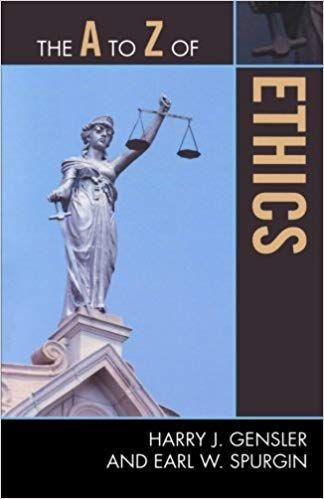
The A to Z of Ethics covers a broad range of topics, including theories, issues, and concepts; historical periods and historical figures; applied ethics; non-Western approaches; and related disciplines. Harry J. Gensler and Earl W. Spurgin tackle such issues as abortion, capital punishment, stem-cell research, and terrorism and explain such key theories as utilitarianism, natural law, social contract, and virtue ethics. This reference provides a complete overview of ethics through a detailed chronology, an introductory essay, a bibliography, and more than 200 cross-referenced dictionary entries, including bioethics, business ethics, Aristotle, Hobbes, autonomy, confidentiality, Confucius, and psychology.
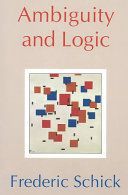
In this book Frederic Schick develops his challenge to standard decision theory. Professor Schick argues that talk of the beliefs and desires of an agent is not sufficient to explain choices. To account for a given choice we need to take into consideration how the agent understands the problem, how he sees in a selective way the options open to him. This book questions the foundations of technical and philosophical decision theory and will appeal to all those who work in that field, be they philosophers, economists or psychologists.
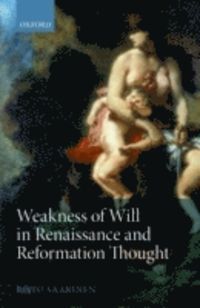
Weakness of will, the phenomenon of acting contrary to one’s own better judgment, has remained a prominent discussion topic of philosophy. The history of this discussion in ancient, medieval, and modern times has been outlined in many studies. Weakness of Will in Renaissance and Reformation Thought is, however, the first book to cover the fascinating source materials on weakness of will between 1350 and 1650. In addition to considering the work of a broad range of Renaissance authors (including Petrarch, Donato Acciaiuoli, John Mair, and Francesco Piccolomini), Risto Saarinen explores the theologically coloured debates of the Reformation period, such as those provided by Martin Luther, Philip Melanchthon, John Calvin, and Lambert Daneau. He goes on to discuss the impact of these authors on prominent figures of early modernity, including Shakespeare, Descartes, Spinoza, and Leibniz.While most of the historical research on weakness of will has focused on the reception history of Aristotle’s Nicomachean Ethics, Saarinen pays attention to the Platonic and Stoic discussions and their revival during the Renaissance and the Reformation. He also shows the ways in which Augustine’s discussion of the divided will is intertwined with the Christian reception of ancient Greek ethics, and argues that the theological underpinnings of early modern authors do not rule out weakness of will, but transform the philosophical discussion and lead it towards new solutions.
ما از اخلاق چه انتظاری داریم؟ این سوال شاید تاحدودی برای عموم مردم و یا متخصصان این رشته قابل پاسخ باشد؛ اینکه خوب بودن را به ما بیاموزد و در تنظیم روابط فردی م...

جشن کتاب تهران به ایستگاه سی و یکم رسیده است. حال و احوال نشر کتاب خوب نیست و باید فرهنگدوستان را به خرید و هدیه دادن کتاب ترغیب نمود. خانه اخلاقپژوهان جوان ب...

بنیاد کتابهای اخلاق اسلامی عمدتا پالایش جان از آلودگیها و آراستن آن به زیباییها است. اندیشه محوری این قبیل کتابها آن است که انسان فعلی آنی نیست که باید باشد...

-
0 Comments