Notice: تابع WP_Block_Type_Registry::register به طورنادرست فراخوانی شد. نامهای نوع بلوک نباید حروف بزرگ داشته باشند. لطفاً برای اطلاعات بیشتر، اشکال زدایی در وردپرس را مشاهده کنید. (این پیام در نگارش 5.0.0 افزوده شده است.) in /home/ethicsho/public_html/wp-includes/functions.php on line 5313
Warning: Use of undefined constant TDC_PATH_LEGACY - assumed 'TDC_PATH_LEGACY' (this will throw an Error in a future version of PHP) in /home/ethicsho/public_html/wp-content/plugins/td-composer/td-composer.php on line 109
Warning: Use of undefined constant TDSP_THEME_PATH - assumed 'TDSP_THEME_PATH' (this will throw an Error in a future version of PHP) in /home/ethicsho/public_html/wp-content/plugins/td-composer/td-composer.php on line 113 بایگانیهای Agricultural Biotechnology - خانه اخلاق پژوهان جوان Notice: Trying to access array offset on value of type bool in /home/ethicsho/public_html/wp-content/plugins/wp-ulike/inc/general-functions.php on line 807
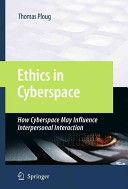
Over the last few decades information and communication technology has come to play an increasingly prominent role in our dealings with other people. Computers, in particular, have made available a host of new ways of interacting, which we have increasingly made use of. In the wake of this development a number of ethical questions have been raised and debated. Ethics in Cyberspace focuses on the consequences for ethical agency of mediating interaction by means of computers, seeking to clarify how the conditions of certain kinds of interaction in cyberspace (for example, in chat-rooms and virtual worlds) differ from the conditions of interaction face-to-face and how these differences may come to affect the behaviour of interacting agents in terms of ethics.
The fundamental question of the ethics of belief is “What ought one to believe?” According to the traditional view of evidentialism, the strength of one’s beliefs should be proportionate to the evidence. Conventional ways of defending and challenging evidentialism rely on the idea that what one ought to believe is a matter of what it is rational, prudent, ethical, or personally fulfilling to believe. Common to all these approaches is that they look outside of belief itself to determine what one ought to believe.In this book Jonathan Adler offers a strengthened version of evidentialism, arguing that the ethics of belief should be rooted in the concept of belief—that evidentialism is belief’s own ethics. A key observation is that it is not merely that one ought not, but that one cannot, believe, for example, that the number of stars is even. The “cannot” represents a conceptual barrier, not just an inability. Therefore belief in defiance of one’s evidence (or evidentialism) is impossible. Adler addresses such questions as irrational beliefs, reasonableness, control over beliefs, and whether justifying beliefs requires a foundation. Although he treats the ethics of belief as a central topic in epistemology, his ideas also bear on rationality, argument and pragmatics, philosophy of religion, ethics, and social cognitive psychology.
Joseph Raz is one of the world’s leading philosophers of law, and in his Seeley Lectures he reflects critically on one of the central tenets of ethical thought, the view that values are universal. He concludes that we should try to understand what is and what is not entailed by the universality of values, with such an understanding central to the future hopes of mankind, rather than abandoning the belief altogether. This is a concise humane account of some fundamental questions of social existence.
ما از اخلاق چه انتظاری داریم؟ این سوال شاید تاحدودی برای عموم مردم و یا متخصصان این رشته قابل پاسخ باشد؛ اینکه خوب بودن را به ما بیاموزد و در تنظیم روابط فردی م...

جشن کتاب تهران به ایستگاه سی و یکم رسیده است. حال و احوال نشر کتاب خوب نیست و باید فرهنگدوستان را به خرید و هدیه دادن کتاب ترغیب نمود. خانه اخلاقپژوهان جوان ب...

بنیاد کتابهای اخلاق اسلامی عمدتا پالایش جان از آلودگیها و آراستن آن به زیباییها است. اندیشه محوری این قبیل کتابها آن است که انسان فعلی آنی نیست که باید باشد...

-
0 Comments