

Notice: تابع WP_Block_Type_Registry::register به طورنادرست فراخوانی شد. نامهای نوع بلوک نباید حروف بزرگ داشته باشند. لطفاً برای اطلاعات بیشتر، اشکال زدایی در وردپرس را مشاهده کنید. (این پیام در نگارش 5.0.0 افزوده شده است.) in /home/ethicsho/public_html/wp-includes/functions.php on line 5313
Warning: Use of undefined constant TDC_PATH_LEGACY - assumed 'TDC_PATH_LEGACY' (this will throw an Error in a future version of PHP) in /home/ethicsho/public_html/wp-content/plugins/td-composer/td-composer.php on line 109
Warning: Use of undefined constant TDSP_THEME_PATH - assumed 'TDSP_THEME_PATH' (this will throw an Error in a future version of PHP) in /home/ethicsho/public_html/wp-content/plugins/td-composer/td-composer.php on line 113 بایگانیهای Zondervan - خانه اخلاق پژوهان جوان Notice: Trying to access array offset on value of type bool in /home/ethicsho/public_html/wp-content/plugins/wp-ulike/inc/general-functions.php on line 807
Can we regard ourselves as having free will? What is the place of values in a world of facts? What grounds the authority of moral injunctions, and why should we care about them? Unless we provide satisfactory answers to these questions, ethics has no credible status and is likely to be subsumed by psychology, history, or rational decision theory. According to Ermanno Bencivenga, this outcome is both common and regrettable. Bencivenga points to Immanuel Kant for the solution. Kant’s philosophy is a sustained, bold, and successful effort aiming at offering us the answers we need. Ethics Vindicated is a clear and thorough account of this effort that builds on Bencivenga’s previous interpretation of transcendental philosophy (as articulated in his Kant’s Copernican Revolution) and draws on the entire Kantian corpus.
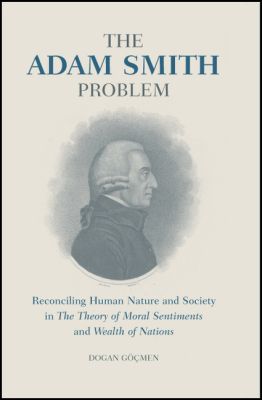
This is the first scholarly work to deal solely with the ‘Adam Smith problem’, namely the apparent contradiction between Adam Smith’s most famous works, The Theory of Moral Sentiments and The Nature and Causes of the Wealth of Nations. Since the 1840s scholars have puzzled over and attempted to explain the fact that these works offer two fundamentally different and contradictory concepts of human nature. In this radical new approach Dogan Göçmen makes a major contribution to the debate. Accepting that Smith does indeed put forward two different and varied ideas, he argues that the ethical position articulated in The Theory of Moral Sentiments can be, and was intended by Smith to be, applied as a basis for criticising the commercial society analysed in the Wealth of Nations. Göçmen argues that this ethical position points to the character of an ideal future society, Adam Smith’s Utopia, a society in which its social components are completely in sympathy – and therefore harmonious – with each other.
Where do our moral beliefs come from? Theologians and scientists provide often conflicting answers. Robert Hinde resolves these conflicts in offering a groundbreaking, multidisciplinary response, drawing on psychology, philosophy, evolutionary biology and social anthropology. Hinde argues that understanding the origins of our morality can clarify the debates surrounding contemporary ethical dilemmas such as genetic modification, increasing consumerism and globalization.
This unique reference offers a quick and convenient overview of the key thinkers in international relations in the twentieth century. The inclusive coverage ranges from politicians such as Lenin and Kissinger, to the most influential figures in feminism, nationalist studies and even historical sociology. Each entry describes the main elements of each thinker’s contribution to the study of international relations, provides relevant information on his or her life and career, and lists valuable suggestions for further reading and critical analysis. Political science and journalism students, media professionals and anyone with an interest in modern international relations will want this useful work.
ما از اخلاق چه انتظاری داریم؟ این سوال شاید تاحدودی برای عموم مردم و یا متخصصان این رشته قابل پاسخ باشد؛ اینکه خوب بودن را به ما بیاموزد و در تنظیم روابط فردی م...

جشن کتاب تهران به ایستگاه سی و یکم رسیده است. حال و احوال نشر کتاب خوب نیست و باید فرهنگدوستان را به خرید و هدیه دادن کتاب ترغیب نمود. خانه اخلاقپژوهان جوان ب...

بنیاد کتابهای اخلاق اسلامی عمدتا پالایش جان از آلودگیها و آراستن آن به زیباییها است. اندیشه محوری این قبیل کتابها آن است که انسان فعلی آنی نیست که باید باشد...

-
0 Comments