Notice: تابع WP_Block_Type_Registry::register به طورنادرست فراخوانی شد. نامهای نوع بلوک نباید حروف بزرگ داشته باشند. لطفاً برای اطلاعات بیشتر، اشکال زدایی در وردپرس را مشاهده کنید. (این پیام در نگارش 5.0.0 افزوده شده است.) in /home/ethicsho/public_html/wp-includes/functions.php on line 5313
Warning: Use of undefined constant TDC_PATH_LEGACY - assumed 'TDC_PATH_LEGACY' (this will throw an Error in a future version of PHP) in /home/ethicsho/public_html/wp-content/plugins/td-composer/td-composer.php on line 109
Warning: Use of undefined constant TDSP_THEME_PATH - assumed 'TDSP_THEME_PATH' (this will throw an Error in a future version of PHP) in /home/ethicsho/public_html/wp-content/plugins/td-composer/td-composer.php on line 113 بایگانیهای West Publishing Company - خانه اخلاق پژوهان جوان Notice: Trying to access array offset on value of type bool in /home/ethicsho/public_html/wp-content/plugins/wp-ulike/inc/general-functions.php on line 807
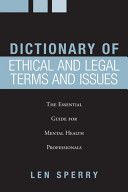
This book is a resource guide that includes all of the key terms, all of the key ethics codes and statues, and all case law relevant to everyday counseling and mental health practice. Ethics in Professional Practice would provide an easily accessible and referenced resource guide in four parts. Part I provides a lexicon of ethical and legal terms relevant to mental health practice. Part II consist a survey of key ethical issue often faced by mental health professionals, including competency, confidentiality, and cultural and ethnic factors. Part III highlights key legal issues, such as billing, testimony and court behavior, and would provide a guide to relevant legal cases and case laws. Part IV would provide a brief guide to professional licensure boards and certification agencies. An Appendix provides an annotated list of key case law and legislation relvant to mental health practice.
The author’s purpose is to understand the philosophical foundations of Hegel’s social theory by articulating the normative standards at work in his claim that the three central social institutions of the modern era–the nuclear family, civil society, and the constitutional state–are rational or good. Its central question is: what, for Hegel, makes a rational social order rational? In addressing this question the book aspires to be faithful to Hegel’s texts and to articulate a compelling theory of rational social institutions; its aim is not only to interpret Hegel correctly but also to demonstrate the richness and power that his vision of the rational social order possesses.Frederick Neuhouser’s task is to understand the conceptions of freedom on which Hegel’s theory rests and to show how they ground his arguments in defense of the modern social world. In doing so, the author focuses on Hegel’s most important and least understood contribution to social philosophy, the idea of “social freedom.”Neuhouser’s strategy for making sense of social freedom is to show its affinities with Rousseau’s conception of the general will. The main idea that Hegel appropriates from Rousseau is that rational social institutions must satisfy two conditions: first, they must furnish the basic social preconditions of their members’ freedom; and, second, all social members must be able subjectively to affirm their freedom-conditioning institutions as good and thus to regard the principles that govern their social participation as coming from their own wills.
Bonnie Steinbock presents The Oxford Handbook of Bioethics –an authoritative, state-of-the-art guide to current issues in bioethics. Thirty-four contributors reflect the interdisciplinarity that is characteristic of bioethics, and its increasingly international character. Thirty topics are covered in original essays written by some of the world’s leading figures in the field, as well as by some newer “up-and-comers.” The essays address both perennial issues, such as the methodology of bioethics, autonomy, justice, death, and moral status, and newer issues, such as biobanking, stem cell research, cloning, pharmacogenomics, and bioterrorism. Other topics concern mental illness and moral agency, the rule of double effect, justice and the elderly, the definition of death, organ transplantation, feminist approaches to commodification of the body, life extension, advance directives, physician-assisted death, abortion, genetic research, population screening, enhancement, research ethics, and the implications of public and global health for bioethics. Anyone who wants to know how the central debates in bioethics have developed in recent years, and where the debates are going, will want to consult this book. It will be an invaluable resource not only for scholars and graduate students in bioethics, but also for those in philosophy, medicine, law, theology, social science, public policy, and public health who wish to keep abreast of developments in bioethics.
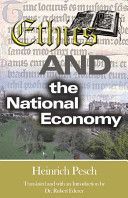
Written toward the end of World War I, this study of economics tackles the issue from the standpoint of religion and philosophy by summarizing the Catholic school of economics, which insists that the welfare of human beings belongs at the center of any real economy and that other systems that place either the individual or the state at the center of their schemes are not only false, but actually injurious to individuals, families, communities, and nations. Extensive documentation and citations from leading economic theorists are provided.
This accessible new book delivers in two key areas: first, a new way of thinking about copyright reform in countries which are engaged in the modernization of their copyright laws; and second, a new international approach to copyright regulation in the era of globalization. This volume draws specific attention to a number of special policy concerns which should inform post-socialist reform. These include the encouragement of creativity, innovation and entrepreneurship, the role of intellectual property in post-socialist modernization, the protection of cultural heritage and minority rights, and the close relationship between recognition of authors rights and the protection of fundamental human rights and freedoms. While these policy issues are generally important to intellectual property regulation, they are of special concern in the post-authoritarian context. This highly readable book will interest students and academics involved with copyright and intellectual property law and well astransitional studies.
ما از اخلاق چه انتظاری داریم؟ این سوال شاید تاحدودی برای عموم مردم و یا متخصصان این رشته قابل پاسخ باشد؛ اینکه خوب بودن را به ما بیاموزد و در تنظیم روابط فردی م...

جشن کتاب تهران به ایستگاه سی و یکم رسیده است. حال و احوال نشر کتاب خوب نیست و باید فرهنگدوستان را به خرید و هدیه دادن کتاب ترغیب نمود. خانه اخلاقپژوهان جوان ب...

بنیاد کتابهای اخلاق اسلامی عمدتا پالایش جان از آلودگیها و آراستن آن به زیباییها است. اندیشه محوری این قبیل کتابها آن است که انسان فعلی آنی نیست که باید باشد...

-
0 Comments