Notice: تابع WP_Block_Type_Registry::register به طورنادرست فراخوانی شد. نامهای نوع بلوک نباید حروف بزرگ داشته باشند. لطفاً برای اطلاعات بیشتر، اشکال زدایی در وردپرس را مشاهده کنید. (این پیام در نگارش 5.0.0 افزوده شده است.) in /home/ethicsho/public_html/wp-includes/functions.php on line 5313
Warning: Use of undefined constant TDC_PATH_LEGACY - assumed 'TDC_PATH_LEGACY' (this will throw an Error in a future version of PHP) in /home/ethicsho/public_html/wp-content/plugins/td-composer/td-composer.php on line 109
Warning: Use of undefined constant TDSP_THEME_PATH - assumed 'TDSP_THEME_PATH' (this will throw an Error in a future version of PHP) in /home/ethicsho/public_html/wp-content/plugins/td-composer/td-composer.php on line 113 بایگانیهای Warren H Green - خانه اخلاق پژوهان جوان Notice: Trying to access array offset on value of type bool in /home/ethicsho/public_html/wp-content/plugins/wp-ulike/inc/general-functions.php on line 807
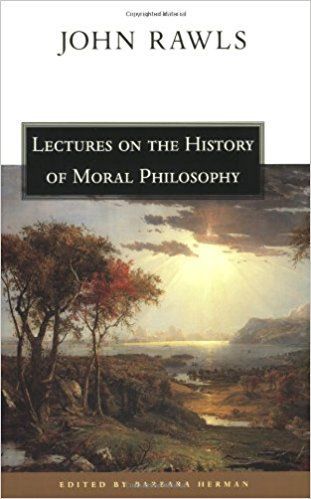
The premier political philosopher of his day, John Rawls, in three decades of teaching at Harvard, has had a profound influence on the way philosophical ethics is approached and understood today. This book brings together the lectures that inspired a generation of students–and a regeneration of moral philosophy. It invites readers to learn from the most noted exemplars of modern moral philosophy with the inspired guidance of one of contemporary philosophy’s most noteworthy practitioners and teachers.Central to Rawls’s approach is the idea that respectful attention to the great texts of our tradition can lead to a fruitful exchange of ideas across the centuries. In this spirit, his book engages thinkers such as Leibniz, Hume, Kant, and Hegel as they struggle in brilliant and instructive ways to define the role of a moral conception in human life. The lectures delineate four basic types of moral reasoning: perfectionism, utilitarianism, intuitionism, and–the ultimate focus of Rawls’s course–Kantian constructivism. Comprising a superb course on the history of moral philosophy, they also afford unique insight into how John Rawls has transformed our view of this history.
This first book of its kind for the medical profession brings the real-world translation of ethics to the care of patients, conduct of protocols, and training of professionals. An interactive, case-oriented approach to mental health ethics, Professionalism and Ethics: Q & A Self-Study Guide for Mental Health Professionals consists of questions and answers developed by the authors and fourteen contributors from backgrounds as diverse as family medicine, research ethics, social psychology, and public health. They draw on personal experience in the care of people with mental illness, in mental health research, and in clinical training to generate scenarios that pose ethical questions. Some questions are narrow and to the point, such as responding to a suspicion of child abuse; others require a more nuanced approach, such as dealing with conflict of interest posed by a pharmaceutical company. They then resolve these questions in alignment with an understanding of ethical principles, the standards of their fields, the law, and the expectations of mental health professionals. The brief case descriptions that frame each ethical question echo the real-life complexities of clinical practice and are presented in single-answer, multiple-choice format modeled after key medical licensure and specialty certification organizations. Following an overview of ethics and professionalism, questions cover four broad areas: core concepts, clinical care, medical research, and interactions with colleagues and trainees. Explanations following the questions offer background information about relevant ethical concepts and related legal and clinical considerations. A subsequent section features another set of questions for self-assessment, followed by answers with citations to appropriate references. The book’s overall approach is geared to underscore the following areas of concern: • Essential ethical skills, such as understanding how personal values affect patient care, recognizing high-risk situations in which ethical problems arise, and building ethical safeguards• Core ethical principles, including nonmaleficence, beneficence, autonomy, respect, justice, veracity, fidelity, and privacy• Key clinical ethics issues, including maintaining therapeutic boundaries, patient non-abandonment, informed consent and treatment refusal, alternative decision making and advance directives, confidentiality, reporting colleague misconduct, and caring for difficult patients. Trainees and experienced clinicians alike will be richly rewarded by considering the dilemmas posed here. Developed with an extensive review process, reference verifications, and iterative crosschecks, this book facilitates professionalism as a core competency in medicine as it instills the need for ongoing consideration of ethical behaviors and principles in the daily practice of psychiatry.
Is it ever acceptable to lie? This question plays a surprisingly important role in the story of Europe’s transition from medieval to modern society. According to many historians, Europe became modern when Europeans began to lie–that is, when they began to argue that it is sometimes acceptable to lie. This popular account offers a clear trajectory of historical progression from a medieval world of faith, in which every lie is sinful, to a more worldly early modern society in which lying becomes a permissible strategy for self-defense and self-advancement. Unfortunately, this story is wrong. For medieval and early modern Christians, the problem of the lie was the problem of human existence itself. To ask “Is it ever acceptable to lie?” was to ask how we, as sinners, should live in a fallen world. As it turns out, the answer to that question depended on who did the asking. The Devil Wins uncovers the complicated history of lying from the early days of the Catholic Church to the Enlightenment, revealing the diversity of attitudes about lying by considering the question from the perspectives of five representative voices–the Devil, God, theologians, courtiers, and women. Examining works by Augustine, Bonaventure, Martin Luther, Madeleine de Scudâery, Jean-Jacques Rousseau, and a host of others, Dallas G. Denery II shows how the lie, long thought to be the source of worldly corruption, eventually became the very basis of social cohesion and peace. –from back cover.
ما از اخلاق چه انتظاری داریم؟ این سوال شاید تاحدودی برای عموم مردم و یا متخصصان این رشته قابل پاسخ باشد؛ اینکه خوب بودن را به ما بیاموزد و در تنظیم روابط فردی م...

جشن کتاب تهران به ایستگاه سی و یکم رسیده است. حال و احوال نشر کتاب خوب نیست و باید فرهنگدوستان را به خرید و هدیه دادن کتاب ترغیب نمود. خانه اخلاقپژوهان جوان ب...

بنیاد کتابهای اخلاق اسلامی عمدتا پالایش جان از آلودگیها و آراستن آن به زیباییها است. اندیشه محوری این قبیل کتابها آن است که انسان فعلی آنی نیست که باید باشد...

-
0 Comments