Notice: تابع WP_Block_Type_Registry::register به طورنادرست فراخوانی شد. نامهای نوع بلوک نباید حروف بزرگ داشته باشند. لطفاً برای اطلاعات بیشتر، اشکال زدایی در وردپرس را مشاهده کنید. (این پیام در نگارش 5.0.0 افزوده شده است.) in /home/ethicsho/public_html/wp-includes/functions.php on line 5313
Warning: Use of undefined constant TDC_PATH_LEGACY - assumed 'TDC_PATH_LEGACY' (this will throw an Error in a future version of PHP) in /home/ethicsho/public_html/wp-content/plugins/td-composer/td-composer.php on line 109
Warning: Use of undefined constant TDSP_THEME_PATH - assumed 'TDSP_THEME_PATH' (this will throw an Error in a future version of PHP) in /home/ethicsho/public_html/wp-content/plugins/td-composer/td-composer.php on line 113 بایگانیهای University Press of the Pacific - خانه اخلاق پژوهان جوان Notice: Trying to access array offset on value of type bool in /home/ethicsho/public_html/wp-content/plugins/wp-ulike/inc/general-functions.php on line 807
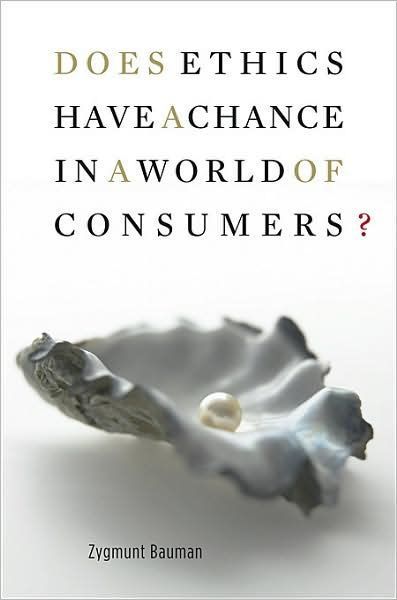
Zygmunt Bauman is one of the most admired social thinkers of our time. Once a Marxist sociologist, he has surrendered the narrowness of both Marxism and sociology, and dares to write in language that ordinary people can understand—about problems they feel ill equipped to solve. This book is no dry treatise but is instead what Bauman calls “a report from a battlefield,” part of the struggle to find new and adequate ways of thinking about the world in which we live. Rather than searching for solutions to what are perhaps the insoluble problems of the modern world, Bauman proposes that we reframe the way we think about these problems. In an era of routine travel, where most people circulate widely, the inherited beliefs that aid our thinking about the world have become an obstacle. Bauman seeks to liberate us from the thinking that renders us hopeless in the face of our own domineering governments and threats from unknown forces abroad. He shows us we can give up belief in a hierarchical arrangement of states and powers. He challenges members of the “knowledge class” to overcome their estrangement from the rest of society. Gracefully, provocatively, Bauman urges us to think in new ways about a newly flexible, newly challenging modern world. As Bauman notes, quoting Vaclav Havel, “hope is not a prognostication.” It is, rather, alongside courage and will, a mundane, common weapon that is too seldom used.
Moral Sentiments and Material Interests presents an innovative synthesis of research in different disciplines to argue that cooperation stems not from the stereotypical selfish agent acting out of disguised self-interest but from the presence of “strong reciprocators” in a social group.Presenting an overview of research in economics, anthropology, evolutionary and human biology, social psychology, and sociology, the book deals with both the theoretical foundations and the policy implications of this explanation for cooperation. Chapter authors in the remaining parts of the book discuss the behavioral ecology of cooperation in humans and nonhuman primates, modeling and testing strong reciprocity in economic scenarios, and reciprocity and social policy. The evidence for strong reciprocity in the book includes experiments using the famous Ultimatum Game (in which two players must agree on how to split a certain amount of money or they both get nothing.)
Philosophy of Right remains among the most influential works in Western political theory. It introduces a notion of civil society that has proven of inestimable importance to diverse philosophical and social agendas. In this transcription of the lectures that formed the initial version of Hegel’s text, the philosopher presents his thought with a clarity and directness seldom matched in his later writings. Nowhere does Hegel make clearer the difference between his concept of objective spirit and traditional concepts of natural law. Nowhere does he offer a more prominent treatment of the key notion of recognition. The long-awaited appearance of this first English-language translation of these lectures is a major event for Hegel scholars, philosophers, and political theorists. Philosophy of Right remains among the most influential works in Western political theory. It introduces a notion of civil society that has proven of inestimable importance to diverse philosophical and social agendas. In this transcription of the lectures that formed the initial version of Hegel’s text, the philosopher presents his thought with a clarity and directness seldom matched in his later writings. Nowhere does Hegel make clearer the difference between his concept of objective spirit and traditional concepts of natural law. Nowhere does he offer a more prominent treatment of the key notion of recognition. The long-awaited appearance of this first English-language translation of these lectures is a major event for Hegel scholars, philosophers, and political theorists.
The second volume in applied ethics based on the distinguished Wayne Leys Memorial Lectureship Series. With guidelines from legal reasoning, Michael D. Bayles examines “Moral Theory and Application.” Abraham Edel questions “Ethics Applied Or Conduct Enlightened?” The late Warner A. Wick shows in “The Good Person and the Good Society: Some Ideals Foolish and Otherwise” that devotion to ideals need not be either fanaticism or foolishness. John Lachs contends that many public gains are purchased at the cost of individuals being manipulated in “Public Benefit, Private Costs.” James E. Childress in “Gift of Life…” considers ethical issues in obtaining and distributing human organs. Carl Wellman in “Terrorism and Moral Rights” argues that there can be no “rights-based justification” for anti-abortion terrorism.
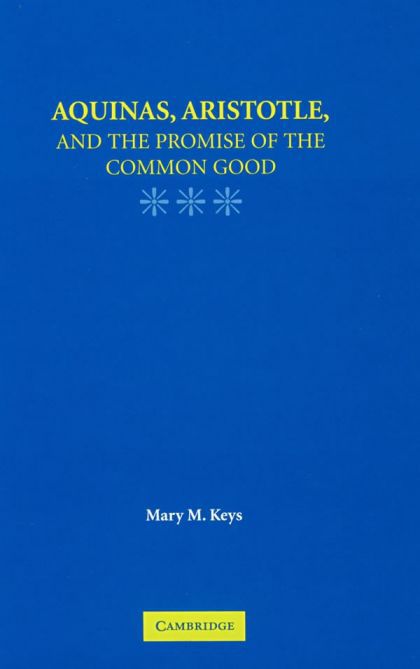
Aquinas, Aristotle, and the Promise of the Common Good claims that contemporary theory and practice have much to gain from engaging Aquinas’s normative concept of the common good and his way of reconciling religion, philosophy, and politics. Examining the relationship between personal and common goods, and the relation of virtue and law to both, Mary M. Keys shows why Aquinas should be read in addition to Aristotle on these perennial questions. She focuses on Aquinas’s Commentaries as mediating statements between Aristotle’s Nicomachean Ethics and Politics and, Aquinas’s own Summa Theologiae, showing how this serves as the missing link for grasping Aquinas’s understanding of Aristotle’s thought, in relation to Aquinas’s own considered views. Keys argues provocatively that Aquinas’s Christian faith opens up new panoramas and possibilities for philosophical inquiry and insights into ethics and politics. Her book shows how religious faith can assist sound philosophical inquiry into the foundation and proper purposes of society and politics.
ما از اخلاق چه انتظاری داریم؟ این سوال شاید تاحدودی برای عموم مردم و یا متخصصان این رشته قابل پاسخ باشد؛ اینکه خوب بودن را به ما بیاموزد و در تنظیم روابط فردی م...

جشن کتاب تهران به ایستگاه سی و یکم رسیده است. حال و احوال نشر کتاب خوب نیست و باید فرهنگدوستان را به خرید و هدیه دادن کتاب ترغیب نمود. خانه اخلاقپژوهان جوان ب...

بنیاد کتابهای اخلاق اسلامی عمدتا پالایش جان از آلودگیها و آراستن آن به زیباییها است. اندیشه محوری این قبیل کتابها آن است که انسان فعلی آنی نیست که باید باشد...

-
0 Comments