


Notice: تابع WP_Block_Type_Registry::register به طورنادرست فراخوانی شد. نامهای نوع بلوک نباید حروف بزرگ داشته باشند. لطفاً برای اطلاعات بیشتر، اشکال زدایی در وردپرس را مشاهده کنید. (این پیام در نگارش 5.0.0 افزوده شده است.) in /home/ethicsho/public_html/wp-includes/functions.php on line 5313
Warning: Use of undefined constant TDC_PATH_LEGACY - assumed 'TDC_PATH_LEGACY' (this will throw an Error in a future version of PHP) in /home/ethicsho/public_html/wp-content/plugins/td-composer/td-composer.php on line 109
Warning: Use of undefined constant TDSP_THEME_PATH - assumed 'TDSP_THEME_PATH' (this will throw an Error in a future version of PHP) in /home/ethicsho/public_html/wp-content/plugins/td-composer/td-composer.php on line 113 بایگانیهای Springer - صفحه 10 از 11 - خانه اخلاق پژوهان جوان Notice: Trying to access array offset on value of type bool in /home/ethicsho/public_html/wp-content/plugins/wp-ulike/inc/general-functions.php on line 807
The contributions to Law and Art address the interaction between law, justice, the ethical and the aesthetic. The exercise of the legal role and the scholarly understanding of legal texts were classically defined as ars iuris – an art of law – which drew on the panoply of humanist disciplines, from philology to fine art. That tradition has fallen by the wayside, particularly in the wake of modernism. But, as this book demonstrates, a consideration of the relationship between law and art can still bring jurisprudence, and particularly critical jurisprudence, to life. In its attention to the inexpressible, art can contribute to the liberation of legal doctrine from its own self-imposed limits. It can inform the ethics of a legal theory that is concerned to address how theoretical abstractions and concrete oppressions overlook the singularity and spontaneity to which art attests. The contributors to this volume – and their engagement with the full range of ‘the arts’ – seek, therefore, to disturb and to supplement conventional accounts of justice: raising the difficulty, but also the promise, of that surplus which art reveals: of life over legal formalisation.
Robert B. Brandom is one of the most original philosophers of our day, whose book Making It Explicit covered and extended a vast range of topics in metaphysics, epistemology, and philosophy of language–the very core of analytic philosophy. This new work provides an approachable introduction to the complex system that Making It Explicit mapped out. A tour of the earlier book’s large ideas and relevant details, Articulating Reasons offers an easy entry into two of the main themes of Brandom’s work: the idea that the semantic content of a sentence is determined by the norms governing inferences to and from it, and the idea that the distinctive function of logical vocabulary is to let us make our tacit inferential commitments explicit.Brandom’s work, making the move from representationalism to inferentialism, constitutes a near-Copernican shift in the philosophy of language–and the most important single development in the field in recent decades. Articulating Reasons puts this accomplishment within reach of nonphilosophers who want to understand the state of the foundations of semantics.
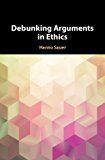
In this crisply written book, Hanno Sauer offers the first book-length treatment of debunking arguments in ethics, developing an empirically informed and philosophically sophisticated account of genealogical arguments and their significance for the reliability of moral cognition. He breaks new ground by introducing a series of novel distinctions into the current debate, which allows him to develop a framework for assessing the prospects of debunking or vindicating our moral intuitions. He also challenges the justification of some of our moral judgments by showing that they are based on epistemically defective processes.
ما از اخلاق چه انتظاری داریم؟ این سوال شاید تاحدودی برای عموم مردم و یا متخصصان این رشته قابل پاسخ باشد؛ اینکه خوب بودن را به ما بیاموزد و در تنظیم روابط فردی م...

جشن کتاب تهران به ایستگاه سی و یکم رسیده است. حال و احوال نشر کتاب خوب نیست و باید فرهنگدوستان را به خرید و هدیه دادن کتاب ترغیب نمود. خانه اخلاقپژوهان جوان ب...

بنیاد کتابهای اخلاق اسلامی عمدتا پالایش جان از آلودگیها و آراستن آن به زیباییها است. اندیشه محوری این قبیل کتابها آن است که انسان فعلی آنی نیست که باید باشد...

-
0 Comments