Notice: تابع WP_Block_Type_Registry::register به طورنادرست فراخوانی شد. نامهای نوع بلوک نباید حروف بزرگ داشته باشند. لطفاً برای اطلاعات بیشتر، اشکال زدایی در وردپرس را مشاهده کنید. (این پیام در نگارش 5.0.0 افزوده شده است.) in /home/ethicsho/public_html/wp-includes/functions.php on line 5313
Warning: Use of undefined constant TDC_PATH_LEGACY - assumed 'TDC_PATH_LEGACY' (this will throw an Error in a future version of PHP) in /home/ethicsho/public_html/wp-content/plugins/td-composer/td-composer.php on line 109
Warning: Use of undefined constant TDSP_THEME_PATH - assumed 'TDSP_THEME_PATH' (this will throw an Error in a future version of PHP) in /home/ethicsho/public_html/wp-content/plugins/td-composer/td-composer.php on line 113 بایگانیهای Seabury Press - خانه اخلاق پژوهان جوان Notice: Trying to access array offset on value of type bool in /home/ethicsho/public_html/wp-content/plugins/wp-ulike/inc/general-functions.php on line 807
What is the environment, and how does it figure in an ethical life? This book is an introduction to the philosophical issues involved in this important question, focussing primarily on ethics but also encompassing questions in aesthetics and political philosophy. Topics discussed include the environment as an ethical question, human morality, meta-ethics, normative ethics, humans and other animals, the value of nature, and nature’s future. The discussion is accessible and richly illustrated with examples. The book will be valuable for students taking courses in environmental philosophy, and also for a wider audience in courses in ethics, practical ethics, and environmental studies. It will also appeal to general readers who want a reliable and sophisticated introduction to the field.
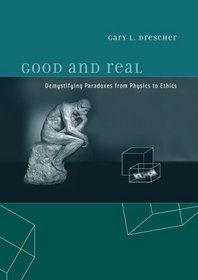
In Good and Real, Gary Drescher examines a series of provocative paradoxes about consciousness, choice, ethics, quantum mechanics, and other topics, in an effort to reconcile a purely mechanical view of the universe with key aspects of our subjective impressions of our own existence.Many scientists suspect that the universe can ultimately be described by a simple (perhaps even deterministic) formalism; all that is real unfolds mechanically according to that formalism. But how, then, is it possible for us to be conscious, or to make genuine choices? And how can there be an ethical dimension to such choices? Drescher sketches computational models of consciousness, choice, and subjunctive reasoning—what would happen if this or that were to occur?—to show how such phenomena are compatible with a mechanical, even deterministic universe. Analyses of Newcomb’s Problem (a paradox about choice) and the Prisoner’s Dilemma (a paradox about self-interest vs. altruism, arguably reducible to Newcomb’s Problem) help bring the problems and proposed solutions into focus. Regarding quantum mechanics, Drescher builds on Everett’s relative-state formulation—but presenting a simplified formalism, accessible to laypersons—to argue that, contrary to some popular impressions, quantum mechanics is compatible with an objective, deterministic physical reality, and that there is no special connection between quantum phenomena and consciousness.In each of several disparate but intertwined topics ranging from physics to ethics, Drescher argues that a missing technical linchpin can make the quest for objectivity seem impossible, until the elusive technical fix is at hand.
This second edition of A Companion to Bioethics, fully revised and updated to reflect the current issues and developments in the field, covers all the material that the reader needs to thoroughly grasp the ideas and debates involved in bioethics. Thematically organized around an unparalleled range of issues, including discussion of the moral status of embryos and fetuses, new genetics, life and death, resource allocation, organ donations, AIDS, human and animal experimentation, health care, and teaching Now includes new essays on currently controversial topics such as cloning and genetic enhancement Topics are clearly and compellingly presented by internationally renowned bioethicists A detailed index allows the reader to find terms and topics not listed in the titles of the essays themselves
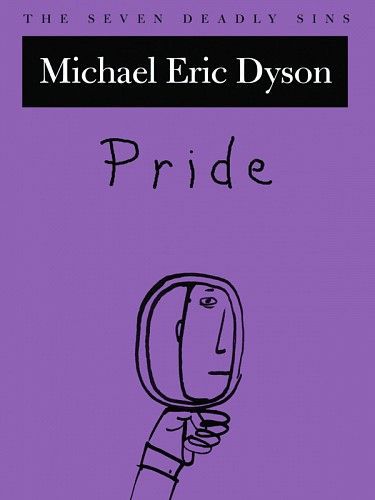
Of the seven deadly sins, pride is the only one with a virtuous side. It is certainly a good thing to have pride in one’s country, in one’s community, in oneself. But when taken too far, as Michael Eric Dyson shows in Pride, these virtues become deadly sins. Dyson, named by Ebony magazine as one of the 100 most influential African Americans, here looks at the many dimensions of pride. Ranging from Augustine and Aquinas, MacIntyre and Hauerwas, to Niebuhr and King, Dyson offers a thoughtful, multifaceted look at this “virtuous vice.” He probes the philosophical and theological roots of pride in examining its transformation in Western culture. Dyson discusses how black pride keeps blacks from being degraded and excluded by white pride, which can be invisible, unspoken, but nonetheless very powerful. Dyson also offers a moving glimpse into the teachers and books that shaped his personal pride and vocation. Dyson also looks at less savory aspects of national pride. Since 9/11, he notes, we have had to close ranks. But the collective embrace of all things American, to the exclusion of anything else, has taken the place of a much richer, much more enduring, much more profound version of love of country. This unchecked pride asserts the supremacy of America above all others–elevating our national beliefs above any moral court in the world–and attacking critics of American foreign policy as unpatriotic and even traitorous. Hubris, temerity, arrogance–the unquestioned presumption that one’s way of life defines how everyone else should live–pride has many destructive manifestations. In this engaging and energetic volume, Michael Eric Dyson, one of the nation’s foremost public intellectuals, illuminates this many-sided human emotion, one that can be an indispensable virtue or a deadly sin.
ما از اخلاق چه انتظاری داریم؟ این سوال شاید تاحدودی برای عموم مردم و یا متخصصان این رشته قابل پاسخ باشد؛ اینکه خوب بودن را به ما بیاموزد و در تنظیم روابط فردی م...

جشن کتاب تهران به ایستگاه سی و یکم رسیده است. حال و احوال نشر کتاب خوب نیست و باید فرهنگدوستان را به خرید و هدیه دادن کتاب ترغیب نمود. خانه اخلاقپژوهان جوان ب...

بنیاد کتابهای اخلاق اسلامی عمدتا پالایش جان از آلودگیها و آراستن آن به زیباییها است. اندیشه محوری این قبیل کتابها آن است که انسان فعلی آنی نیست که باید باشد...

-
0 Comments